Why Do Nations Trade? The Theory of Comparative Advantage
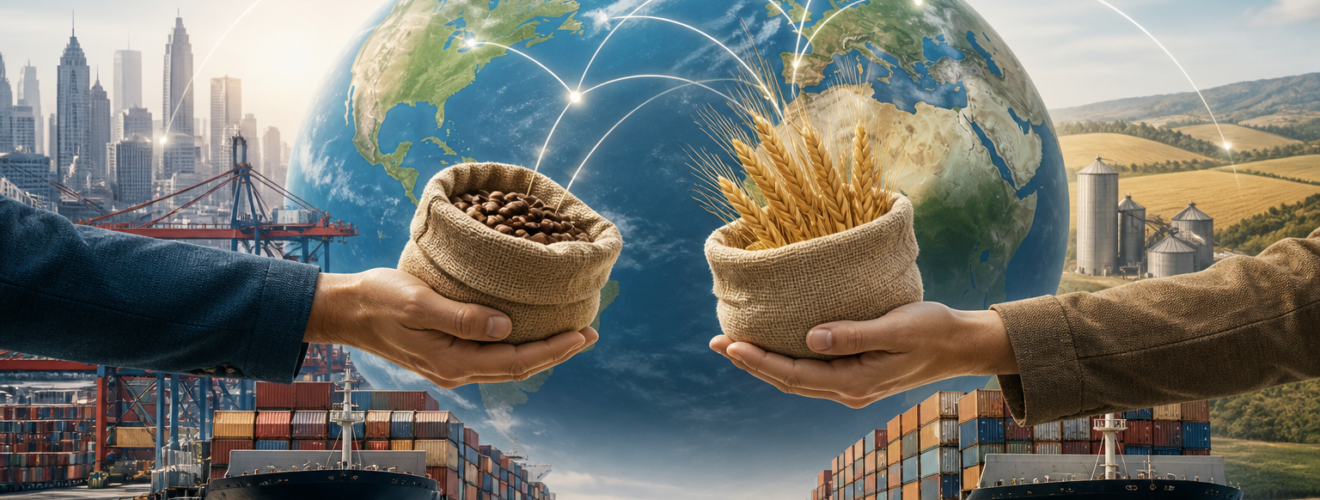
International trade is a vital part of the modern global economy. It allows people to enjoy goods and services from all over the world. Without trade, most nations would have fewer choices and higher prices. Economists have long sought to explain why nations trade and how it benefits them. The most important idea in this field is the theory of comparative advantage. This theory explains that trade is not just about who can make the most goods. Instead, it is about who can make goods at the lowest relative cost. By following this rule, nations can increase their total wealth and improve the lives of their citizens.
The study of trade began with the search for wealth. For a long time, many leaders believed in mercantilism. This view suggested that a nation could only get rich by exporting more than it imported. They thought of trade as a game where one person wins and the other loses. This changed when Adam Smith published his work in 1776. He argued that trade benefits both sides. He introduced the idea of absolute advantage. This meant that a country should make what it is best at making. If one country is better at growing wheat and another is better at making wine, they should trade. Both will have more of each good than if they tried to do everything alone.
The Shift to Comparative Advantage
While the idea of absolute advantage was helpful, it left one big question. What happens if one country is better at making everything? This was the problem that David Ricardo solved in 1817. He showed that even if a nation is less efficient at making every single good, trade still makes sense. This is the heart of the theory of comparative advantage. It suggests that trade is based on relative costs rather than absolute ones. A nation should focus on the goods it can produce most efficiently compared to other goods it might make.
To understand this, we must look at the choices a nation makes. Every hour spent making one product is an hour not spent making another. This leads us to the concept of opportunity cost. Opportunity cost is what you give up to get something else. If a country chooses to make cars, it might give up the chance to grow corn. In the world of trade, the nation with the lowest opportunity cost for a specific good has the comparative advantage. Even if a rich nation can make both cars and corn faster than a poor nation, they should still trade. The rich nation should make the product where its lead is greatest. The poor nation should make the product where its disadvantage is smallest.
The Role of Specialization
Specialization is the process where a nation focuses its labor and capital on a few specific industries. This focus allows workers to become more skilled. It also encourages the use of better tools and technology. When a nation specializes according to its comparative advantage, it becomes more productive. This increase in productivity means there are more goods available for everyone. If every nation tries to be self-sufficient, resources are wasted on tasks they do poorly. Specialization stops this waste and creates a larger global pie for everyone to share.
Specialization also leads to economies of scale. This happens when the cost of making each unit goes down as the nation makes more of it. Large factories and supply chains become more efficient over time. By trading with the rest of the world, a small country can find a large enough market to support these big industries. This allows even small nations to compete in the global market. They can find a niche where they excel and use that to build a strong economy. This has been a key factor in the growth of many developing nations in recent decades.
Gains from Trade and Consumer Welfare
The most direct benefit of trade is felt by the people who buy things. Trade increases the variety of goods available in local stores. It also forces local companies to compete with foreign ones. This competition leads to lower prices and better quality for consumers. When prices fall, people have more money left over to spend on other things. This raises the overall standard of living in a nation. Even if some local jobs are lost to trade, the gains to the public are often much larger than the losses.
Trade also helps spread new ideas and technology. When companies from different nations work together, they share knowledge. A country that imports high-tech machines can learn how to use them and even how to make them. This transfer of knowledge helps poor nations catch up with rich ones. It drives innovation on a global scale. As nations trade, they become more connected. This creates a more stable world because trading partners are less likely to go to war. They rely on each other for their economic health, which creates a common interest in peace.
Modern Views and Factor Endowments
Modern economists have expanded on Ricardo’s work. One major addition is the Heckscher-Ohlin model. This model suggests that comparative advantage comes from the resources a nation has. These resources are called factor endowments. They include things like land, labor, and capital. A country with a lot of land might have a comparative advantage in farming. A country with many skilled workers might have an advantage in making software. This explains why different parts of the world produce different things.
In today’s world, human capital is more important than ever. Education and training allow a nation to create new types of comparative advantage. A country does not have to be born with resources like oil or gold to be rich. They can invest in their people to become leaders in science or finance. This shows that comparative advantage is not fixed. It can change over time as a nation develops and invests in its future. This dynamic nature of trade keeps the global economy moving and growing.
Real World Frictions and Challenges
While the theory of comparative advantage is very strong, the real world is complex. There are many things that can slow down or block trade. These are often called trade frictions. One common friction is the cost of transport. If it costs too much to ship a good, the advantage of making it elsewhere might disappear. Governments also put up barriers like tariffs and quotas. Tariffs are taxes on imported goods. Quotas limit the amount of a good that can enter a country. These are often used to protect local jobs from foreign competition.
Another challenge is that trade does not help everyone equally within a country. While the nation as a whole gets richer, some workers in specific industries might lose their jobs. For example, if a nation starts importing cheaper steel, local steel workers may suffer. This creates political pressure to stop trade. Economists argue that the best solution is not to stop trade. Instead, they suggest helping those workers find new jobs through training and support. This way, the nation can keep the gains from trade while caring for its citizens.
Conclusion
The theory of comparative advantage remains a pillar of modern economic thought. It explains that by focusing on what they do best, nations can achieve more together than they can alone. Trade is a powerful tool for reducing poverty and increasing global wealth. It promotes efficiency, innovation, and cooperation across borders. While there are challenges and costs to trade, the broad benefits are clear. Understanding why nations trade helps us appreciate the complex web of connections that sustain our world. As we look to the future, the principles of comparative advantage will continue to guide the growth of the global economy.
Bernhofen, D. M., & Brown, J. C. (2004). A direct test of the theory of comparative advantage: The case of Japan. Journal of Political Economy, 112(1), 48-67.
Krugman, P. R., Obstfeld, M., & Melitz, M. J. (2018). International economics: Theory and policy (11th ed.). Pearson.
Ricardo, D. (1817). On the principles of political economy and taxation. John Murray.
Smith, A. (1776). An inquiry into the nature and causes of the wealth of nations. W. Strahan and T. Cadell.