The History and Evolution of Global Trade Agreements
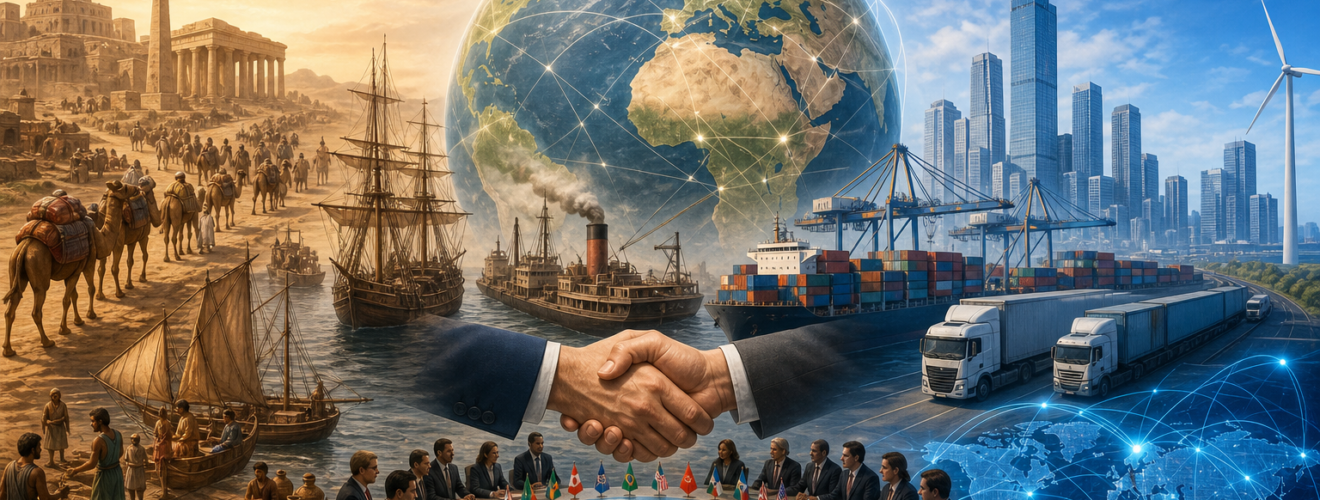
Global trade agreements are the main tools that shape how nations interact. These deals set the rules for buying and selling goods across borders. They help lower taxes and remove barriers that make trade hard. Over many centuries, the way countries trade has changed a lot. It began with simple pacts between neighbors and grew into a complex global system. This history shows how the world has moved toward more cooperation and open markets. By looking at the past, we can see how trade deals help build the modern economy. They provide a clear framework that gives businesses the confidence to grow and invest in new places.
The study of these agreements is important for understanding modern politics. Every major shift in trade history reflects a change in how leaders think about wealth. In the early days, wealth was seen as a finite prize to be guarded. Today, most people view trade as a way for all nations to gain at the same time. This shift did not happen fast. It took many years of trial and error to find the best ways to work together. This article will track that long journey from early history to the digital age of today.
The Early Era of Trade and Mercantilism
Long ago, trade was not governed by formal written deals as we see them now. Instead, it relied on simple routes and local rules. The Silk Road is a great example of an early trade network. It linked the East and the West for many hundreds of years. However, these early networks did not have the formal legal structures we use today. Traders faced many risks and high costs. Most trade was limited to luxury items that were small and very valuable. This made trade a rare event for most people in the world.
By the 16th century, a system called mercantilism became popular in Europe. Under this view, nations thought that the total amount of wealth in the world was fixed. They wanted to export as much as possible and import very little. Governments used high taxes, called tariffs, to stop foreign goods from coming in. They also used trade deals to gain power over other nations. These deals were often forced and did not help both sides. The goal was to build up gold and silver for the state. This era was marked by competition rather than true cooperation between equals.
As time went on, thinkers began to challenge these old ideas. They argued that high taxes actually hurt the people. They believed that free trade could make everyone richer. This led to a slow change in how deals were made. Nations started to see that if they lowered their barriers, other nations might do the same. This logic laid the seeds for the first modern trade agreements. It moved the focus from the power of the king to the welfare of the public and the success of the merchant.
The Rise of Free Trade in the Nineteenth Century
The 19th century was a turning point for global trade. Britain was the world leader in industry at that time. They decided to move away from high taxes on grain and other goods. In 1860, Britain and France signed the Cobden-Chevalier Treaty. Many experts see this as the first modern trade deal. It was a formal pact that lowered taxes on many items. It also used a special rule called the most-favored-nation clause. This meant that if one country gave a low tax rate to a friend, they had to give it to everyone else in the deal too.
This treaty started a wave of similar deals across Europe. For a few decades, trade grew very fast. Countries began to specialize in what they did best. This is an idea known as comparative advantage. It suggests that trade helps everyone if each nation focuses on its strengths. The world became more linked than ever before. People could buy goods from far away at low prices. This era showed that trade deals could be a force for peace and shared wealth. It proved that open markets work better than closed ones.
The Impact of the World Wars
The progress of the 19th century came to a stop during the early 20th century. World War I and the Great Depression changed everything. Many nations went back to the old way of thinking. They raised taxes to very high levels to protect their own jobs. The United States passed the Smoot-Hawley Act in 1930. This law raised taxes on thousands of imported goods. Other nations got angry and did the same thing in return. This created a trade war that made the economic crisis much worse for everyone.
Global trade fell by more than half in just a few years. This period taught world leaders a very hard lesson. They saw that when trade stops, the whole world suffers. They realized that they needed a global system to prevent this from happening again. After World War II, leaders met to build a new world order. They wanted to make sure that trade wars would never again lead to real wars. This led to the birth of the first global trade rules that we still use in some form today.
The GATT and the Birth of Global Rules
In 1947, twenty-three countries signed the General Agreement on Tariffs and Trade. This is known as the GATT. It was not a full organization at first. It was a set of rules for how to trade fairly. The main goal was to reduce taxes and other barriers. The GATT held many rounds of talks over the next fifty years. Each round brought more countries into the fold. They talked about how to lower taxes on cars, steel, and farm goods. These talks were often slow, but they were very successful in the long run.
The GATT rounds helped the world economy grow after the war. For example, the Kennedy Round in the 1960s cut taxes by a large amount. The Tokyo Round in the 1970s looked at more than just taxes. It looked at how rules and standards could also block trade. These meetings kept the world moving toward more open markets. By the 1980s, it was clear that the GATT needed to be stronger. It needed a way to handle new things like services and ideas. This led to the most famous round of all.
The Uruguay Round and the WTO
The Uruguay Round began in 1986 and lasted for eight years. It was the largest trade talk in history. It covered almost every part of the economy. In 1995, this round led to the creation of the World Trade Organization, or WTO. The WTO is a formal group that sits in Geneva. Unlike the GATT, it has a strong system to settle fights between nations. If one country breaks the rules, the WTO can help fix the problem. This gave the global trade system a lot of strength and stability.
The WTO made sure that trade rules were the same for everyone. It brought many developing nations into the global market. Today, nearly every country is a member. The WTO deals with things like patents, banking, and food safety. It has helped keep trade flowing even during hard times. While it faces some criticism, it remains the most important part of the global trade system. It provides a place where countries can talk instead of fighting over money and goods.
Regional Trade Deals and the Modern Era
In recent years, many nations have also signed regional trade deals. These are pacts between neighbors or small groups of countries. The North American Free Trade Agreement was a famous example. The European Union is another. These regional deals often go further than the WTO rules. They might allow people to move freely between countries for work. They might also set very high standards for the environment. These deals help close neighbors work together more closely than the rest of the world.
Some experts call this the “spaghetti bowl” of trade deals. This is because there are so many different sets of rules overlapping each other. While this can be confusing, it also shows that nations still want to trade. Today, trade deals are about more than just goods. They focus on the digital world. They set rules for how data moves across borders. They also try to protect the planet by adding green rules to trade. The focus has shifted from simple taxes to complex social and environmental issues.
Conclusion
The history of global trade agreements is a story of growth and learning. We have moved from a world of high taxes and secrets to a world of open rules and cooperation. These deals have helped billions of people move out of poverty. They have made goods cheaper and better for everyone. While the system is not perfect, it is much better than the trade wars of the past. As our world becomes more digital, trade deals will have to change again. They will need to solve new problems that we cannot even see yet.
The future of trade will likely focus on fairness and the environment. Nations will continue to argue over the best way to move forward. However, the core idea will remain the same. Cooperation is always better than isolation. By working together through formal agreements, the world can build a more stable and wealthy future for all. The evolution of these pacts shows that when we trade fairly, we all win. This long history is the foundation of the world we live in today and the world we will build tomorrow.
Sources:
Hoekman, B. M., & Kostecki, M. M. (2009). The political economy of the world trading system. Oxford University Press.
Irwin, D. A. (2020). Against the tide: An intellectual history of free trade. Princeton University Press.
Jackson, J. H. (1997). The world trading system: Law and policy of international economic relations. MIT Press.
World Trade Organization. (2023). Understanding the WTO. WTO Publications.