Out of Africa: Understanding the Origins of Early Humans
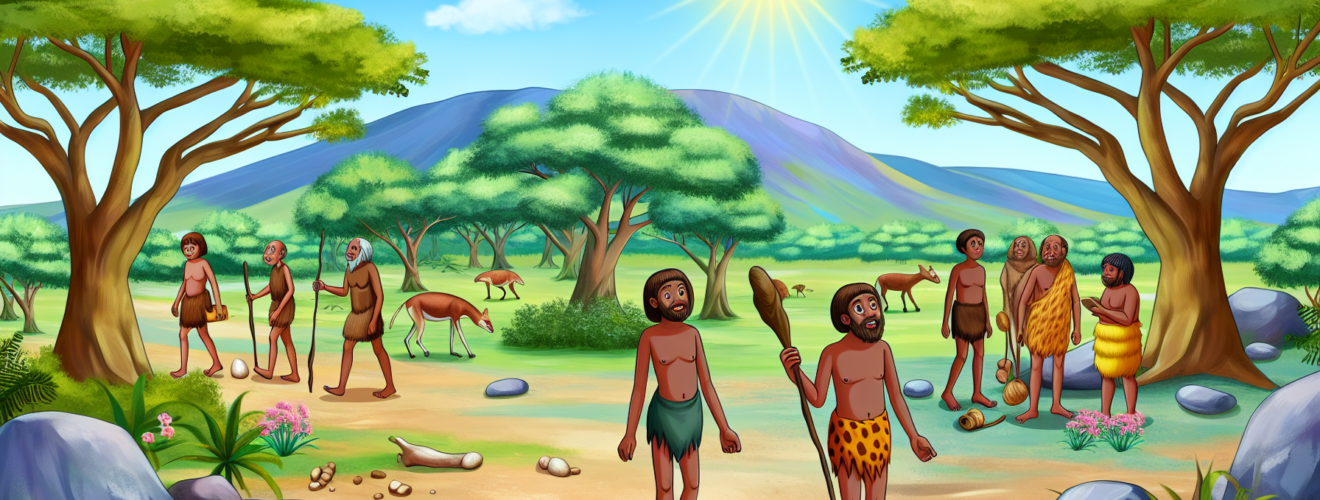
The study of human origins is a vital part of modern science. For many years, researchers have tried to find where our species began. Most evidence now supports the Out of Africa model. This theory suggests that all modern humans share a recent common home. It states that our ancestors lived in Africa before they spread across the globe. This view has changed how we look at our own history. It replaces older ideas that humans grew up in many places at the same time. Today, we use tools like old bones and DNA to tell this story. These tools provide a clear picture of our shared past in the African continent.
The Out of Africa theory is often called the Recent African Origin model. It posits that Homo sapiens emerged as a distinct species around three hundred thousand years ago. These early humans lived in small groups. Over time, they developed the tools and social skills needed to survive. Eventually, some groups began to move. They traveled into the Middle East and then into Europe and Asia. This movement did not happen all at once. Instead, it occurred in several waves over thousands of years. Each wave brought our ancestors closer to the diverse world we see today.
The Role of Fossil Evidence
Key Discoveries in East Africa
Fossils are like windows into the past. They provide physical proof of how our ancestors looked. In the late twentieth century, experts found very old bones in East Africa. The Omo Kibish remains in Ethiopia are a famous example. These fossils are nearly two hundred thousand years old. They show skulls that look very much like ours. This find was a major turning point for science. It proved that people with modern bodies lived in Africa long before they lived anywhere else. Other sites, such as Herto, have provided similar proof. These bones suggest that East Africa was a cradle for our species.
Expanding the Search to the South
While East Africa is famous, other regions are also important. Sites in South Africa have yielded many old remains. Caves like Klasies River Mouth show that early humans lived along the coast. These people used the sea for food. They also made complex tools from stone and bone. This shows that early humans were very smart. They could adapt to different environments with ease. The fossil record from across the continent tells a story of growth. It shows a species that was slowly getting ready to explore the rest of the world.
The Power of Genetic Data
In recent years, genetics has changed the field of human origins. DNA acts as a map of our deep history. By looking at the genes of people today, we can track our ancestors. One key tool is mitochondrial DNA. This is passed down from mothers to their children. It does not mix with the father’s DNA. This allows scientists to trace a direct line back in time. The data shows that all living humans share a single female ancestor. She lived in Africa about two hundred thousand years ago. Scientists often call her Mitochondrial Eve. This does not mean she was the first woman. It means she is the ancestor of everyone alive today.
Men also carry a genetic record in the Y-chromosome. This is passed from fathers to sons. Like mitochondrial DNA, it helps us track ancient moves. Study after study confirms the same result. Our genetic roots are deepest in Africa. People living in Africa today have more genetic variety than people anywhere else. This is a clear sign of an old population. When a small group leaves a home, they only take a part of the gene pool with them. This is why groups outside of Africa have less genetic variety. This data is some of the strongest proof for the Out of Africa model.
Patterns of Global Migration
Leaving Africa was a grand journey. Humans likely followed two main paths. The first path led through the Sinai Peninsula into the Levant. This is known as the Northern Route. The second path may have crossed the sea at the southern end of the Red Sea. This is known as the Southern Route. Climate change played a big role in these moves. When the earth was wet, deserts turned into green plains. These green paths allowed people to move into new lands. When the earth became dry, these paths closed. Humans had to wait for the next shift in the weather to move again.
As humans moved, they met other early people. These included the Neanderthals in Europe and the Denisovans in Asia. For a long time, we thought these groups simply vanished. We now know that early humans and these other groups met and shared genes. Most people today carry a small amount of Neanderthal DNA. This shows that our history is not a simple line. It is a complex web of meeting and mixing. Despite this mixing, the bulk of our DNA still comes from our African ancestors. The Out of Africa event remains the most important part of our story.
Conclusion
Understanding our origins helps us see the unity of the human race. The Out of Africa theory is supported by bones, genes, and the study of the earth. It shows that all humans are part of one large family. Our shared journey began on the African plains. From there, we traveled to every corner of the globe. This history reminds us that our differences are small compared to our shared past. By looking back at our roots, we gain a better sense of our place in the world. The story of human origins is still being written, but the heart of the story remains in Africa.