Gross Domestic Product (GDP) vs. Gross National Happiness
Introduction to Economic Metrics
For many years, the world has used one main tool to measure success. This tool is the Gross Domestic Product. Most people call it GDP. It tracks the value of all goods and services in a nation. Many leaders look at GDP to see if a country is doing well. If the GDP goes up, they believe the nation is growing. If it goes down, they worry about a recession. This has been the standard for a very long time. It provides a simple way to compare different countries using money. However, money is only one part of life. It does not show if people are happy or healthy. It does not show if the air is clean. This has led to a new idea called Gross National Happiness. This article will look at both of these systems. We will see how they work and why they matter for our future.
The debate between these two metrics is very important today. Some argue that we need to focus more on quality of life. Others say that a strong economy is the only way to fund social programs. To understand this, we must look at where these ideas came from. We must also look at how they change the way governments act. An academic view of these tools reveals deep truths about our values. It shows what we prioritize as a global society. By comparing GDP and GNH, we can find better ways to build a good world. This comparison helps us see the full picture of human progress beyond just financial gains.
The Genesis and Utility of GDP
Gross Domestic Product was first developed in the 1930s. A man named Simon Kuznets helped create this system for the United States. At that time, the world was in a Great Depression. Leaders needed a way to measure the economy. They wanted to know how many goods were being made. GDP helped them track industrial output during the war years. It became the primary way to measure national power. If a country had a high GDP, it could support its people and its military. This metric is very useful because it is clear and objective. It uses numbers that are easy to collect from banks and stores. It allows for a fast comparison between different years and different nations. Because of this, it remains the gold standard for economists everywhere.
The utility of GDP lies in its focus on productivity. High GDP often leads to more jobs. It can mean that a country has more money for roads and schools. When a nation grows its GDP, it often sees a rise in the standard of living. This is why many developing nations work hard to increase their output. It is a vital sign for the health of the market. Investors use these numbers to decide where to put their money. Banks use them to set interest rates. Without GDP, it would be hard to manage a complex modern economy. It provides a common language for trade and global finance. In many ways, it has helped guide the world toward great wealth over the last century.
The Limitations of Monetary Measurement
Even though GDP is useful, it has many flaws. Even Simon Kuznets warned that it was not a measure of welfare. One major problem is that it ignores things that do not have a price tag. For example, it does not count the work of parents at home. It does not count the value of volunteering in a community. If a person stays home to care for a child, the GDP does not rise. But if that person pays for a daycare center, the GDP goes up. This means the metric misses a large part of human life. It also fails to account for how wealth is shared. A country can have a very high GDP but also have many poor citizens. This gap between the rich and the poor is not visible in the total number. This can lead to social unrest even when the economy looks strong on paper.
Another big issue is the environment. GDP often treats the destruction of nature as a gain. If a company cuts down a forest to sell wood, the GDP rises. It does not subtract the loss of the trees or the clean air. If there is a large oil spill, the cost of cleaning it up actually adds to the GDP. This is called the broken window fallacy. It means that spending money on a disaster looks like growth. This creates a false sense of progress. We might be getting richer in money but poorer in resources. Many experts now believe that we cannot ignore these costs. We need a way to measure growth that does not hurt the planet. This is where the concept of happiness begins to play a larger role in policy.
The Philosophy of Gross National Happiness
Gross National Happiness is a very different kind of metric. It started in the small country of Bhutan in 1972. The fourth King of Bhutan said that happiness was more important than wealth. He believed that the goal of a government should be the well-being of its people. This idea is based on the belief that a good life has many parts. It is not just about how much you buy. It is about how you feel and how you live with others. GNH tries to measure these things in a formal way. It uses surveys and data to track the joy and peace of the citizens. This approach shifts the focus from the market to the human experience. It suggests that a nation can be successful even if it is not the richest in the world.
The philosophy of GNH is rooted in balance. It does not say that money is bad. Instead, it says that money should serve the people. Economic growth is a tool, but it is not the final goal. The final goal is a society where everyone can thrive. This requires looking at the mind, the body, and the community. GNH encourages people to spend time with family. It values culture and tradition. It also places a high value on the natural world. This holistic view is becoming more popular in other countries as well. Many people feel that modern life is too stressful and busy. They look at GNH as a way to find a better path. It offers a vision of progress that feels more human and kind.
The Four Pillars of Well-Being
Sustainable Development
The first pillar of GNH is sustainable socio-economic development. This means the economy should grow in a way that lasts. It should not use up all the resources today and leave nothing for tomorrow. It focuses on fairness and equality. This pillar ensures that everyone has access to healthcare and education. It looks at the long-term health of the community rather than quick profits. By focusing on sustainability, a nation can protect its future.
Cultural Preservation
The second pillar is the preservation of culture. Many people believe that culture gives life meaning. It connects us to our past and our neighbors. GNH tracks how well a nation keeps its traditions alive. This includes language, art, and local customs. When people feel a sense of belonging, they are often happier. This pillar helps prevent the loss of identity that can happen with global trade.
Environmental Conservation
The third pillar is the protection of the environment. In the GNH system, nature is a key part of wealth. A healthy forest or a clean river is worth more than a factory. This pillar requires the government to keep a certain amount of land as forest. It encourages green energy and limits waste. This is a vital part of well-being because humans need nature to survive and feel at peace.
Good Governance
The fourth pillar is good governance. This means the government must be honest and efficient. It must listen to the people and care for their needs. Trust in the government is a major factor in national happiness. When people feel safe and respected, they are more likely to thrive. This pillar ensures that laws are fair and that the public has a voice in how the country is run.
Comparing the Two Frameworks
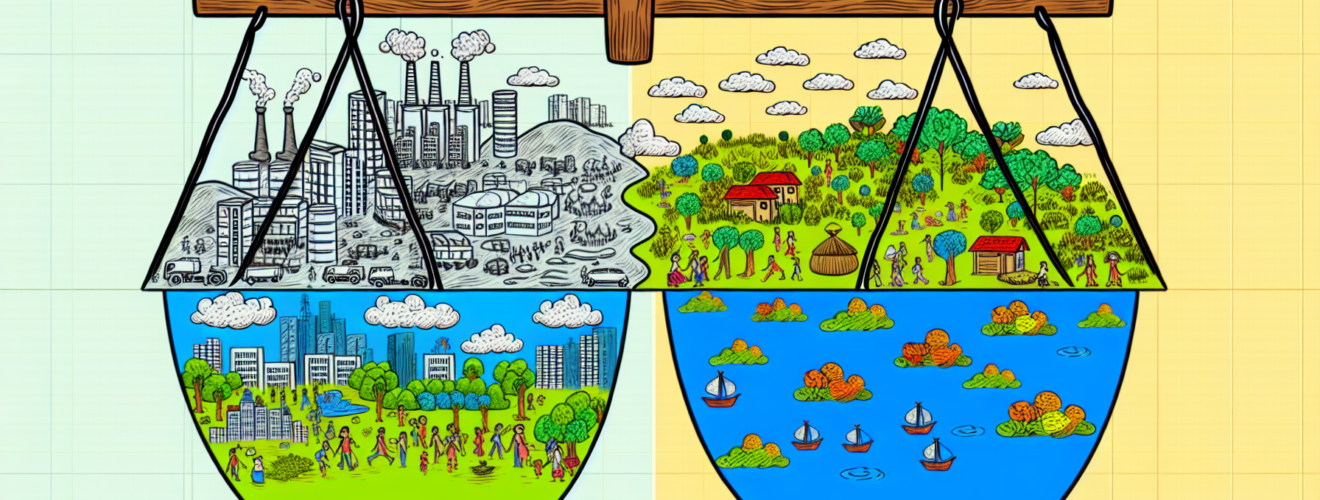
When we compare GDP and GNH, we see two different worldviews. GDP is a vertical metric. It looks at the height of the economy. GNH is a horizontal metric. It looks at the breadth of life. GDP is easy to measure because it uses currency. Everyone knows what a dollar or a euro is. GNH is harder to measure because happiness is subjective. What makes one person happy might not work for another. This is one of the main criticisms of GNH. Critics say it is too vague to be a real policy tool. They argue that you cannot put a number on the human soul. However, supporters of GNH say that we already measure vague things like consumer trust. They believe that with good data, happiness can be a solid metric.
Another difference is how these metrics drive policy. A government focused on GDP will favor big business. It will want to see more sales and more building. A government focused on GNH might pass laws to limit work hours. It might spend more on parks and mental health. This shows that the metrics we choose will dictate our daily lives. If we only measure money, we will only work for money. If we measure happiness, we will work for a better life. The two frameworks do not have to be enemies. Many experts think they can work together. A country needs a stable economy to provide for its citizens. But it also needs a focus on well-being to ensure that life is worth living.
Future Directions in Global Policy
The future of global policy may lie in a hybrid approach. Some organizations, like the OECD, have created the Better Life Index. This index looks at both money and quality of life. It tracks things like housing, income, and jobs. But it also tracks health, safety, and life satisfaction. This gives a more complete picture than GDP alone. More nations are starting to use these mixed tools. New Zealand has recently adopted a wellbeing budget. This means they spend money based on how it will help the people, not just the economy. This is a significant shift in the way we think about national success.
As we face global challenges like climate change, these new metrics are vital. We cannot solve modern problems with old tools. We need to value things that are not for sale. Clean air and social trust are more important now than ever before. Moving toward a happiness-based model could help us save the planet. It could also help reduce the high rates of stress and anxiety in modern society. By looking at the human side of the economy, we can build a world that is both rich and joyful. The movement toward GNH is growing, and it may soon change the way every nation measures its progress.
Conclusion
In conclusion, both Gross Domestic Product and Gross National Happiness have value. GDP is a strong tool for tracking trade and market strength. It has helped many nations grow and escape poverty. But it is not a complete measure of life. It leaves out our health, our culture, and our planet. Gross National Happiness offers a more holistic view. it reminds us that the economy should serve people, not the other way around. While it is harder to measure, it captures the things that truly matter to us. In the years ahead, we should try to use both. We need a strong economy to fund our dreams. But we also need to make sure those dreams lead to a happy and healthy life. By balancing these two metrics, we can create a better future for everyone.
Sources
Bhutan, G. N. H. C. (2012). Bhutan: Lessons from Bhutan on happiness and well-being. United Nations Press.
Kuznets, S. (1934). National income, 1929-1932. National Bureau of Economic Research.
OECD. (2020). How’s life? 2020: Measuring well-being. OECD Publishing.
Stiglitz, J. E., Sen, A., & Fitoussi, J. P. (2009). Report by the commission on the measurement of economic performance and social progress. Commission on the Measurement of Economic Performance and Social Progress.
United Nations. (2011). Happiness: Towards a holistic approach to development. UN General Assembly Resolution.