
The Philippine Labor Movement: A History of Workers’ Rights
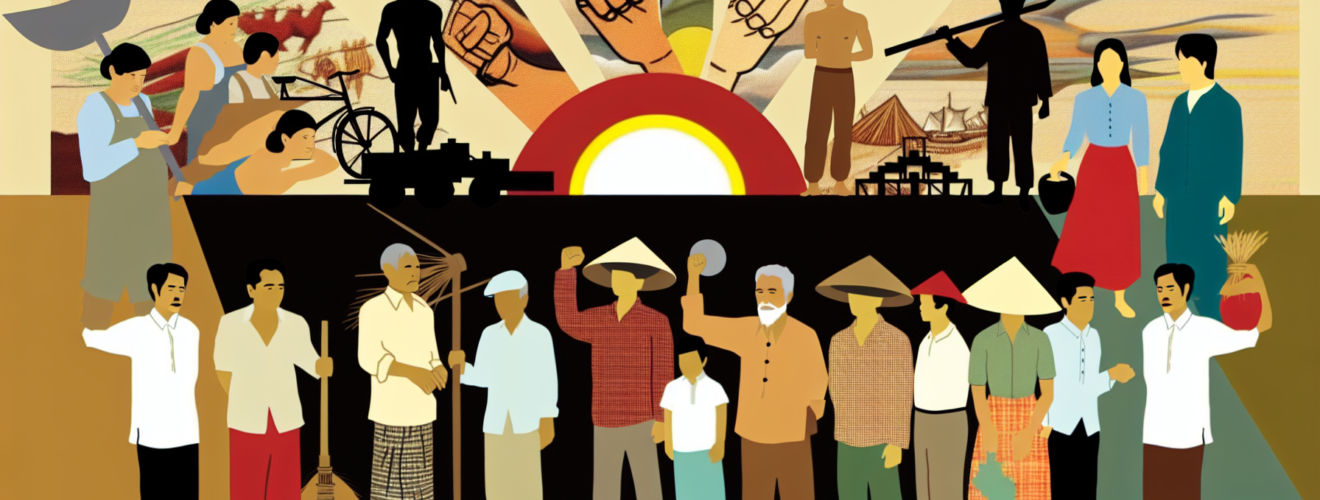
The labor movement in the Philippines is a vital part of the nation’s history. It is a story of workers who seek justice. These workers want fair wages and safe jobs. This movement has faced many challenges over time. It has survived colonial rule and heavy war. It has also fought against unfair laws and state power. Today, it remains a strong force for social change. The struggle for labor rights is also a struggle for human rights. This article will look at how this movement grew. It will trace the path from the Spanish era to the present day. Understanding this history helps us see the value of collective action. It shows why labor rights are essential for a fair society.
The Colonial Foundations and Early Organizing
Formal labor groups in the Philippines began in the late nineteenth century. During the final years of Spanish rule, workers formed groups called gremios. These were mutual aid societies based on specific trades. They were not yet full labor unions as we know them today. However, they allowed workers to help each other in times of need. These groups provided funds for members who were sick or injured. They also helped with the costs of burials for workers. These early groups laid a solid base for future organizing. They showed that workers could come together for a common goal. Even under a colonial power, people found ways to build solidarity. This period was a vital first step for the working class.
The Rise of the First Trade Unions
The transition from Spanish to American rule brought new ideas about labor. In 1902, the first real trade union was born in the Philippines. Isabelo de los Reyes founded the Union Obrera Democratica. This was a major event for the Filipino people. De los Reyes was a scholar and a bold leader. He wanted to protect the rights of the local worker against foreign firms. The group grew very fast and attracted thousands of members. They led the first general strike in the country in August 1902. This was a brave move under the new American colonial government. The UOD showed that workers had the power to stop the economy. They proved that unity could lead to change. This group paved the way for many more unions to form in the following years.
The American Era and Legal Frameworks
The American era brought a mix of support and control for labor. The colonial government passed several laws to manage the workforce. One key law was Act Number 213. This law allowed unions to exist and operate legally. However, it also gave the state the power to monitor their activities. The government wanted to keep peace in the workplace to help industry grow. During this time, the labor movement became more diverse. Workers in factories, ports, and fields started to join groups. They wanted to end the long hours of work that were common then. They also sought a minimum wage to support their families. The movement became more vocal and structured during this stage of history.
The Growth of Political Labor Groups
In the 1930s, the labor movement took a more political turn. Workers began to link their local struggles with national issues. They saw that labor rights were tied to the call for independence. Socialist and peasant groups became more active in the countryside. These groups fought against the harsh conditions of tenant farming. They wanted land reform and better pay for rural workers. In the cities, unions became more active in the halls of power. They formed parties to run for office and influence the law. This period showed that labor was not just about the factory floor. It was about the future of the entire nation and its people.
Post-War Radicalism and the Cold War
After World War II, the labor movement saw many shifts. The country was in ruins and needed to rebuild. In this context, the Congress of Labor Organizations was formed. It was a very large and strong group that united many unions. They had strong links to peasant movements and radical politics. However, the global Cold War soon changed the landscape. The government began to fear the rise of radical ideas among workers. In 1953, the Industrial Peace Act was passed by the state. This law was known as the Magna Carta of Labor. It promoted the idea of free collective bargaining. But it also moved the focus away from radical political action. Unions were encouraged to focus on legal talks rather than social protest. This change led to a more moderate period for the labor movement.
The Suppression of Labor Under Martial Law
The era of Martial Law was a dark time for the labor movement. In 1972, President Ferdinand Marcos banned almost all strikes. He claimed this was needed for national discipline and growth. Many labor leaders were arrested or disappeared during this time. The state tried to control all unions through a central body. This was the Trade Union Congress of the Philippines. It was a state-led group meant to ensure worker peace. Yet, many workers did not stay silent in the face of fear. They formed new groups to fight for their rights and for democracy. One major group was the Kilusang Mayo Uno, formed in 1980. They led many protest actions against the regime. Their bravery was a key part of the movement that eventually restored democracy in 1986.
Modern Challenges and the Changing Economy
In the years after the EDSA Revolution, labor faced new hurdles. The global economy began to change how people work. One major issue that remains today is contractualization. Many firms use short-term contracts to hire people. This practice is often called “endo” in the Philippines. It prevents workers from getting the benefits they deserve. It also makes it very hard for them to form unions. Without a permanent job, a worker has less power to negotiate. The labor movement continues to fight for a total ban on this practice. They argue that every worker deserves job security and fair pay. This struggle is a core part of modern labor advocacy in the nation.
Labor in the Digital Age
The rise of the service sector has also changed the labor scene. Many young Filipinos now work in the business process outsourcing sector. These jobs offer good pay but come with unique stresses. Workers often have to work at night to match foreign time zones. This can affect their health and social life. At the same time, the gig economy is growing fast. Many people work as delivery drivers or online freelancers. These workers often lack any legal protection or health insurance. They are not seen as regular employees under current laws. The labor movement is now working to reach these new types of workers. They want to ensure that technology does not erase the rights won in the past. This is the new frontier for labor organizing in the country.
Conclusion
The history of the Philippine labor movement is a long and proud journey. It is marked by the courage of millions of men and women. From the early gremios to the modern unions, the goal has not changed. Workers want to be treated with the dignity they deserve. They want a fair share of the wealth that they help to create. The movement has shown that change is possible when people stand together. As the economy shifts, the fight for labor rights will go on. The labor movement remains a key pillar of Philippine society. It ensures that the voice of the worker is heard in the halls of power. A strong labor movement is vital for a truly free and fair nation.
Sources
Constantino, R. (1975). The Philippines: A past revisited. Tala Publishing Services.
Kuruvilla, S. (1996). Linkages between industrialization strategies and industrial relations/human resource management policies: Singapore, Malaysia, the Philippines, and India. Industrial and Labor Relations Review, 49(4), 635-657.
Ofreneo, R. E. (1980). Capitalism in Philippine agriculture. Foundation for Nationalist Studies.
Quimpo, N. G. (2008). Contested democracy and the left in the Philippines after Marcos. Yale University Southeast Asia Studies.
Sibal, J. V. (2004). A history of the Philippine labor movement. University of the Philippines Press.