The Life and Legacy of Jose Rizal: A Global Perspective
The Life and Legacy of Jose Rizal: A Global Perspective
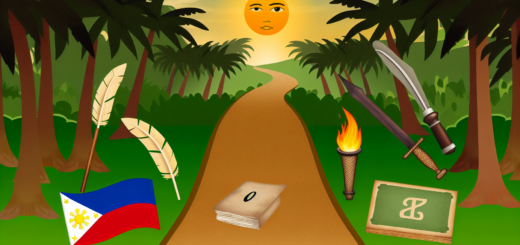
Jose Rizal stands as a central figure in the history of the Philippines. He was born on June 19, 1861, in the town of Calamba. At that time, the Spanish Empire ruled the islands. This rule had lasted for over three hundred years. Rizal was a man of many talents. He was a doctor, a writer, and a scholar. He was also a man who loved his home deeply. His life was short, but it was very full. He used his mind and his books to fight for his people. He did not want a violent war. He wanted peace, fairness, and rights for all Filipinos. His work helped a nation find its voice. This article looks at his life and his impact on the world stage.
The family of Jose Rizal was quite wealthy for the time. His parents were Francisco Mercado and Teodora Alonso. They were farmers who worked hard. They also valued education very much. Rizal was the seventh of eleven children. From a very young age, he showed a great mind. His mother was his very first teacher. She taught him how to read the alphabet. She also taught him how to pray in Spanish. When he was only eight years old, he wrote a famous poem. It was about loving the native language of the land. This was the start of his long journey. He grew up seeing the world around him. He saw how the Spanish treated the local people. These early years shaped his heart and his future goals.
Rizal went to the best schools in Manila. He studied at the Ateneo Municipal de Manila. He was a very good student and won many prizes. He then went to the University of Santo Tomas to study medicine. He chose this path because his mother was losing her sight. He wanted to learn how to heal her eyes. However, he felt that he needed to see more of the world. In 1882, he traveled to Spain without telling the Spanish leaders. He wanted to learn about European laws and culture. He believed that knowledge was the key to freedom. He lived in Madrid, Paris, and Berlin. In these cities, he met many great thinkers. He learned many languages like French and German. These travels made him a global citizen.
The Power of the Written Word
Novels and Social Change
While he was in Europe, Rizal wrote his most famous books. In 1887, he published a novel called Noli Me Tangere. The title is a Latin phrase that means “Touch Me Not.” The book told a story about life in the Philippines. It showed the bad things that some Spanish friars were doing. It also showed the suffering of the poor. Rizal did not write this book to start a fight. He wrote it to show the truth. He sent copies back home, but the Spanish leaders banned them. They were afraid of his words. Despite the ban, people read the book in secret. It gave them hope and a sense of pride. It made them realize that they deserved better lives.
A few years later, Rizal wrote a second novel. This book was called El Filibusterismo. It was published in 1891. This story was much darker than the first one. It talked about the anger of the people and the idea of a revolution. Rizal used this book to warn the Spanish leaders. He wanted them to make changes before it was too late. These two books are very important in Filipino history. They are still taught in every school in the country today. They helped the people feel like one nation. Rizal proved that the pen could be stronger than the sword. His books spoke to the hearts of millions of people who wanted change.
A Global Intellectual and Scientist
Rizal as a Polymath
Rizal was not just a writer. He was a man of science and art. He was a very skilled eye doctor. He eventually operated on his mother and saved her sight. He was also an artist who made many sketches and statues. Rizal had a great love for nature too. When he was sent away to the town of Dapitan, he spent his time doing good work. He built a school for local boys and taught them for free. He also built a water system for the town people. He studied plants and animals in the area. He even found new types of frogs and bugs. Some of these species were named after him. This shows that he was respected by scientists around the world.
From a global perspective, Rizal was ahead of his time. He was one of the first major thinkers in Asia to speak against colonial rule. He had many friends in Europe who were also scholars. One of his best friends was Ferdinand Blumentritt from Austria. They wrote many letters to each other over the years. Blumentritt thought very highly of Rizal. He saw him as a great man of the world. Rizal showed that an Asian man could be just as smart and capable as anyone else. He broke many stereotypes of that era. His ideas about human rights and liberty were for everyone, not just for one group of people. He was truly a global hero.
Martyrdom and Lasting Legacy
The Final Sacrifice
The Spanish leaders were very afraid of Rizal. They believed he was the leader of a secret group. In 1896, a real revolution broke out in the islands. Even though Rizal was not the leader, he was blamed for it. He was arrested and put on a trial that was not fair. He was sentenced to death. On the morning of December 30, 1896, he was led to a field called Bagumbayan. Today, this place is known as Rizal Park. He was shot by a firing squad. He was only thirty-five years old. Before he died, he wrote a beautiful poem called Mi Ultimo Adios. This means “My Last Farewell.” He hid the poem in a small cooking lamp. It was a letter of love to his country and his people.
The death of Jose Rizal did not stop the quest for freedom. Instead, it made the people more determined to win. He became a symbol of courage for the entire nation. Today, he is the national hero of the Philippines. There are statues of him in many cities around the world. People in other Asian countries also look up to him. He is seen as a pioneer of peace and education. He taught his people that the best way to be free is through learning. His legacy lives on in every school and every heart in his home land. He remains a bright light for anyone who seeks justice and truth. His life shows that one person can truly change the course of history.
Conclusion
The story of Jose Rizal is one of brilliance and sacrifice. He was a man who chose to use his gifts for the good of others. He traveled the world to gain knowledge. He then brought that knowledge back to help his people. His novels gave a voice to those who could not speak. His scientific work showed his love for the earth. His death gave a nation the strength to fight for its rights. Even today, his life serves as a lesson for the world. He proved that ideas are more powerful than violence. Jose Rizal will always be remembered as a global hero and a man of peace.
Anderson, B. (2005). Under three flags: Anarchism and the anti-colonial imagination. Verso.
Coates, A. (1968). Rizal: Philippine nationalist and martyr. Oxford University Press.
Guerrero, L. M. (1963). The first Filipino. National Historical Commission of the Philippines.
Quibuyen, F. C. (1999). A nation aborted: Rizal, American hegemony, and Philippine nationalism. Ateneo de Manila University Press.
Rizal, J. (1887). Noli me tangere (S. Locsin, Trans.). University of Hawaii Press.