Understanding the Economic Impact of the Galleon Trade
Understanding the Economic Impact of the Galleon Trade
The Manila Galleon trade was a very important part of global history. It began in 1565 and lasted until 1815. This trade route linked the city of Manila in the Philippines to Acapulco in Mexico. For two hundred and fifty years, these ships crossed the vast Pacific Ocean. This was the first time that Asia and the Americas had a direct and lasting trade link. The impact of this route on the world economy was huge. It moved goods and money across the globe in ways never seen before. This trade changed how nations interacted. It also set the stage for the modern world we live in today. This article will look at how this trade worked and what it did to the world.
The trade route started because Spain wanted to find a way to reach the wealth of Asia. Miguel Lopez de Legazpi and Andres de Urdaneta were the first to find the way back across the ocean. This return trip was called the tornaviaje. It was a very long and hard journey that took many months. The ships had to sail north to catch the right winds to take them to Mexico. Once this path was known, the trade grew very fast. The galleons became the most famous ships of their time. They carried gold, silk, and silver across the sea. These ships were built using strong wood from the Philippine islands. They were large and could hold many tons of goods. Each trip brought great risk but also the chance for great wealth.
The Role of New World Silver
Silver was the main driver of the galleon trade. At that time, the Spanish had found huge silver mines in Mexico and Peru. The mines at Potosi and Zacatecas produced a vast amount of this metal. In the East, the Ming Dynasty in China needed silver for its economy. China had changed its laws so that people had to pay taxes in silver. This created a very high demand for the metal in Asia. The Spanish galleons were the bridge that brought this silver to the East. Every year, millions of silver pesos were loaded onto ships in Acapulco. These ships then sailed to Manila. From Manila, the silver was traded with Chinese merchants for luxury goods. This flow of silver was the fuel for the first global economy.
This exchange had a deep impact on the global value of money. The huge amount of silver entering China helped to stabilize their trade systems for a while. However, it also led to shifts in prices around the world. Because silver was so common, its value started to change. In Europe, this led to what some call a price revolution. In Asia, the influx of silver allowed for more growth and larger markets. The silver from the Americas did more than just buy silk. it made the world more connected through a single type of currency. This was a key step in the history of international finance. It showed how events on one side of the world could change the lives of people on the other side.
Manila as a Global Trade Hub
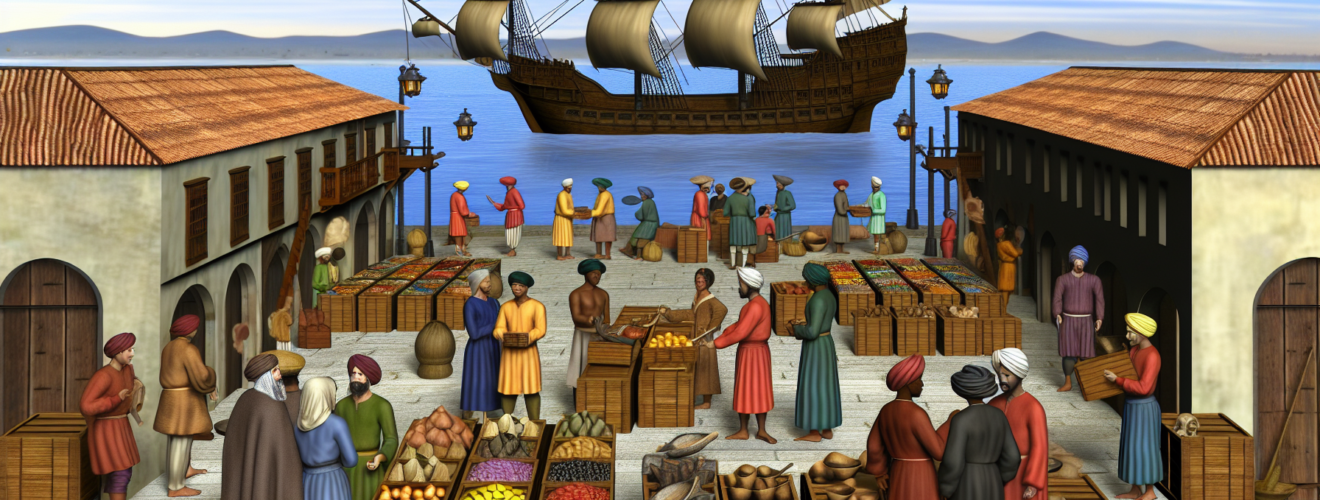
Manila became one of the most vital cities in the world due to this trade. It was the point where the East met the West. Merchants from all over Asia came to Manila to sell their goods. They brought fine silk, cotton, tea, and porcelain from China. They also brought spices from the islands of Indonesia and gems from India. These goods were then sold to the Spanish in exchange for the silver from Mexico. The city of Manila grew very fast because of this activity. It was a place where many cultures mixed. People from China, Spain, and Mexico all lived and worked in the same area. This created a very rich and diverse society in the heart of the Philippines.
The growth of the city also led to the creation of the Parian. This was a special district for Chinese traders. It was a busy place full of shops and markets. The Chinese merchants were very good at trade and became a key part of the local economy. They provided skills and goods that the Spanish needed to survive. Over time, this trade hub made Manila a center of power in Asia. However, the wealth was not shared by everyone. Most of the profit went to the Spanish crown and the wealthy merchants. While the city grew, many of the local people still lived in poverty. The focus on trade also meant that other parts of the economy were left behind. This led to a mix of great wealth and deep struggle.
Economic Stagnation and Resource Focus
While the galleon trade brought wealth, it also had some negative effects on the local economy. The Spanish leaders in the Philippines focused almost all of their energy on the trade. They wanted the quick profits that came from silk and silver. This meant that they did not invest much in local farming or industry. For many years, the fields and factories of the islands were ignored. The country had to import many of its basic needs from other places. This made the economy very weak in some areas. If a ship was lost at sea, the whole colony suffered. This total focus on the galleons prevented the growth of a more stable and diverse local market.
Local crafts and farming did not get the support they needed to grow. The best land was often used for trade goods rather than food for the people. Many skilled workers also left their traditional jobs to work in the trade industry. This caused a shift in how the society was built. The economy became a transit point rather than a place of production. This meant that when the trade ended, the country had to find new ways to survive. The long years of the galleon trade left a mark on the way the Philippines grew. It created a system where the country relied on global markets rather than its own resources. This is a challenge that many nations still face today in the world of global trade.
The Global Legacy and the End of an Era
The galleon trade finally came to an end in 1815. There were many reasons for this. First, Mexico began its fight for independence from Spain. This made it very hard to keep the trade route open. Second, other nations like England and the Netherlands were building faster ships. New trade routes were being found that did not rely on the slow galleons. Steam power also started to change how people moved across the seas. The old way of trading with just one or two ships a year was no longer enough. The world was moving faster, and the monopoly of the Spanish galleons was over. However, the legacy of this era remains very strong.
This trade route did more than move money. It moved ideas, food, and people. Many plants from the Americas were brought to Asia. These included corn, sweet potatoes, and chili peppers. These crops changed the diet of millions of people in China and the Philippines. In return, items from Asia became part of daily life in Mexico and Spain. The culture of the Philippines is still a mix of these many influences. The trade also helped to create the first true map of the world economy. It showed that all parts of the globe were linked together. Even though the ships no longer sail, the bonds they created still exist. The Manila Galleon trade was a grand chapter in the story of how we became a global world.