
The Significance of the 1899 Malolos Constitution in Asia
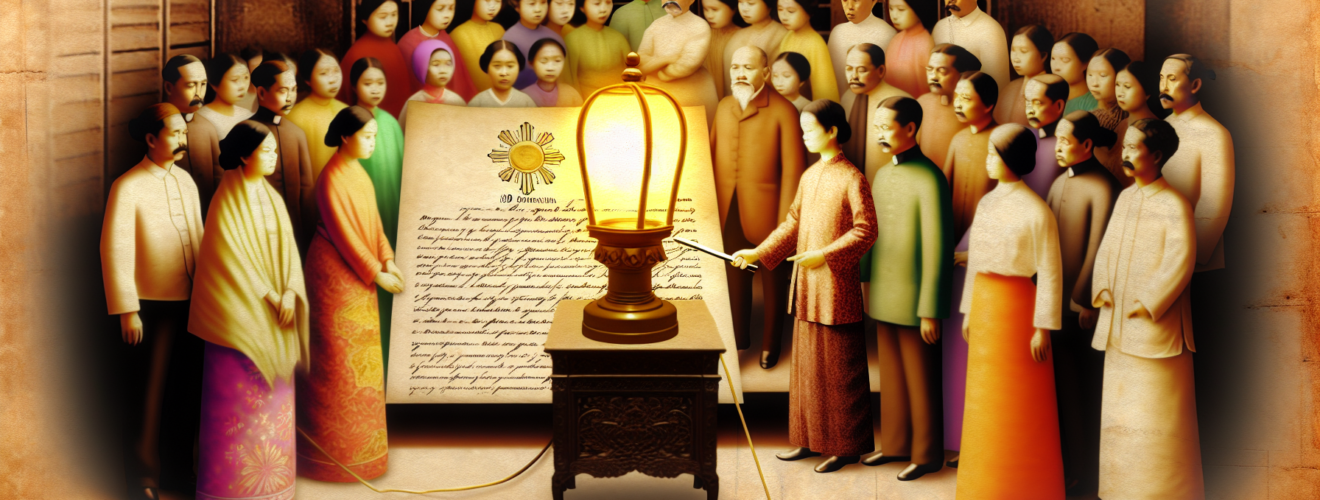
The 1899 Malolos Constitution holds a special place in Asian political history. Written during the First Philippine Republic, it offered a clear plan for a modern state. It came soon after the end of Spanish rule and during the rise of new colonial pressure from the United States. In this tense setting, Filipino leaders tried to show that their nation could govern itself. The document mattered not only for the Philippines but also for Asia, where many societies faced empire and sought self-rule.
Its importance rests on both its ideals and its timing. It set out rules for a republic, defined public power, and described the rights of citizens. It also showed that constitutional thought in Asia was not only an import from Europe. Local leaders used global ideas, yet they shaped them to fit local aims. For these reasons, the Malolos Constitution remains a key case for the study of Asian constitutional change.
Historical Context and Creation
The constitution was drafted in the town of Malolos, Bulacan, in 1898 and approved in early 1899. This period followed the Philippine Revolution against Spain. Filipino revolutionaries had formed a new government and sought wider support at home and abroad. A written constitution could help prove political maturity. It could also support claims to equal standing among nations.
At the same time, the international scene was shifting fast. Spain had lost the Spanish-American War, and the Treaty of Paris transferred the Philippines to the United States. Filipino leaders rejected this transfer, as it ignored their declaration of independence. The Malolos Constitution thus emerged as a response to both old and new empires. It was a tool for self-rule and a statement of national will.
Core Ideas and Institutional Design
The Malolos Constitution created a republican system with elected representation and defined branches of government. It recognized the need for laws that bind rulers as well as citizens. In a region where imperial systems often held unchecked power, this was a bold move. It linked authority to the people and to legal process, not to a monarch or a foreign state.
Popular Sovereignty and Representation
A central idea was that sovereignty rests in the people. The document used representative institutions to express that principle. This point matters in Asia’s wider story because it offered an early example of a self-declared Asian republic with a written constitutional order. Even where later states took different paths, the Malolos model showed that popular rule could be argued in formal legal terms.
Checks, Accountability, and the Rule of Law
The constitution aimed to limit abuses by setting roles and duties for public officials. It treated law as a guide for state action, not as a mere tool of those in power. This stress on accountability is a key feature of constitutionalism in any region. In Asia, where colonial governments often ruled by decree, a local charter that insisted on legal limits carried strong meaning.
Civil Rights and Civic Status
The Malolos Constitution included protections tied to civil liberty and civic participation. These provisions were not perfect, and real practice was shaped by war and crisis. Still, the effort to define rights in written form helped set a standard for later debates. It encouraged the view that citizens are not only subjects, but holders of claims against the state.
Regional Significance in Asia
In the late nineteenth and early twentieth centuries, many Asian societies faced political pressure from empires and unequal treaties. Legal reform, constitutional drafts, and new parliaments appeared in parts of Asia as leaders sought strength and unity. The Malolos Constitution belongs to this larger regional pattern, yet it stands out because it was tied to a declared republic born of revolution.
Its regional weight also lies in symbolism. It showed that an Asian anti-colonial movement could produce a detailed constitutional text, not only a military or protest program. This mattered for international legitimacy. It also mattered for learning across borders, as reformers often watched events in other colonies and new states. Even when direct influence is hard to trace, the Malolos example widened the set of Asian political possibilities.
Limits, Crisis, and Historical Impact
The First Philippine Republic faced war soon after the constitution took effect. Armed conflict with the United States limited stable governance and reduced the chance to build strong institutions. Many constitutional promises could not be fully tested in normal times. This gap between text and practice is common in new states under siege, and it shapes how scholars assess the document.
Yet short life does not mean small value. The constitution helped fix a national memory of lawful self-rule. It later served as a reference point for Philippine constitutional thought and for debates on independence, citizenship, and the limits of public power. In Asian studies, it provides a case of early constitutional drafting within an anti-colonial project, rather than under imperial sponsorship.
Conclusion
The 1899 Malolos Constitution was significant in Asia because it joined national liberation with a formal constitutional order. It asserted popular sovereignty, outlined public institutions, and named civil rights at a time when many Asian peoples lived under foreign rule. Although war kept the First Philippine Republic from lasting long, the document still marked an important moment in the region’s legal and political history. It remains a strong reminder that Asian constitutionalism has deep roots and was shaped by local agency as well as global ideas.