The Role of the Church in Spanish Colonial Philippines
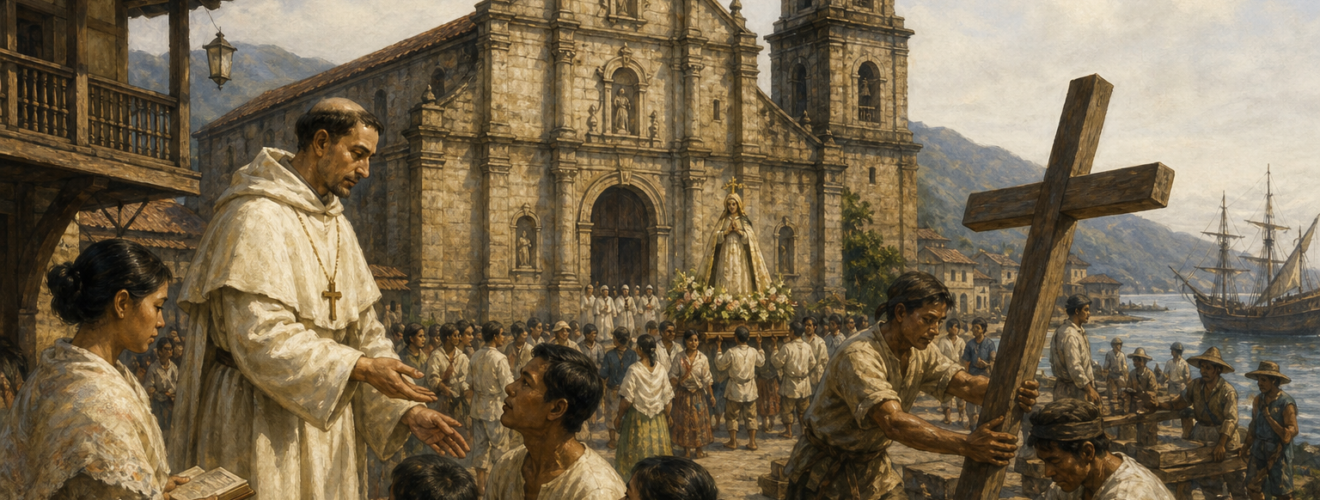
The Spanish colonial era in the Philippines lasted for more than three centuries. During this long period, the Catholic Church was the most vital force in the islands. It was not just a religious group. It was a primary part of the government. The cross and the sword worked together to build a new society. This partnership changed the lives of the people in many deep ways. To understand the history of the Philippines, one must look at the role of the friars and the Church. They shaped the law, the culture, and the very land itself. This article looks at how the Church held such a huge amount of power. It also explores how this power lead to the birth of a new nation.
The Union of Church and State
The Spanish rule in the Philippines was unique because of the Patronato Real. This was a legal agreement between the Pope and the King of Spain. The King had the right to appoint bishops and priests to the colonies. In return, the King paid for the missions and the spread of the faith. This link meant that the Church was a branch of the colonial state. Priests were not just spiritual guides. They were also state officials. This union gave the Church a level of power that was hard to match. It ensured that the goals of the King and the goals of the Church were the same. This system made the Church the most stable part of the Spanish reign.
The friars were often the only Spaniards in the local towns. While the civil officials moved from place to place, the priests stayed for decades. They learned the local languages and knew the people well. This gave them more influence than the governors in Manila. They acted as the eyes and ears of the crown. Because they spoke the native tongue, they could bridge the gap between the rulers and the ruled. They were the most effective agents of the empire. Without the friars, the Spanish crown could not have kept control over such a large area for so long.
The Policy of Reduccion
One of the first major tasks of the Church was the policy of Reduccion. This policy aimed to move the native people into central towns. Before the Spanish arrived, the people lived in small, scattered groups. The friars wanted them to live “bajo de las campanas” or under the bells. This made it easier to teach them the faith. It also made it easier for the state to collect taxes. These central towns were designed with a plaza in the middle. The church building and the town hall faced each other across this space. This layout showed the dual power of the faith and the state. It turned the wild landscape into a structured colonial world.
Moving people into towns changed the social structure of the islands. The friars became the center of community life. They oversaw the birth, marriage, and death of every citizen. They used these new towns to build a loyal Catholic population. This process was not always easy. Many people resisted leaving their old lands. However, the Church used both social pressure and spiritual promises to make the plan work. Over time, these towns became the heart of Filipino life. The local culture began to mix with Spanish traditions within these town centers.
Friarocracy and Civil Governance
By the 19th century, the power of the friars had grown so much that it was called Friarocracy. This term means the rule of the friars. In almost every town, the priest was the most powerful man. He did more than just lead the Mass. He was the local school inspector. He was the health officer. He was also the tax collector. He kept the list of residents and chose who could vote in local elections. If a person wanted to get a permit or a job, they often needed the priest to sign off. This gave the friars a total grip on the local life. No law could be truly followed without their support.
This power often led to tension between the Church and the civil officials. The friars often ignored the orders of the Governor-General if they did not like them. Because they were so vital to the colony, they could not be easily removed. They used their pulpits to influence the views of the people. They could label a person as a rebel or a heretic if they disagreed with them. This control was a double-edged sword. It kept the colony stable for centuries. However, it also led to a lot of abuse and anger. The people began to feel that the friars were the true masters of their lives.
Education and Cultural Impact
The Church was the leader in education in the Philippines. They built the first schools and universities. The University of Santo Tomas was founded in 1611. It is one of the oldest in the world. The friars taught the children how to read and write. They also taught them the Spanish language and the Catholic faith. For a long time, the Church controlled what books could be read. They wanted to make sure that no dangerous ideas entered the colony. This control over the mind was a key part of their power. It shaped the intellectual life of the nation for many years.
Despite this control, education also gave the people new tools. The Church helped preserve local languages by writing dictionaries and grammar books. They did this to help with preaching. But in doing so, they also saved the native scripts and stories from being lost. They introduced new crops and farming tools from Europe and Mexico. They built hospitals and orphanages to care for the poor. The Church was the primary source of social services in the colony. These acts of service earned them the deep respect of many Filipinos. This legacy of faith and service remains a part of the Filipino identity today.
The Land and the Economy
The economic role of the Church was very large. Over time, the religious orders became the biggest landowners in the country. These lands were known as the friar estates or haciendas. They were given to the Church by the crown or by rich donors. The friars used the income from these lands to fund their schools and missions. However, this also made them very wealthy and powerful. They rented the land out to local farmers. These farmers often felt that the rents were too high. This economic link created a lot of social friction.
By the late 1800s, land disputes were a major cause of unrest. Many Filipinos felt that the Church was taking advantage of them. The friars were seen as landlords rather than holy men. This shifted the view of the Church in the eyes of many. The wealth of the religious orders became a symbol of colonial greed. This issue was a key spark for the later revolution. People wanted their land back. They saw the friars as the main barrier to their freedom and growth.
The Secularization Movement and Nationalism
As time went on, a new group of priests emerged. These were the secular priests, many of whom were native Filipinos. Unlike the friars, who belonged to orders like the Jesuits or Dominicans, these priests did not have the same power. The Spanish friars wanted to keep control of the parishes. They did not want the native priests to take over. This led to the Secularization Movement. Native priests like Father Jose Burgos fought for the right to lead their own churches. They wanted equality within the Church hierarchy. This struggle soon turned into a political one.
The execution of Fathers Gomez, Burgos, and Zamora in 1872 was a turning point. These three priests were seen as martyrs for the Filipino cause. Their deaths woke up the spirit of nationalism. Young Filipinos, like Jose Rizal, saw the injustice in how the Church and state worked together. The demand for religious reform became a demand for national freedom. The very Church that helped build the colony now faced a challenge from within. The fight for the rights of native priests helped unite the people. It was the beginning of the end for Spanish rule.
Conclusion
The role of the Church in the Spanish colonial Philippines was deep and complex. It was a force for order, education, and social care. It brought a new faith that millions of people embraced. Yet, it was also a force of control and high-handed rule. The union of church and state gave the friars a level of power that eventually led to a backlash. The Church shaped the Filipino nation in ways that are still visible. From the layout of the towns to the names of the people, the Spanish legacy is strong. Understanding this role is key to knowing the history of the Philippines. It is a story of faith, power, and the search for identity.
Sources
Agoncillo, T. A. (1990). History of the Filipino People (8th ed.). Garotech Publishing.
Constantino, R. (1975). The Philippines: A Past Revisited. Tala Publishing Services.
Phelan, J. L. (1959). The Hispanization of the Philippines: Spanish Aims and Filipino Responses, 1565–1700. University of Wisconsin Press.
Schumacher, J. N. (1981). The Revolutionary Clergy: The Role of the Native Clergy in the History of Resistance to Spanish Rule in the Philippines. Ateneo de Manila University Press.