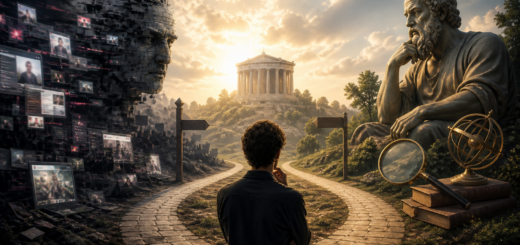
Seeing the Big Picture: How Philosophical Thinking Expands Life Perspectives

Philosophy is often seen as a field for experts in quiet rooms. Many people think it has little to do with real life. This is a common mistake. In truth, philosophy is a vital tool for the modern world. It offers a way to step back from the rush of daily tasks. It allows us to see the big picture. This perspective is not just about abstract ideas. it is about how we live, work, and interact with others. By using philosophical thinking, we can expand our view of what is possible. We can move from a narrow focus to a broad understanding of the world. This article will explore how deep thought changes our lives. It will show how logic and ethics provide a clearer path forward.
The value of a broad view cannot be overstated. In our current era, we are often buried in data. We get news and alerts every minute. This makes it hard to see the whole path. We see the trees but lose the forest. Philosophical thinking helps us zoom out. It asks us to look at the foundations of our thoughts. It teaches us to question why we believe what we do. This process creates a mental space. In that space, we can grow and find new meaning. It turns a busy life into a purposeful one.
The Role of Critical Inquiry
The first step in expanding our view is critical inquiry. This is the practice of asking deep questions. Most people take their ideas from their surroundings. They follow the crowd without a second thought. Philosophy breaks this habit. It asks us to define our terms. When we speak of success, what do we really mean? Is it money, or is it a sense of peace? By defining our goals, we gain control. We no longer chase what others want. We chase what we have chosen for ourselves.
Logic is a key part of this inquiry. It provides a set of rules for clear thought. When we use logic, we can spot errors in our own thinking. We can see when our fears are driving us instead of facts. This leads to a calm mind. A calm mind can see much further than a stressed one. It can weigh options without bias. This is a professional skill as much as a personal one. In the workplace, clear thinkers lead the way. They do not panic when things go wrong. Instead, they look at the logic of the situation. They find the best path based on evidence and reason.
Breaking Mental Boundaries
We all have mental boundaries. These are the limits of what we think we can do. Philosophy helps to push these walls back. It shows us that many of our limits are just ideas. For example, the fear of failure is often based on a narrow view. If we see life as a series of lessons, failure is no longer a wall. It is just a part of the process. This shift in view is a core part of philosophical growth. It allows for more risk and more reward. It turns the unknown from a threat into an opportunity. By breaking these boundaries, we find a larger world to explore.
Ethics and the Global Perspective
Another way philosophy expands our view is through ethics. Ethics is the study of right and wrong. It is not just about following rules. It is about understanding our impact on the world. When we think about ethics, we stop seeing ourselves as lone actors. We see that we are part of a large web of people. Our choices affect others in ways we may not see at first. A big-picture view includes the well-being of the whole community. This leads to better decisions in business and in life.
Professional ethics often focus on the long term. A narrow view might seek a quick profit today. A broad view looks at the health of the company over ten years. It looks at the trust of the customers. It looks at the health of the planet. Philosophy teaches us that short-term gains are often hollow. True value comes from actions that hold up over time. This long-term view reduces stress. It makes our work feel more stable. We are building something that lasts. This gives us a sense of pride and a clear direction.
Empathy and Understanding
Philosophy also builds empathy. By studying different schools of thought, we learn to see through other eyes. We realize that there are many ways to live a good life. This reduces judgment and increases curiosity. In a global world, this is a vital skill. It allows us to work with people from all walks of life. We can find common ground where others find conflict. This broad social view makes us better citizens. It makes us more effective leaders. We learn that our way is not the only way. This humility is the mark of a truly expanded mind.
Finding Resilience Through Existential Thought
Life is full of challenges and changes. Philosophical thinking provides a shield against the storms of life. This is often seen in the study of Stoicism. The Stoics taught that we cannot control what happens to us. We can only control how we respond. This is a powerful shift in perspective. It takes the power away from outside events. It places the power back in our own hands. When we focus on our response, we become resilient. We no longer feel like victims of fate.
This resilience comes from seeing the big picture of time. Our current problems often feel huge. But when we look at the span of a human life, they seem smaller. When we look at the span of history, they seem smaller still. This does not mean our problems do not matter. It means we have the strength to face them. We see that others have faced hard times and won. We see that change is the only constant. This helps us stay steady when things shift. It allows us to keep our eyes on the goal, even in a storm.
The Power of Purpose
Finally, philosophy helps us find a clear purpose. Without a big-picture view, life can feel like a list of chores. We wake up, work, and sleep. Philosophy asks us to find the “why” behind the “what.” When we have a strong why, we can endure any how. This sense of purpose links our small acts to a grand design. It turns a job into a career. It turns a house into a home. A purposeful life is a full life. It is a life that has been expanded by the power of thought.
Conclusion
Expanding our life perspective is not a one-time act. It is a daily practice of thinking and reflecting. Philosophy provides the tools for this journey. It gives us logic to clear our minds. It gives us ethics to guide our steps. It gives us resilience to face our fears. By looking at the big picture, we find more joy in the small things. We see the beauty in the complex world around us. This professional and academic approach to life is open to everyone. It requires only a curious mind and a bit of time. The rewards are a life of depth, clarity, and lasting peace.
Sources
Hadot, P. (1995). Philosophy as a Way of Life: Spiritual Exercises from Socrates to Foucault. Blackwell Publishing.
Nussbaum, M. C. (1997). Cultivating Humanity: A Classical Defense of Reform in Liberal Education. Harvard University Press.
Russell, B. (1912). The Problems of Philosophy. Williams and Norgate.
Seneca, L. A. (2004). On the Shortness of Life. Penguin Books.