The Industrial Revolution: How Technology Changed Human Labor
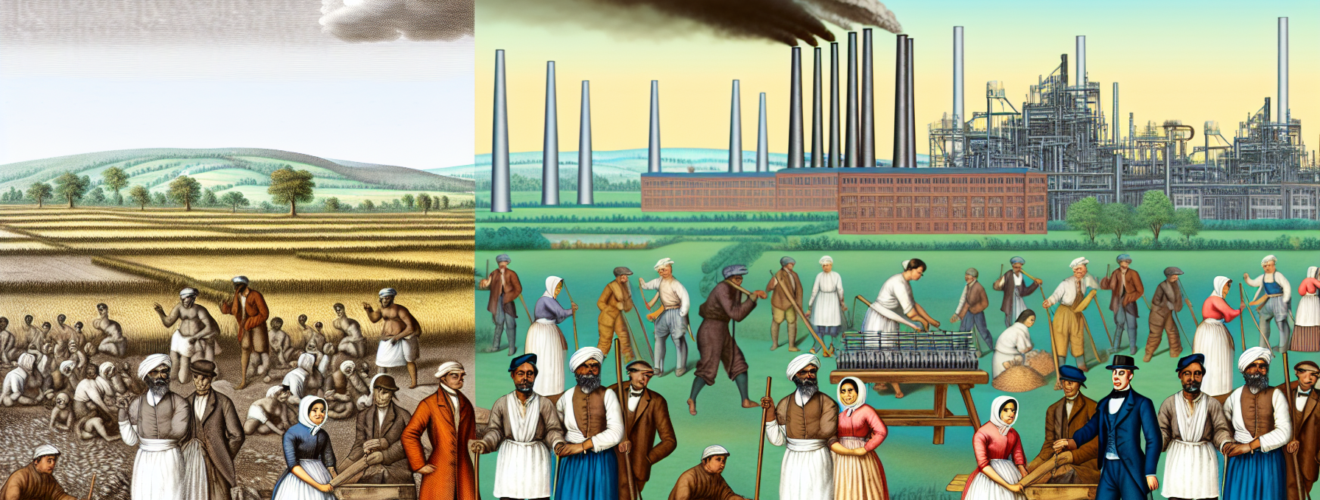
The Industrial Revolution changed how people worked, lived, and earned a wage. It began in Britain in the late eighteenth century and spread across Europe and North America. New machines, new power sources, and new ways to organize work raised output on a large scale. At the same time, they shifted labor away from homes and small shops toward factories. This article explains how technology reshaped human labor, both by replacing tasks and by creating new kinds of work.
Before this era, many workers made goods by hand. Spinning, weaving, metalwork, and food processing often took place in cottages or small workshops. Skill mattered, and the pace of work could follow seasons and local demand. The Industrial Revolution did not end skill, but it changed where skill was used. It also changed who controlled tools, time, and wages.
From Hand Production to Mechanized Work
Mechanization altered labor by moving key tasks from human hands to machines. In textiles, devices such as the spinning jenny, the water frame, and the power loom increased the speed of yarn and cloth production. One machine could do what many spinners or weavers had done before. This raised output and lowered unit costs, but it also reduced the bargaining power of some craft workers.
Mechanization did not remove labor from production. Instead, it changed the type of labor needed. Workers were required to feed, watch, and maintain machines. The job often shifted from making a whole product to managing a single step in a process. This division of labor could make training faster, yet it could also make work more repetitive.
New Energy Sources and the Factory System
Technology changed work further when factories adopted new sources of power. Waterwheels had limits, since they depended on rivers and seasons. Steam engines, improved by innovators such as James Watt, allowed factories to operate in many locations and at larger scales. Steam power also supported mining, iron production, and transport, which made industrial growth more stable.
The factory system reorganized labor. Instead of working near home, many people traveled to mills and workshops owned by industrialists. Time became more strict. Clocks, shifts, and supervisors shaped the rhythm of the day. Wages were often paid on a daily or weekly basis, which tied survival to regular employment. For many households, this became a new form of dependence on the labor market.
Changes in Skills, Wages, and Job Roles
Industrial technology affected skills in uneven ways. Some older crafts declined, especially where machines could match or beat skilled handwork. At the same time, industry created demand for mechanics, toolmakers, engineers, and machine builders. Even within factories, skilled workers were needed to set up complex equipment and repair breakdowns. This led to a labor force with sharper divisions between higher paid skilled roles and lower paid routine roles.
Wage patterns also shifted. In some sectors, real wages rose over the long run as productivity increased. Yet many workers faced short periods of job loss when machines spread or when markets fell. Moreover, wages differed by gender and age. Employers often hired women and children for lower pay in tasks that required attention more than strength. This expanded household income in some cases, but it also raised serious concerns about exploitation and education.
Technology also produced new job roles outside the factory floor. Growing cities needed clerks, warehouse staff, transport workers, and service labor. Railways, canals, and ports required planners, ticket sellers, signal operators, and maintenance crews. In this way, industrialization broadened the labor market, even as it narrowed some traditional paths.
Urban Life, Labor Conditions, and Social Response
The movement of workers into industrial towns changed daily life. Cities grew quickly, often faster than housing and sanitation systems could manage. Crowded living conditions and poor water supplies increased disease. Factory work itself could be dangerous. Early machines had few guards, and long hours increased fatigue. Noise, dust, and heat added to health risks, especially in textiles and mining.
These pressures helped shape social and political responses. Workers formed mutual aid groups and, later, trade unions. Reformers pushed for limits on child labor, safer workplaces, and shorter hours. Governments began to collect data on health and employment and to pass early labor laws. While enforcement was uneven, these steps signaled that industrial labor had become a topic of public policy, not only private contract.
Long-Term Effects on Human Labor
In the long term, the Industrial Revolution set patterns that still influence work today. It showed how new technology can raise productivity while displacing certain tasks. It also showed that labor markets adapt by creating new roles, often in areas that support machines, manage systems, or deliver services. Over time, economies tended to move from agriculture toward industry and then toward services, with each shift changing the skills most valued.
The Industrial Revolution also changed ideas about time, discipline, and efficiency. Standard hours, wage contracts, and performance rules became common. At the same time, debates about fairness, safety, and worker rights grew stronger. In this sense, technology did not only change tools. It reshaped human labor as a social institution, linking innovation to new forms of work, conflict, and reform.