
The EDSA People Power Revolution: A Triumph of Non-Violence
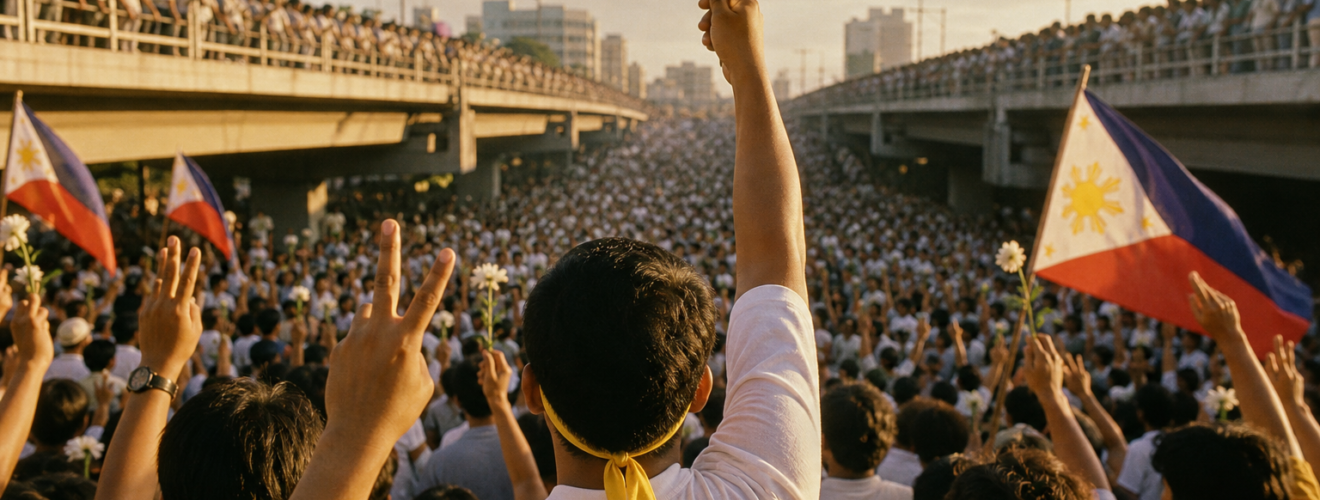
The 1986 EDSA People Power Revolution stands as a bright moment in the history of the Philippines. It was a four-day event that changed the fate of a nation. This movement took place on a long road in Manila. That road is called Epifanio de los Santos Avenue, or EDSA. Millions of Filipinos went there to seek change. They wanted to end the long rule of President Ferdinand Marcos. The world saw a peaceful shift in power. It was a triumph of the human spirit over force. This event showed the power of the people. It remains a key point in the study of modern democracy. It taught the world about the strength of non-violent protest.
The Historical Context of the Revolution
To understand the revolution, one must look at the years before 1986. Ferdinand Marcos became president in 1965. In 1972, he placed the country under martial law. He said this was to stop the spread of communism. However, this move gave him total control. He stayed in power for twenty years. During this time, many people felt the loss of their basic rights. The media was controlled by the state. Political rivals were often put in jail. The economy of the country began to fail as well. Debt grew high and many people became poor.
The Growth of Dissent
Opposition to the rule of Marcos grew slowly at first. It became much stronger in 1983. In August of that year, Senator Benigno “Ninoy” Aquino Jr. returned to the Philippines. He was the most famous critic of the government. He was shot and killed at the airport as soon as he landed. This event shocked the whole nation. Millions of people went to his funeral. It was a clear sign that the people were no longer afraid. They began to march in the streets of Manila. The death of Ninoy Aquino served as a catalyst for unity among the citizens.
The Snap Election of 1986
In late 1985, Marcos called for a snap election. He wanted to prove that he still had the support of the people. The widow of Ninoy Aquino, Corazon “Cory” Aquino, ran against him. She became the face of the opposition. The campaign was very intense. People used the color yellow to show their support for her. The election took place on February 7, 1986. It was marked by many reports of fraud. Many people saw that votes were being stolen. The official body said Marcos won. However, an independent group said Cory Aquino was the true winner. This led to a huge public outcry.
The Defection and the Call to EDSA
On February 22, 1986, two key leaders left the government. They were Juan Ponce Enrile and Fidel V. Ramos. Enrile was the Minister of Defense. Ramos was a top general in the police. They went to a military camp on EDSA. They said they could no longer support Marcos. They called for him to step down. This was a very risky move. They were trapped in the camp with few soldiers. Cardinal Jaime Sin, the head of the Catholic Church, spoke on the radio. He asked the people to go to EDSA to protect the leaders. He asked them to show their support through prayer and presence.
The Four Days of Peace
The response to the call was amazing. Within hours, thousands of people filled the highway. By the next day, there were millions. They formed a human wall around the military camps. This was a diverse group of people. There were nuns, priests, students, and workers. They did not carry guns or sticks. Instead, they carried rosaries and flowers. They shared food and water with each other. They even offered food to the soldiers who were sent to stop them. This created a very calm and peaceful atmosphere despite the tension.
The Confrontation with Tanks
Marcos sent tanks and armored cars to break up the crowd. The world watched as the tanks moved toward the people. Many feared there would be a bloodbath. However, the people did not run away. They knelt in front of the heavy tanks. They prayed and sang songs of peace. Some children put flowers into the barrels of the guns. The soldiers were moved by this sight. They refused to fire on their own people. This was the moment the revolution was won. The military power of the state could not break the will of a peaceful crowd. It was a clear victory for non-violence.
The Flight of the Dictator
By February 25, it was clear that Marcos had lost control. Most of the military had joined the people. Two different inaugurations were held that day. Corazon Aquino was sworn in as the president in a simple club. Marcos held his own event at the palace. But his support was gone. Later that night, Marcos and his family left the palace. They were flown to Hawaii by the United States government. When the news broke, the people celebrated. The streets of Manila were filled with joy. The twenty-year rule had ended without a war.
The Global Legacy of People Power
The EDSA Revolution had a big impact on the world. It showed that a peaceful protest could topple a strong leader. It inspired other movements across the globe. Some historians say it helped lead to the fall of the Berlin Wall in 1989. It also set an example for the Arab Spring many years later. The world saw that peace was more powerful than force. It became a model for how to restore democracy. The Philippines became a symbol of hope for many nations. The term “People Power” became known in every language.
Conclusion
The 1986 EDSA Revolution was more than just a change in leaders. It was a rebirth of democracy in the Philippines. It proved that the voice of the people is the highest power. The triumph of non-violence kept the nation from a civil war. It preserved the lives of many citizens. Today, the event is remembered every year. It serves as a reminder to stay vigilant in protecting freedom. The spirit of EDSA lives on in the hearts of those who believe in peace. It remains a proud chapter in the story of the human race. The revolution showed that flowers and prayers can change the world.
Sources
Agoncillo, T. A. (1990). History of the Filipino People (8th ed.). Garotech Publishing.
Komisar, L. (1987). Corazon Aquino: The Story of a Revolution. George Braziller.
Schirmer, D. B., & Shalom, S. R. (1987). The Philippines Reader: A History of Colonialism, Neocolonialism, Dictatorship, and Resistance. South End Press.
Steinberg, D. J. (2000). The Philippines: A Singular and a Plural Place. Westview Press.