Gross Domestic Product (GDP) Explained

Gross Domestic Product (GDP) is one of the best known numbers in economics. It is used by governments, central banks, investors, and the media. When GDP rises, the story often sounds simple: the economy is doing well. When GDP falls, the story can sound just as simple: the economy is in trouble. Yet GDP is not a full report on a country’s success. It is a useful tool, but it also has clear limits.
GDP matters because it sums up how much an economy produces in a given time. It helps track growth, compare countries, and guide policy choices. Still, the idea of “success” can include health, security, fairness, and the natural world. These do not always move with GDP. To judge progress with care, it helps to know what GDP measures and what it misses.
What GDP Measures
GDP is the total market value of final goods and services produced within a country’s borders during a period, often a quarter or a year. “Final” matters because it avoids double counting. For example, the value of flour is not counted again when it becomes bread. GDP is usually reported in money terms, such as dollars or euros.
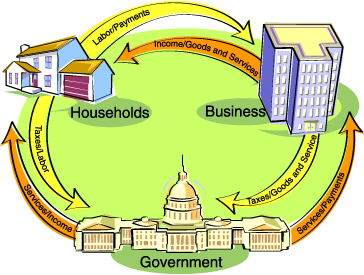
Economists often describe GDP using three equivalent approaches. The production approach adds value created by each industry. The expenditure approach adds spending by households, firms, government, and foreign buyers, minus imports. The income approach adds wages, profits, and taxes minus subsidies. In practice, data limits mean the three are reconciled with statistical adjustments, but the goal is a consistent total.
Why GDP Became So Important
GDP gained influence in the twentieth century, especially after the Great Depression and during World War II. Leaders needed a clear way to measure output, plan budgets, and manage scarce resources. Over time, GDP became a common language for economic performance. It is now central to debates about growth, jobs, inflation, and public debt.
GDP is also appealing because it is broad and regular. It can be updated often, broken down by sector, and compared across time. When used with care, it can signal changes in demand, productivity, and business cycles. In this sense, it is a strong measure of economic activity.
Strengths of GDP as a Measure of Success
GDP captures the scale of an economy. A larger GDP can support more public services, from schools to hospitals. It can also reflect higher production capacity, better infrastructure, and a stronger tax base. For many policy tasks, these are practical indicators of what a country can afford.
GDP growth is often linked with rising employment and incomes. When firms sell more, they tend to hire more. When households earn more, they can consume more and save more. Over long periods, countries with sustained growth have often reduced poverty and improved living standards, even if the gains were not shared equally.
Limits: What GDP Does Not Capture
GDP does not measure how income is shared. An economy can grow while many people see little change in pay or security. If gains go mainly to a small group, average output can rise while typical life conditions do not. For this reason, GDP per person and inequality measures are needed to add context.
GDP also misses non market work. Care for children, support for older relatives, and unpaid community work can be vital to well being, yet they are not priced and so are largely excluded. If a parent stays home, GDP may not change. If the same care is bought as a service, GDP rises, even if the care is similar.
Environmental costs are another gap. GDP counts production even when it degrades air, water, or climate. A factory that pollutes can raise GDP, while the harm appears later as health costs or lost ecosystems. Spending to clean up a spill may also raise GDP, even though the spill lowered welfare. In this way, GDP can treat repair as progress.
Finally, GDP is not a direct measure of quality of life. It does not record life expectancy, mental health, safety, trust, or free time. A country can have high GDP with long work hours, high stress, and weak social ties. It can also have modest GDP with strong health and social outcomes, depending on institutions and choices.
Better Ways to Use GDP
GDP is most useful when it is part of a wider dashboard. GDP per capita can improve comparisons, and median income can reflect typical living standards. Measures of inequality, such as the Gini coefficient, can show who benefits from growth. Labor indicators, like participation rates and underemployment, can capture job quality more fully than the headline unemployment rate.
To address well being, many analysts pair GDP with health and education data, such as life expectancy and years of schooling. Broader composite indexes, like the Human Development Index, also help. For environmental limits, “green” accounting methods and carbon measures can track whether growth is compatible with long run stability. Time use surveys can add the value of unpaid work and leisure.
Conclusion: Is GDP a Good Measure of Success?
GDP is a strong measure of economic production and a useful signal for policy and planning. It can show whether an economy is expanding or shrinking, and it often relates to jobs and fiscal capacity. In that role, GDP remains essential.
Yet success is more than output. A complete view must ask how growth is shared, whether it supports health and dignity, and whether it protects the natural systems that future output depends on. GDP can inform these questions, but it cannot answer them on its own. The most credible approach is to treat GDP as one key metric, supported by clear social and environmental indicators.