
More Than Flesh and Bone: Understanding Human Embodiment
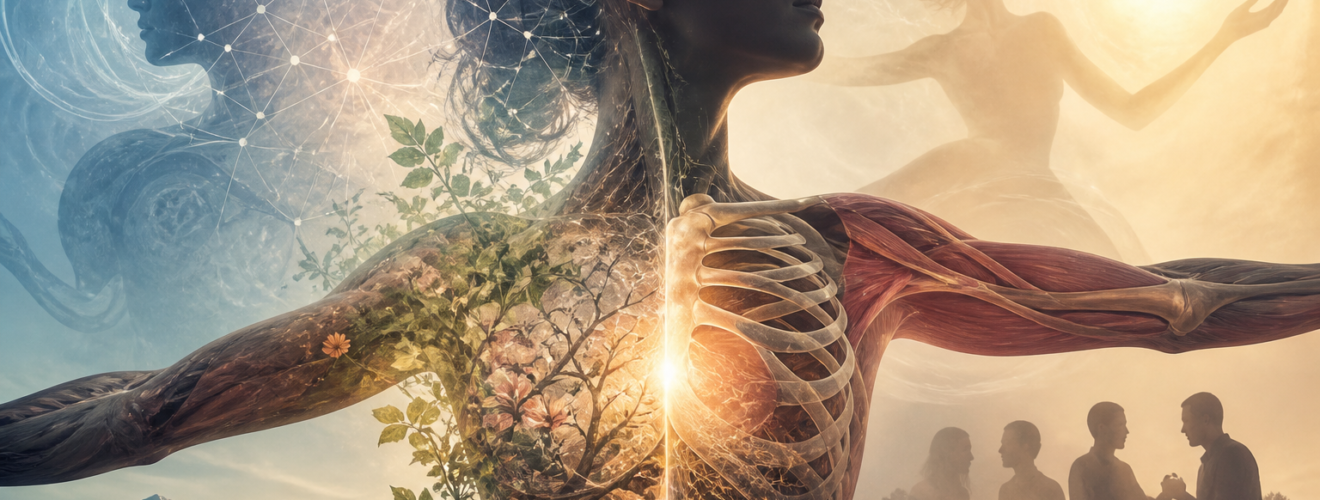
Human life starts and ends with the physical form. We often think of ourselves as minds that own a body. However, modern thought shows a different view. We do not just have a body. We are a body. This concept is called human embodiment. It looks at how our physical selves shape who we are. It explores how we think, feel, and act in the world. This article will look at why the body is so important to the human experience. We will see how it is more than just flesh and bone.
The Legacy of Mind and Body
For many years, Western thought followed the ideas of Rene Descartes. He believed the mind and the body were separate things. This is called dualism. In this view, the mind is the seat of reason. The body is just a machine that carries the mind around. This idea shaped how we viewed science and health for a long time. It suggested that we could understand the brain without looking at the rest of the person. But this view has many flaws. It ignores how much our physical state changes our thoughts. If you are hungry, your mind works differently. If you are in pain, your focus shifts. The two are clearly linked.
Moving Past the Machine
Today, experts move away from this split view. They see the person as a whole. This change helps us understand human nature better. We see that the body is not just a tool. It is the very ground of our being. Without the body, there is no “self” to speak of. We learn about the world through our skin, eyes, and ears. These are not just sensors. They are part of how we make sense of everything around us. This shift in thinking is vital for modern science and philosophy.
The Lived Body and Experience
A famous thinker named Maurice Merleau-Ponty changed how we see the body. He spoke about the “lived body.” This is not the body as an object. It is the body as we feel it from the inside. When you reach for a cup, you do not think about your arm as a crane. You just reach. Your body knows how to move in space without a map. This is called bodily self-awareness. It happens before we even think about it. Our body is our point of view on the world. It is the center of our reality.
The Body as a Source of Knowledge
Our bodies also hold a type of knowledge. Think about riding a bike. You do not remember the steps in your head. Your muscles and nerves remember the balance. This is known as tacit knowledge. It is a form of wisdom that lives in our limbs. It shows that the body has its own way of learning. We interact with the world through these skills. This physical knowledge is just as important as the things we read in books. It allows us to navigate life with ease and grace.
Embodied Cognition and the Mind
In recent years, cognitive science has embraced embodiment. This field studies how the mind works. It used to look at the brain like a computer. Now, it sees the brain as part of a larger system. This system includes the body and the environment. This is called embodied cognition. It suggests that our physical shape affects how we think. For example, we use metaphors based on the body. We say a person is “warm” if they are nice. Research shows that holding a hot drink can actually make us feel more trust. Our thoughts are rooted in our physical senses.
The Role of Action in Thought
Thinking is also tied to action. We do not just sit and process data. we move to solve problems. A child might use their fingers to count. An adult might pace while they think. These actions are not extra. They are part of the thinking process itself. By moving, we help our brains work. This shows that the mind is not trapped in the skull. It extends out into the body. This helps us understand why sitting still for too long can make it hard to focus. Our minds need our bodies to stay sharp and active.
The Social and Cultural Body
Embodiment is not just about biology. It is also about society. Our bodies are seen and judged by others. We are born into bodies that have a race, a gender, and a size. These traits change how the world treats us. Therefore, our sense of self is built on how others see our physical form. A person’s history is written on their skin. We carry the habits and gestures of our culture in our walk. We learn how to sit and stand based on social rules. This makes the body a site of cultural meaning.
The Body in the Digital Age
Now, we spend a lot of time online. This brings new questions about embodiment. Are we still embodied when we use an avatar? Some say we are losing touch with our physical selves. Others say our sense of body is just expanding. We can feel “present” in a video call even if we are far away. However, the physical body still matters. We still need sleep, food, and touch. No matter how much technology we use, we cannot leave our flesh behind. Our digital lives must find a way to fit our physical needs.
Conclusion: Embracing Our Physicality
In conclusion, being human means being a body. We are more than just thoughts in a head. We are a living, breathing, and moving system. The body is the foundation of our mind and our social life. It is how we learn, how we feel, and how we connect. By understanding embodiment, we see the true value of our physical selves. We should care for our bodies not just for health, but for our whole sense of being. We are flesh and bone, but that flesh and bone is what makes us who we are. It is the greatest gift of the human experience.
Sources
Csordas, T. J. (1990). Embodiment as a paradigm for anthropology. Ethos, 18(1), 5-47.
Gallagher, S. (2005). How the body shapes the mind. Oxford University Press.
Lakoff, G., & Johnson, M. (1999). Philosophy in the flesh: The embodied mind and its challenge to Western thought. Basic Books.
Merleau-Ponty, M. (2012). Phenomenology of perception (D. A. Landes, Trans.). Routledge.
Varela, F. J., Thompson, E., & Rosch, E. (1991). The embodied mind: Cognitive science and human experience. MIT Press.