
How Honeybees Make Honey: Understanding Sequential Steps in Nature (Grade 4 English )
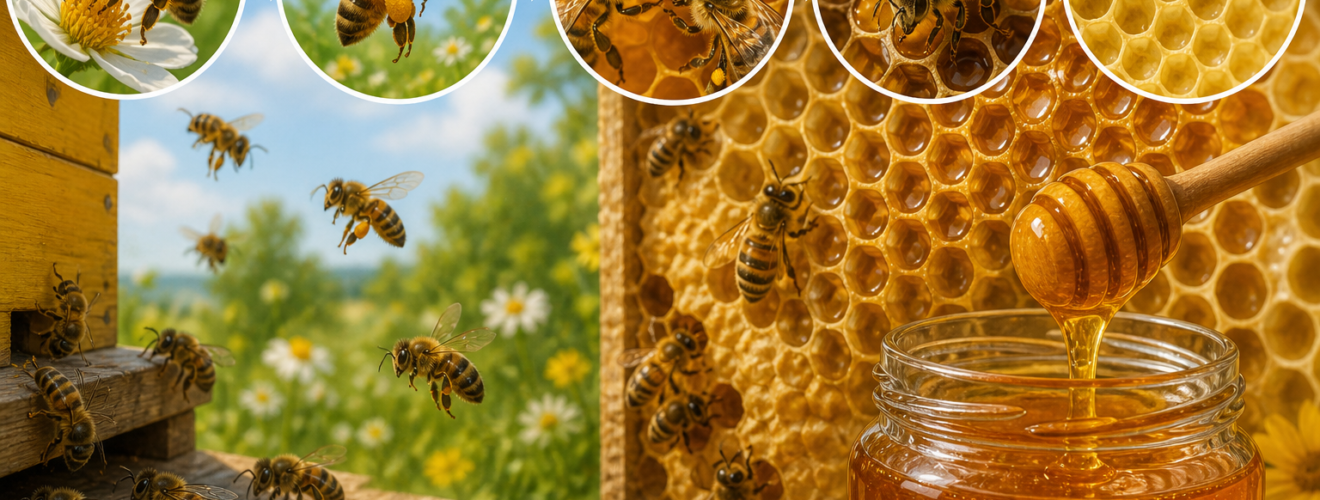
The natural world is full of complex systems that follow a strict order. One of the most famous examples of this is the way honeybees make honey. For students in Grade 4, learning about this process is not just about science. It is also an excellent way to practice English language skills. Specifically, it helps students understand sequential steps. Sequencing is the ability to put events in the order they happen. In nature, many things must happen in a specific order for the final result to be successful. If one step is missed, the outcome changes. By looking at the honeybee, we can see how nature uses a perfect list of steps to create something sweet and healthy. This article will look at the stages of honey production through a clear lens.
The Role of the Forager Bee
The process of making honey starts outside the hive. It begins with a specific type of bee called a forager. Forager bees are older worker bees that have the job of finding food. They fly away from the hive to find flowers that are full of nectar. Nectar is a sugary liquid that plants produce to attract insects. When a bee finds a flower, it uses its long, tube-like tongue to drink the nectar. This tongue is called a proboscis. It works like a straw to suck the liquid up into the bee’s body. However, the bee does not eat all of this nectar for its own lunch. Instead, it has a special body part for storage.
The bee has two different stomachs. One stomach is for its own food. The other stomach is called the honey stomach or the crop. The honey stomach can hold a lot of nectar compared to the bee’s size. While the nectar sits in this stomach, some very important things start to happen. The bee’s body adds special proteins called enzymes to the nectar. These enzymes begin to change the chemical structure of the sugar. This is the very first step in the transformation from flower juice to honey. Without these enzymes, the nectar would not turn into the thick honey we know. Once the forager bee has filled its honey stomach, it flies back to the hive to share its prize with the rest of the colony.
The Transfer of Resources
When the forager bee arrives at the hive, the next step in the sequence begins. The forager does not simply put the nectar into a storage cell. Instead, it passes the nectar to other bees called house bees. House bees are younger bees that stay inside the hive to keep things running. The transfer of nectar happens through a process of mouth-to-mouth sharing. This might sound strange to humans, but it is a vital part of the process for bees. As the nectar passes from one bee to another, more enzymes are added. This step is repeated many times within the hive. Each time the nectar is shared, it becomes more stable and the sugars break down further.
The Importance of Enzyme Action
Inside the house bees, the enzymes go to work on the sucrose found in the nectar. Sucrose is a type of complex sugar. The enzymes break this sucrose down into two simpler sugars called glucose and fructose. This change is important for two reasons. First, simple sugars are easier for the bees to digest later. Second, these sugars are less likely to spoil over time. The chemical change ensures that the honey will last for a very long period without going bad. This is why honey found in ancient tombs is still edible today. The bees have created a food source that does not grow mold or bacteria easily. This phase of the sequence is a brilliant example of natural chemistry at work.
The Evaporation Process
Even after the nectar is shared and the sugars are changed, it is not yet honey. At this stage, the liquid is still very watery. Natural nectar is about eighty percent water. If the bees stored it this way, it would ferment and turn sour. To make honey, the bees must remove most of that water. They do this through a process called evaporation. The bees place the thin, watery nectar into the small hexagonal cells of the honeycomb. These cells are made of beeswax. Once the nectar is in the cells, the bees work together to dry it out. This is a very physical part of the honey-making sequence.
Fanning the Hive
To speed up the drying, the bees use their wings. Hundreds of bees stand near the nectar and flap their wings very fast. This creates a strong wind that moves across the top of the honeycomb. Just like a fan helps dry a wet floor, the bees’ wings help the water evaporate from the nectar. They must keep this up until the water content drops from eighty percent to around eighteen percent. This is a lot of work and requires the bees to act as a team. They also work to keep the hive at a steady, warm temperature. The heat and the moving air work together to make the liquid thick and sticky. Once the liquid reaches the right thickness, it has officially become honey.
Sealing and Storage
The final step in the sequence is to protect the finished product. Once the honey is thick enough, the bees must seal the cells. If they left the cells open, the honey would absorb moisture from the air and become thin again. To prevent this, the bees produce fresh wax from glands on their bodies. They use this wax to create a little lid, or cap, over each cell. This is like putting a lid on a jar of jam. The wax cap keeps the honey fresh and safe from pests and moisture. The colony now has a supply of high-energy food that can last through the winter when there are no flowers to visit.
Understanding this sequence helps us appreciate the hard work of the honeybee. Each step must be done correctly and in the right order. If the foragers did not find nectar, there would be nothing to change. If the house bees did not add enzymes, the sugar would not be right. If the bees did not fan their wings, the honey would spoil. For students, this shows that even in nature, following a plan is the key to success. In English class, when we write about a process, we use words like first, next, then, and finally. These transition words help the reader follow the path of the bee from the flower to the honey jar.
Conclusion
The honeybee is a master of sequence and order. By breaking down the process into clear steps, we can better understand how nature provides for itself. From the initial search for nectar to the final sealing of the wax cap, every action has a purpose. This biological journey is a great way to learn about the environment and the importance of teamwork. It also serves as a perfect model for how we organize our own thoughts and writing. By observing the bee, we learn that great things are achieved one careful step at a time. This knowledge helps us respect the tiny insects that play such a large role in our world’s ecosystem.
Sources
Britannica, T. Editors of Encyclopaedia (2023). Honeybee. Encyclopedia Britannica. https://www.britannica.com/animal/honeybee
National Geographic Society. (2022). The Importance of Bees. Education Resources. https://www.nationalgeographic.org/article/importance-bees/
University of Florida. (2021). Honey Bee Research and Extension Lab: How Bees Make Honey. UF/IFAS Extension. https://entnemdept.ufl.edu/honey-bee/