
Structural Patterns of Japanese Haiku and Tanka
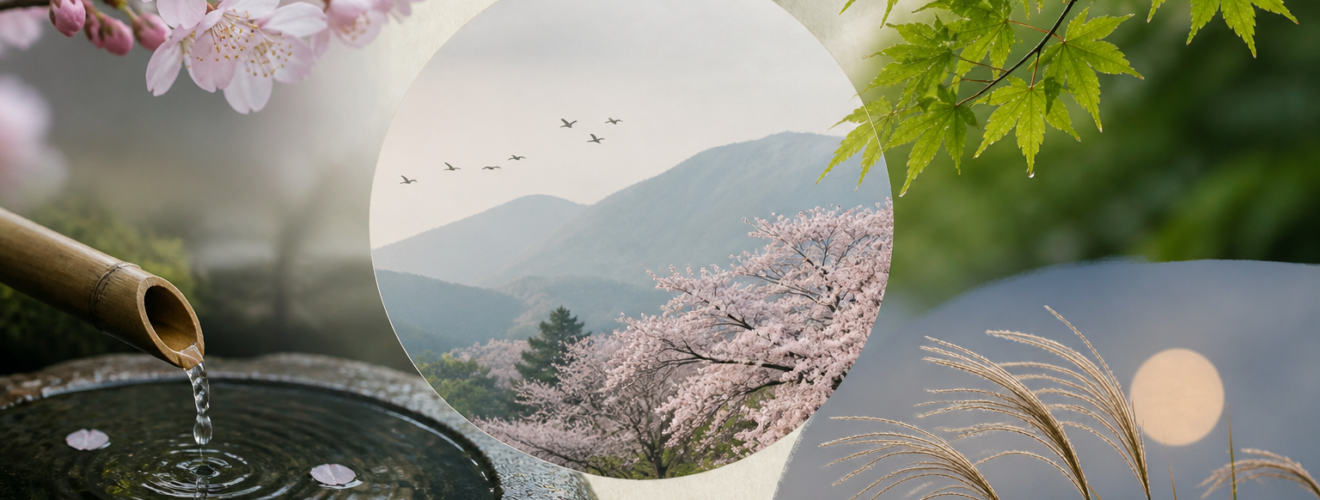
Capturing Asian Nature: Structural Patterns of Japanese Haiku and Tanka
The literary history of Japan is deeply tied to the natural world. For many centuries, poets have looked at the changing seasons to find truth. They use short poems to catch the beauty of a single moment. These poems are small but they hold a lot of power. They use strict rules to help the poet focus. By looking at a small leaf or a cold wind, they see the whole world. This article looks at two main forms of Japanese verse. These are the tanka and the haiku. We will see how their shapes help us see nature. These forms are a key part of Asian art. They show us how to look at the world with fresh eyes and a calm mind.
Japanese poetry is unique because it relies on sound counts. In English, we often use rhyme and meter. In Japanese, the focus is on the number of sounds in each line. This creates a steady rhythm. It mimics the natural sounds of the earth. It sounds like water flowing or wind in the trees. This rhythm helps the reader feel at peace. It sets a mood of quiet study. Both the tanka and the haiku use these sound patterns to build a bridge. This bridge links the human heart to the wild world. By following these rules, poets can say a lot with just a few sounds. This is the core of the Japanese style.
The Tanka: An Ancient Foundation
The tanka is the oldest form of verse in Japan. It began over a thousand years ago. In the early days, it was called waka. This name means “Japanese song.” It was the main form of poetry in the royal court. The tanka has a very specific structure. It has five lines. The sound pattern is five, seven, five, seven, and seven. This makes a total of thirty-one sounds. This structure is very balanced. It allows the poet to build a full scene. It is long enough to tell a small story but short enough to stay sharp. For a long time, the tanka was the gold standard for all Japanese writers.
The Duality of the Tanka
One of the most important parts of the tanka is its two-part shape. The first three lines are called the upper phrase. The last two lines are the lower phrase. The upper phrase usually shows a scene from nature. It might talk about the moon behind a cloud. It might describe the scent of a flower. Then, the lower phrase shows the poet’s feelings. This shift is a key tool in Japanese art. It is called a pivot. It links the outer world to the inner soul. For example, a poet may see a falling leaf. This image then makes them think of their own life passing by. This link gives the poem a deep meaning. It shows that humans and nature are not separate.
The tanka was often used to share love letters in the court. A person would write a tanka on a piece of fine paper. They would attach it to a flower branch. The choice of the flower was as important as the words. If it was spring, they might use a cherry blossom. This showed that the poet was in tune with the season. The structure of the tanka made it easy to memorize. It became a way for people to talk to each other through art. Even today, the tanka is still written and loved. It remains a vital part of the cultural history of Japan. It is a form that values both the eye and the heart.
The Haiku: Precision and Zen
The haiku is perhaps the most famous type of poem in the world. It is much shorter than the tanka. It grew out of the first three lines of the tanka. Over time, it became its own form. A haiku has only seventeen sounds. These are set in three lines. The pattern is five, seven, and five. This form became very popular during the Edo period. It was a time of peace and art. Many people began to write these short poems. They liked how fast and sharp a haiku could be. It was like a quick flash of light that showed a whole scene.
The Master Matsuo Basho
Matsuo Basho is the most famous haiku poet. He lived a simple life and traveled a lot. He believed that a poem should be clear and plain. He did not want to use fancy words. He wanted to catch the “now.” He saw the haiku as a way to find Zen. Zen is a state of mind where one is fully present. A haiku should show a single moment without any extra noise. Basho’s most famous poem is about a frog. The frog jumps into an old pond. There is a sound of water. That is all. The poem does not explain why. It just shows the event. This forces the reader to feel the silence after the splash. This is the goal of the haiku.
The structure of the haiku is very strict. With only seventeen sounds, there is no room for waste. Every word must be perfect. This forces the poet to be very careful. They must pick the best image to show their idea. The haiku does not tell the reader how to feel. Instead, it gives the reader an image. The reader then finds their own feeling within that image. This makes the haiku a very deep form of art. it relies on the power of less. It shows that a few words can hold a huge amount of truth. It is a sketch of the world in its most basic form.
The Role of Nature and Seasonal Words
A vital part of both the tanka and the haiku is the use of kigo. A kigo is a word that points to a specific season. In Japanese culture, the seasons are a sign of change. Nature is never still. It is always moving. Every season has its own set of symbols. For spring, a poet might use a “plum blossom.” For summer, they might use “heat” or a “cicada.” For autumn, they use “red leaves.” For winter, they use “frost” or “cold.” These words do more than just set the time. They carry a heavy weight of history. When a reader sees a kigo, they think of all the other poems that used it. It adds a deep layer of meaning to the short text.
The structure of the poem is often built around this kigo. It acts as the anchor for the work. Without a seasonal word, many people do not think a haiku is real. The kigo links the poem to the earth. It shows that the poet is paying attention to the world around them. In Japan, there are lists of thousands of kigo words. Poets study these lists to find the right mood. This tradition shows how much the culture values the natural world. It is not just a backdrop. Nature is the main character of the poem. The structure serves to highlight this fact. It gives nature a stage to stand on.
Another key part of the structure is the kireji. This is a “cutting word.” It acts like a punctuation mark. It breaks the poem into two parts. This break creates a small space for the reader to think. It allows two different ideas to meet in the mind. This meeting creates a new spark of meaning. In the haiku, the kireji often comes at the end of the first or second line. It stops the flow for a second. This pause is very important. It is called “Ma.” Ma is the beauty of empty space. It is the silence between the notes. The structure of these poems uses this silence to make the words stronger.
Conclusion: The Lasting Impact of Brief Verse
The tanka and the haiku are small treasures of world literature. They show us that we do not need many words to say something big. By using strict patterns, they help the poet focus on the present. They turn a small moment into a work of art. These poems remind us of our place in the wild. They show us that the world is beautiful and very brief. Through the use of sound counts and seasonal words, Japanese poets have made a lasting legacy. Their work continues to inspire people all over the world today. Many people in many lands now write haiku in their own languages.
Learning about these structures helps us appreciate Asian nature. It teaches us to slow down and look at a leaf. It teaches us to listen to the rain. The tanka and the haiku are more than just poems. They are ways of seeing. They are tools for finding peace in a busy world. By following the five and seven sound patterns, we can find a rhythm that matches the earth. This is the true gift of Japanese verse. It brings us closer to the trees, the wind, and the stars. It proves that in art, sometimes less is truly more. We can all find wisdom in these short, clear lines of poetry.
Sources
Basho, M. (1966). The narrow road to the deep north and other travel sketches (N. Yuasa, Trans.). Penguin Classics.
Higginson, W. J. (1985). The haiku handbook: How to write, share, and teach haiku. McGraw-Hill.
Keene, D. (1999). Seeds in the heart: Japanese literature from earliest times to the late sixteenth century. Columbia University Press.
Ueda, M. (1992). Basho and his interpreters: Selected hokku with commentary. Stanford University Press.