Geography of Language
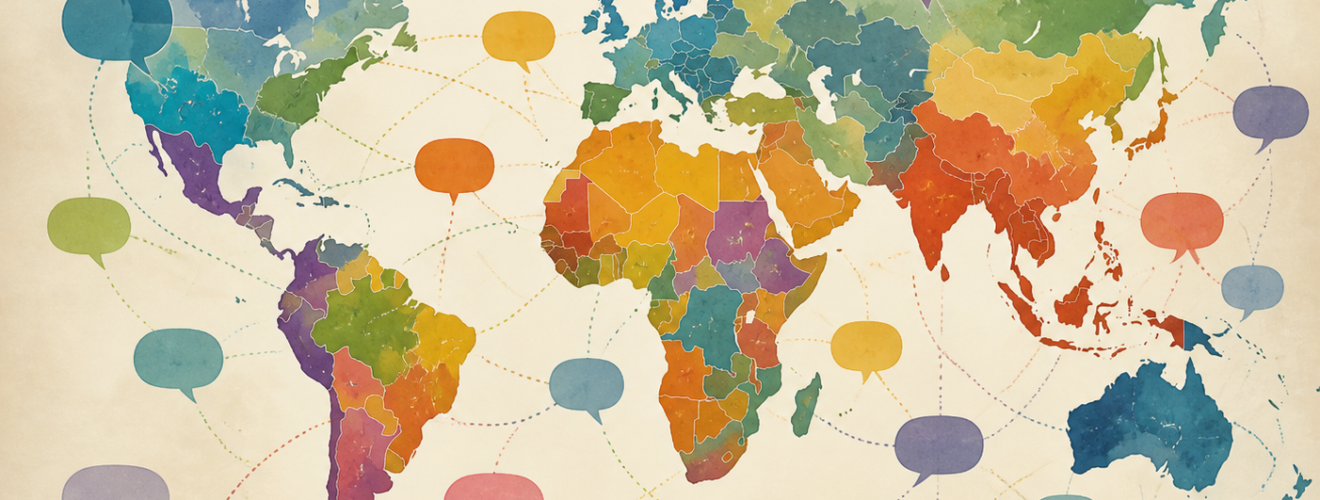
Language is a core part of how we live. It is more than just words we say. It is a tool that helps us share our history and our thoughts. The study of where and why people speak certain languages is called linguistic geography. This field looks at the patterns of human speech across the world. It maps how words travel from one place to another. By looking at these maps, we can learn about the past and the present. We can see how human groups move. We can also see how they interact with each other and their land. This article explores the link between space and speech. It examines how languages grow, change, and sometimes fade away.
The Spread and Movement of Language
Languages do not stay in one spot. They move as people move. This process is known as diffusion. Geographers look at two main ways this happens. The first way is called relocation diffusion. This occurs when people move from their home to a new land. They take their language with them. For example, when people moved from Europe to North America, they brought English, Spanish, and French. Over time, these languages became the main ways of speaking in the new region. This shows how migration shapes the map of the world. It shows how the movement of bodies leads to the movement of sounds.
The second way is called expansion diffusion. In this case, the language spreads like a wave. It does not need people to move to a new home. Instead, it spreads through trade, media, and school. A person might stay in their city but learn a new language to get a better job. This is how English has spread to many parts of the globe today. It is used as a common tongue in business and science. This type of spread is often linked to power and wealth. When a country is strong in trade, its language often grows. This makes it easier for different groups to talk to each other across borders.
Dialects and Regional Variation
Even when people speak the same language, they do not always speak it the same way. These variations are called dialects. A dialect is a local form of a language. It has its own unique words and sounds. Geographers study these differences to find out where one region ends and another begins. For example, in the United States, people in the north and south use different words for soft drinks. Some say “pop” while others say “soda.” These small differences are more than just fun facts. They show the history of who settled in each area. They show how groups of people kept their own identity over time. Maps of these words help us see the invisible lines between cultures.
Cultural Landscapes and the Power of Names
The way we name our world is a big part of geography. These names are called toponyms. A toponym is the name given to a place on Earth. It can be the name of a city, a river, or a mountain. These names are like a layer of history on the land. They tell us who lived there first. They also tell us what those people valued. For example, many names in California have Spanish roots. This reflects the history of Spanish missions in the area. In other places, names might come from local plants or the shape of the land. Studying these names helps us understand the soul of a place.
Toponyms can also show changes in power. When a new group takes over a land, they often change the names of the cities. This is a way to claim the space. It is a way to make the new group feel at home and the old group feel like guests. By changing a name, a government can erase part of the past. Or, it can honor a new hero. This makes the linguistic landscape a site of social struggle. The names on a map are not just labels. They are signs of who has the right to define the world around them. This is why many groups fight to keep their original names for their homes.
The Influence of the Physical Environment
Nature also plays a role in how we speak. The shape of the land can act as a wall or a bridge. Physical barriers like high mountains and deep oceans can keep groups of people apart. When people are separated for a long time, their speech begins to change. They develop new words and new ways to say things. This is how new languages are born. Isolation leads to linguistic diversity. For instance, the island of Papua New Guinea has hundreds of different languages. This is because the rugged land kept tribes away from each other for centuries. Each group developed its own way to talk in its own valley.
On the other hand, flat land and open plains make it easy for people to meet. On these lands, languages tend to be more similar over large areas. There are fewer barriers to stop the flow of ideas. This shows that the earth itself helps shape the way we communicate. Even the climate can have an impact. Some studies suggest that the air temperature might affect the sounds people make. Cold air or dry air can change how the throat works. While this is still being studied, it shows that humans and nature are deeply linked. Our speech is an echo of the land we walk upon.
Globalization and the Future of Language
In the modern world, the map of language is changing fast. Technology and the internet have removed many old barriers. People from all over the world can now talk in real time. This has led to the rise of a global lingua franca. A lingua franca is a language used for trade and talk between people who speak different native tongues. Today, English is the most common lingua franca. While this helps people connect, it also has a downside. Many smaller languages are in danger of dying out. When a language is no longer taught to children, it starts to fade. This is known as language extinction.
When a language dies, we lose more than just words. We lose a unique way of looking at the world. Every language has special words for local plants, animals, and feelings. These words cannot always be translated. Geographers and linguists are now working hard to save these tongues. They use digital tools to record elders. They also help schools teach native languages to young kids. This work is vital for keeping human culture rich and varied. The goal is to balance the need for a global talk with the need to protect local roots. Diversity makes our world a more interesting place to live.
Conclusion
The geography of language is a broad and vital field. it shows us that where we are affects how we talk. It maps the paths of our ancestors and the shifts in our modern world. From the names of our streets to the sounds of our voices, geography is always present. We see how nature separates us and how trade brings us together. We see the power of words to define a home and the risk of losing our unique voices to a global tide. By studying these patterns, we gain a deeper respect for human life. We learn that every word carries a piece of the earth with it. Language is not just a code. It is a map of our shared human journey.
Sources
Crystal, D. (2000). Language Death. Cambridge University Press.
Rubenstein, J. M. (2020). The Cultural Landscape: An Introduction to Human Geography. Pearson.
Trudgill, P. (2000). Sociolinguistics: An Introduction to Language and Society. Penguin Books.
Fellmann, J., Getis, A., & Getis, J. (2010). Human Geography: Landscapes of Human Activities. McGraw-Hill.