The Industrial Revolution: How Machines Changed Human Life
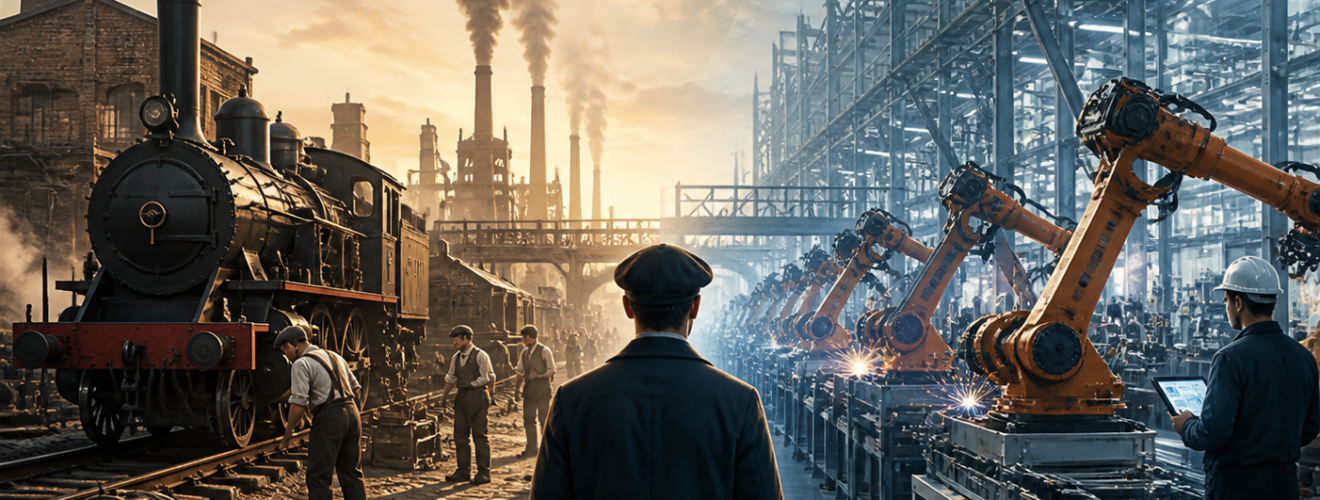
The Industrial Revolution was a major turning point in human history. It began in Great Britain during the late eighteenth century. This period saw a shift from manual labor to machine production. Before this change, most people lived in small rural communities. They made most of their own clothes and tools by hand. The rise of new technology changed this way of life forever. It moved the center of work from the home to the factory. This change had a huge impact on the whole world. It affected how people worked and where they lived. It also changed how they thought about time and labor. The scale of this shift was truly vast. It set the stage for the modern world we know today. Scientists and historians study this era to understand our current economy. It remains one of the most vital times in our past.
This era was not just about new tools. It was a change in how humans lived. For centuries, the pace of life was slow. It was set by the sun and the seasons. The new machines changed that pace. Work became something that happened at a set time. Factories ran on a clock. This was a new idea for many people. It led to a more organized way of life. It also led to new social classes. The gap between the rich and the poor grew. However, the total wealth of nations also went up. This period was the start of the world we see now. It was a time of great hope and great struggle. To understand the modern age, we must look at these early machines.
The Power of Steam and Coal
The steam engine was the most important tool of this time. It was the heart of the new industry. James Watt made a better engine in 1776. This engine was much more efficient than older ones. Before this, mills had to use water or wind. This meant they had to be near rivers or on hills. The new steam engine changed the rules. It allowed factories to be built anywhere. Most owners chose to build them near cities or coal mines. This made it easier to get fuel and workers. Steam power allowed machines to run without stopping. It was a reliable source of energy that did not depend on the weather. This led to a massive increase in the number of goods made. It also made these goods cheaper for the average person to buy.
Coal was the fuel that fed the steam engines. This made coal mining a very large industry. People dug deep into the earth to find this black rock. Coal was better than wood because it burned hotter and longer. The need for coal created many new jobs. However, mining was a very dangerous job. Workers spent long hours in the dark. They faced many health risks from the dust and the heat. Despite the risks, the demand for coal kept growing. It was needed for factories, trains, and ships. The link between coal and steam was the engine of growth. It allowed for the mass production of iron and steel. These materials were then used to build even more machines and structures. This created a cycle of growth that lasted for decades.
The Impact of Iron and Steel
New ways to make iron and steel also changed the world. Before this, iron was hard to produce in large amounts. New furnace designs made it easier to melt ore. This allowed for the creation of strong tools and parts. Steel became the backbone of the new age. It was used to build bridges, rails, and tall buildings. This made the world safer and more connected. Ships made of iron could carry more goods than wood ships. They were also faster and could cross the ocean in less time. This change helped global trade grow at a fast rate. It made it possible to move items across the globe. People could now buy goods from far away lands for the first time. The rise of metal changed how we built our world.
The Shift to the Factory System
The factory system was a new way to organize work. Before the revolution, people worked at home. This was called the cottage industry. A weaver would work on a loom in their own house. They worked at their own pace and sold what they made. The new machines were too big and expensive for homes. They had to be kept in large buildings called factories. This forced workers to leave their homes for work. They had to follow strict rules and work long hours. The factory was a place of noise and constant motion. It was very different from the quiet life on a farm. This shift changed the family unit. Often, every member of the family had to work to earn enough money. This included women and very young children.
Mass production was the main goal of the factory. Machines could make hundreds of items in the time it took a person to make one. This was very clear in the textile industry. New machines like the spinning jenny made cloth very fast. This made clothing cheaper for everyone. People could now own more than one set of clothes. This was a big change for the poor. It also meant that goods were the same. A shirt made in one city looked just like a shirt made in another. This was the start of a consumer culture. People began to buy things instead of making them. This created a new kind of economy based on buying and selling. It also led to a rise in the standard of living for some people over time.
Labor and Working Conditions
Life in the early factories was very hard. The work day often lasted for twelve or fourteen hours. There were very few breaks for the workers. The air was often dirty, and the machines were dangerous. Many people were hurt while working near the heavy gears. There were no laws to protect the workers at first. They could be fired for any reason. Wages were very low, especially for women and children. This led to the rise of labor unions. Workers began to join together to ask for better pay. They also wanted safer places to work and shorter hours. These early unions faced many challenges from factory owners. However, they slowly began to win rights for the working class. This struggle for fair work is a big part of the history of this era.
Urbanization and Social Change
The rise of factories caused cities to grow very fast. This process is called urbanization. Many people moved from the countryside to find work in the towns. In 1800, most people lived on farms. By 1900, most people in Great Britain lived in cities. This was a massive shift in where humans lived. The cities were not ready for so many people. They grew too fast without a good plan. This led to crowded and dirty living areas. Many families lived in one small room. There was often no clean water or ways to get rid of waste. This caused diseases to spread quickly. Life in the city was a struggle for many of the new workers. Over time, cities began to build better homes and pipes. But the early years were very tough for those who moved.
A new middle class also began to emerge. This group included factory owners, doctors, and lawyers. They had more money than the workers but were not as rich as the land owners. This middle class had a big say in how society was run. they valued hard work and education. They lived in better houses and could afford more goods. This group helped to drive the demand for new products. They also helped to change the laws of the land. They wanted more freedom for trade and business. The rise of the middle class changed the social ladder. It was now possible to move up in life through business and skill. This gave many people a sense of hope and drive. It also changed the culture of the time.
The Role of Transportation
New ways to travel were a key part of the social change. The steam engine was used to build locomotives. Trains could carry people and goods across land at great speed. This made it easier for people to travel to find work. It also meant that food could be moved from farms to cities before it went bad. Railways connected different parts of the country like never before. This helped to create a sense of national identity. People could visit other towns and see new things. Steamships also made travel across the sea much faster. This led to more trade between nations. It also made it easier for people to move to new countries. The world felt smaller as travel became faster and cheaper. This change in travel was vital for the growth of the new industry.
Conclusion: The Legacy of Innovation
The Industrial Revolution was a time of massive change. It moved humanity from the field to the factory. It brought new tools that made life easier in many ways. But it also brought new problems that we still face today. The move to cities changed our social structure forever. The use of coal and oil began to change our climate. We now live in a world of high speed and mass production. All of this started with the first steam engines. We must learn from this history to build a better future. The spirit of innovation remains a strong force in our world. As we move into the future, we look back at this time of great shift. It shows us how machines can change the human story. The era of the machine is still with us today in every part of our lives.
The lessons of the past help us to navigate the new tech of today. Just as the steam engine changed the world, new digital tools are doing the same now. We can see many of the same social shifts. People are learning new ways to work and live. We must balance the need for progress with the needs of people. The Industrial Revolution teaches us that change is constant. It also shows us that humans are very good at adapting. By looking at where we came from, we can see where we might go next. The story of machines is the story of human drive and growth. It is a story that is still being written every single day in our modern age.
Ashton, T. S. (1948). The Industrial Revolution, 1760-1830. Oxford University Press.
Hobsbawm, E. J. (1962). The Age of Revolution: 1789-1848. Weidenfeld & Nicolson.
Landes, D. S. (1969). The Unbound Prometheus: Technological Change and Industrial Development in Western Europe from 1750 to the Present. Cambridge University Press.
Mokyr, J. (1990). The Lever of Riches: Technological Creativity and Economic Progress. Oxford University Press.