The Body as a Vessel of Meaning: Philosophical Views on Physical Presence
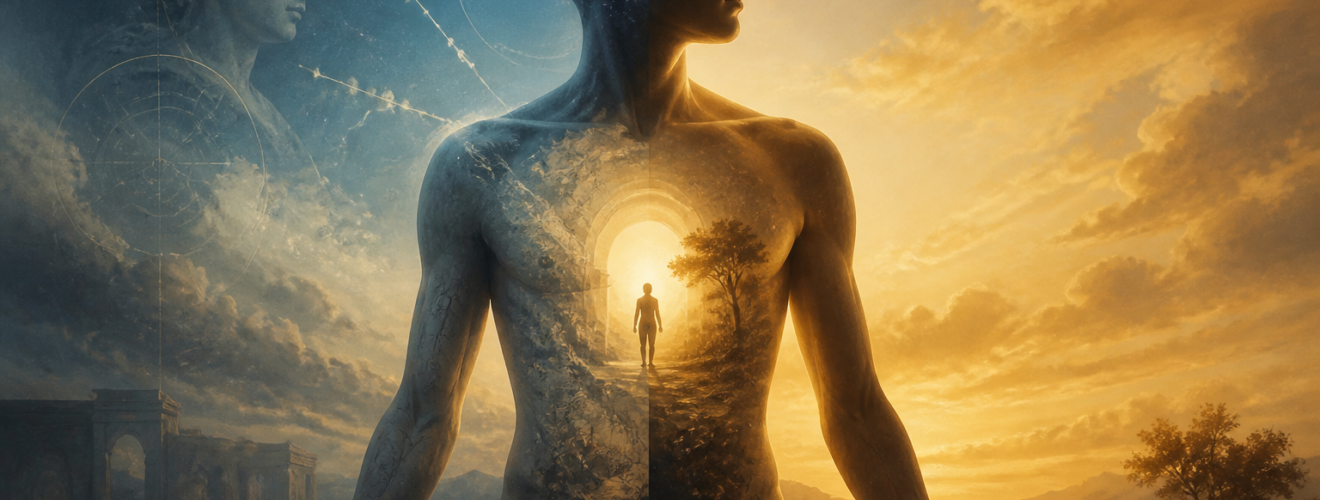
The human body is much more than a collection of cells. It is not just a tool for movement or a biological machine. Throughout history, many great thinkers have viewed the body as a deep source of meaning. We experience our whole lives through our physical presence. Every sight, sound, and touch happens in the body. Because of this, the body is central to how we understand what it means to be human. In this article, we will look at how different philosophers see the body. We will explore how it acts as a bridge between our inner minds and the outer world. We will also see how the body shapes our place in society.
For a long time, many people thought the mind and body were separate things. They believed the mind was the home of reason. They thought the body was just a physical shell. This view suggests that who we are is found only in our thoughts. But newer ideas suggest something different. These ideas say that our physical presence is what gives our lives flavor. Without a body, we could not feel joy or pain. We could not meet other people. The body is the vessel that carries our sense of self. It is the very ground of our being in the world.
The Ghost in the Machine
One of the most famous ideas about the body comes from Rene Descartes. He lived in the seventeenth century. Descartes argued that the mind and the body are two different substances. He called this idea dualism. To him, the mind was a thing that thinks. It did not take up space. On the other hand, the body was a physical thing. It followed the laws of physics. He compared the body to a clock or a machine. In this view, the “real” person was the soul or the mind inside the machine. This idea had a big impact on how we think about science and medicine.
Dualism makes us think of the body as a tool. We use our arms and legs to get tasks done. We treat the body like a car that needs fuel and repairs. While this helped doctors understand how organs work, it left something out. It ignored the feeling of living inside a body. If the body is just a machine, why do we feel so connected to it? Why does a physical injury feel like a hurt to our very soul? Many later thinkers found dualism to be too simple. They wanted to find a way to bring the mind and the body back together.
Living and Feeling the Body
The Lived Body
In the twentieth century, a philosopher named Maurice Merleau-Ponty changed the conversation. He did not like the idea of the body as a machine. Instead, he spoke about the “lived body.” He argued that we do not just have a body. We are our bodies. Our physical presence is not a shell for the mind. It is how we reach out to the world. When you touch a cold stone, you do not just get data. You feel the coldness in your fingers. Your fingers are part of your consciousness. There is no gap between your thought and your physical touch.
Merleau-Ponty believed that our bodies “know” things that our minds do not always say in words. Think about riding a bike. You do not think about every muscle move. Your body just knows how to keep its balance. This is a kind of bodily wisdom. The body is the way we take up space. It is our point of view. We see the world from where we stand. If we were a different shape or size, the world would look and feel different to us. This means the body is the primary way we create meaning in our lives.
The Body as a Map
The lived body also acts as a map for our emotions. We often feel our feelings in our flesh. We feel “butterflies” in the stomach when we are nervous. We feel a “heavy heart” when we are sad. These are not just figures of speech. They are real physical states. Our bodies tell us how we are doing before our minds can find the words. By paying attention to these signals, we can understand ourselves better. The body is a vessel that holds our history. It carries the marks of our hard work, our play, and our rest.
The Social and Political Body
The meaning of the body is not just about how we feel inside. It is also about how others see us. Michel Foucault was a thinker who looked at the body in society. He argued that power works through our physical presence. Modern society has many rules for how we should use our bodies. We learn how to sit in school. We learn how to stand at work. We learn how to dress for different events. Foucault said that these habits turn our bodies into “docile bodies.” This means our bodies are trained to be useful and quiet.
This view shows that the body is a site of struggle. We often feel pressure to look a certain way. Advertisements and social media tell us what a “good” body looks like. This can make us feel like our vessel is not good enough. However, we can also use our bodies to resist. Dance, art, and protest are ways to use physical presence to say something new. When we move in ways that feel free, we reclaim our bodies from the rules of society. The body becomes a vessel for our own values instead of someone else’s rules.
Physical Presence in a Digital World
Today, we face a new challenge. We spend a lot of time in front of screens. In a digital world, our physical bodies can feel less important. We can talk to someone across the ocean without moving a muscle. Some people worry that this “disembodiment” makes our lives less rich. If we only live through our screens, we might lose touch with our physical presence. We might forget the smell of the air or the weight of a tool in our hand. The digital world is fast, but the body is slow and steady.
However, even in the digital age, the body remains vital. We still need to eat, sleep, and move. Many people are now looking for ways to get back in touch with their bodies. Yoga, hiking, and crafts are more popular than ever. These activities remind us that we are physical beings. They help us fill our vessel with meaningful experiences. We find that we are happiest when our minds and bodies work together. Even a simple walk can clear the mind. This shows that the body is not just a carrier for the brain. It is an active partner in our health and happiness.
The Body as a Unified Vessel
In the end, the body is a complex vessel of meaning. It is not just a biological object. It is the way we exist. From the dualism of Descartes to the lived body of Merleau-Ponty, we see a move toward unity. We are beginning to see that the mind and body are one team. Our physical presence allows us to connect with others. it allows us to express our deepest thoughts through action. Whether we are working, playing, or resting, our body is the site where life happens.
Understanding the body helps us live better. When we respect our physical presence, we respect ourselves. We see that every person carries a unique world inside their body. By valuing the vessel, we value the life it holds. We move through the world with more care and more joy. The body is our first and most important home. It is where we find the meaning of our existence.
Sources
Descartes, R. (2008). Meditations on First Philosophy (M. Moriarty, Trans.). Oxford University Press. (Original work published 1641).
Foucault, M. (1995). Discipline and Punish: The Birth of the Prison (A. Sheridan, Trans.). Vintage Books. (Original work published 1975).
Merleau-Ponty, M. (2012). Phenomenology of Perception (D. A. Landes, Trans.). Routledge. (Original work published 1945).
Shusterman, R. (2008). Body Consciousness: A Philosophy of Mindfulness and Somaesthetics. Cambridge University Press.