
Evaluating Opinions Critically: Tools for Sound Logical Analysis
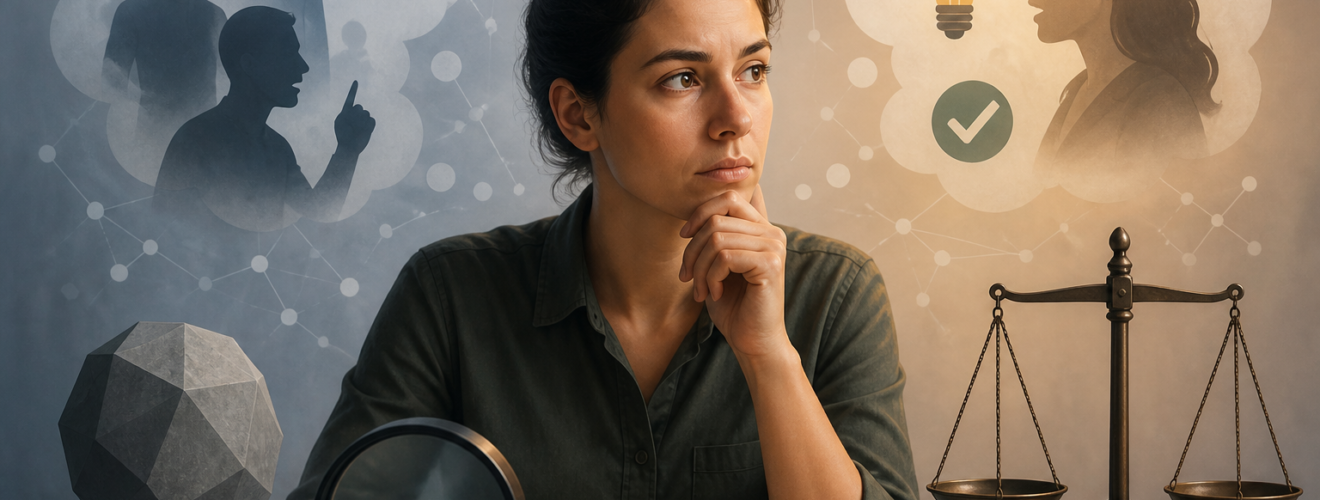
In our world today, we see a lot of information. People share their thoughts on the web every second. It can be hard to know what is true. To find the truth, we must use critical thinking. This skill helps us look at ideas in a deep way. It is not just about being smart. It is about using a clear set of rules to test if an idea is good. If we do not test what we hear, we might believe things that are false. This article will show you how to check opinions using logic and facts. By the end, you will have a set of tools to help you think better every day.
The first step in any analysis is to stay calm. Our feelings often get in the way of clear thought. When we hear an idea we like, we want to believe it right away. When we hear an idea we hate, we want to reject it. A good thinker tries to set these feelings aside. This allows for a fair look at the facts. It is the base of all sound logic. Without it, our minds stay stuck in our own old views. To grow, we must be open to new data that might prove us wrong. This is the mark of a true scholar.
The Core of Logical Reasoning
Logic is like a map for the mind. It shows us how to get from a start point to a conclusion. This path must be solid. In logic, we look at the parts of a claim. Every claim has a premise and a goal. The premise is the reason why we should believe something. If the premise is weak, the whole idea falls apart. To check an opinion, you must first find the main point. Ask yourself what the person wants you to believe. Then, look for the reasons they give. If the reasons do not lead to the point, the logic is bad. This simple test can save you a lot of time.
The Importance of Structure
A good argument is built like a house. It needs a strong base. It needs walls that can hold weight. In logic, this is called a valid form. If the form is good, the idea is strong. If the form is bad, the idea will fail. You do not need to be a math expert to see this. You just need to look at how words fit together. For example, if someone says all birds fly, and then says a dog flies because it is a bird, you know they are wrong. The link between the ideas is broken. This is a clear case of a bad structure. We must look for these breaks in every talk we hear.
Common Errors in Thinking
Many people make mistakes when they try to prove a point. These are called logical fallacies. They are tricks that make a bad idea look good. One common trick is the ad hominem. This is when someone attacks the person instead of the idea. If a doctor tells you to eat less sugar, and you say they are mean, you have not fixed the issue of sugar. You have only attacked the person. This does not change the truth. Another trick is the straw man. This is when someone changes your idea to make it look silly. Then they attack that silly idea. It is a fake way to win a fight. We must watch out for these tricks in ourselves too.
The Appeal to Authority
We often trust people because they have a big title. This can be a trap. Just because someone is a leader does not mean they are always right. We must look at the data they use. A good expert will show you their work. They will not just say “trust me.” In academic work, we value evidence over names. Even the most famous person can be wrong. When you see a claim from an expert, check if other experts agree. If there is no proof, the claim may not be solid. This is a key part of thinking for yourself.
The Role of Evidence and Data
A strong opinion needs more than just logic. It needs facts. Facts are bits of data that stay true no matter what we feel. In the world of science, we use data to test our thoughts. If the data does not match the thought, we change the thought. We should do the same in our daily lives. When you hear a claim, ask for proof. Is there a study that shows this? Is there a record of this happening? If the answer is no, then the opinion is just a guess. Guesses are fine for fun, but they are not a good base for truth.
Not all proof is the same. Some proof is very weak. For example, an anecdote is a story about one person. Just because one person had a bad day does not mean everyone will. We need large sets of data to see a real trend. This is why we use math and stats in professional work. They help us see the big picture. When you read a news story, look for the source of the data. Is the source honest? Do they have a reason to lie? Checking your sources is a fast way to find the truth. It helps you stay away from fake news and myths.
Understanding Hidden Biases
Our brains have shortcuts that can lead us astray. These are called cognitive biases. One of the most famous is confirmation bias. This is when we only look for facts that prove us right. We ignore anything that shows we might be wrong. This makes us feel good, but it keeps us in the dark. To fight this, we must look for the other side. Try to find the best reasons why your idea might be false. If your idea can survive that test, it is a very strong idea. This is how we build a mind that is both sharp and fair.
Another bias is the Dunning-Kruger effect. This happens when people who know very little think they know a lot. They do not know enough to see how complex a topic is. Truly wise people know that there is always more to learn. They stay humble. They ask questions instead of just giving answers. When you look at an opinion, ask if the person is being too sure of themselves. If they say a hard problem has a very simple fix, they might be under this bias. Real life is often full of nuance and shade.
Tools for Better Analysis
There are simple tools you can use to think better. One is the Socratic method. This involves asking a chain of questions. You start with a big idea and break it down. For each part, you ask “Why?” or “How do we know this?” This reveals the gaps in a claim. It forces the other person to be clear. It also helps you see where your own ideas are weak. Another tool is Occam’s Razor. This rule says that the simplest answer is usually the right one. Do not look for a complex plot when a simple cause will do. This keeps your thinking clean and fast.
Finally, you should always check the context. Ideas do not exist in a void. They come from a time and a place. The history of an idea can tell you a lot about its value. If an idea was made to help a specific group, it might be biased. If it has stood the test of time across many cultures, it is likely very strong. By looking at the roots of an opinion, you can see if it is built on a rock or on sand. This depth of view is what makes a professional analysis stand out from a simple chat.
Conclusion
Thinking well is a choice. It takes work to check every idea we see. However, the reward is great. We gain a mind that is hard to fool. We make better choices for our lives and our work. We can talk to others with more grace because we know how to find the truth. Start small. The next time you see a post or hear a speech, stop and think. Look for the logic. Search for the proof. Check for bias. If you do this, you will become a master of your own mind. The world needs more people who can think for themselves.
Sources
Cottrell, S. (2017). Critical thinking skills: Effective analysis, argument and reflection. Palgrave Macmillan.
Kahneman, D. (2011). Thinking, fast and slow. Farrar, Straus and Giroux.
Paul, R., & Elder, L. (2019). The miniature guide to critical thinking concepts and tools. Rowman & Littlefield.
Toulmin, S. E. (2003). The uses of argument. Cambridge University Press.