
Origins of Agriculture
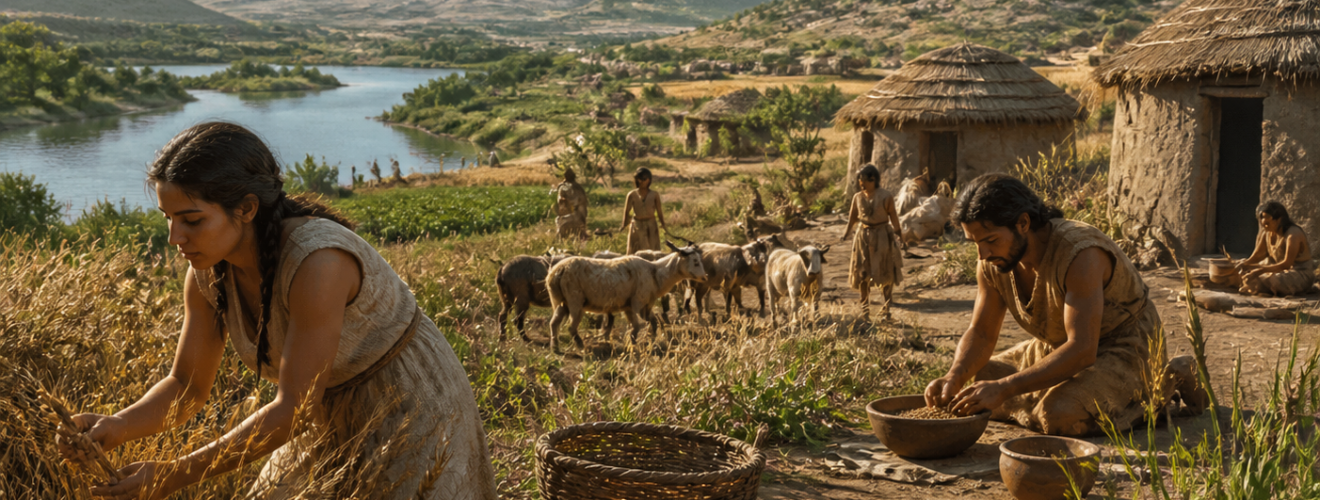
The dawn of farming marks a key point in human history. This shift is known as the Neolithic Revolution. For most of our past, humans lived as hunters and gatherers. They moved often to find food in the wild. About twelve thousand years ago, this began to change. People started to grow their own crops. They also tamed animals for food and work. This change did not happen in just one place. It took place in many parts of the world at different times. It altered how people lived and worked forever. This article looks at how and why this change occurred.
The Shift from Foraging to Farming
The move to farming was not a fast event. It was a slow process that took thousands of years. Early humans had a deep knowledge of the land. They knew which plants were good to eat. They knew when those plants were ripe. Over time, they began to help these plants grow. They might clear away weeds or add water to the soil. This small step led to the birth of true farming. It allowed humans to produce more food on less land. This meant they did not have to move as much to survive.
Climate change played a big role in this shift. The end of the last ice age brought new weather patterns. The world became warmer and wetter in many spots. This helped some wild grains grow in large amounts. However, there were also dry spells. A period called the Younger Dryas was very cold and dry. This made wild food hard to find. Some groups had to find new ways to get enough to eat. They began to save seeds and plant them near their camps. This ensured they had food even when the wild harvests failed.
Theories of Agricultural Origins
Scientists have many ideas about why farming started. These ideas help us see the link between humans and nature. No single theory explains everything. Instead, each one adds a piece to the puzzle. Most focus on the mix of climate, population, and social needs.
The Oasis Theory
One early idea is the Oasis Theory. It was made popular by Raphael Pumpelly and V. Gordon Childe. This theory suggests that the world became very dry. Humans and animals were forced to live near oases. In these small green areas, they lived close together. This forced them to learn how to manage plants and animals. While this idea is old, it shows how vital water is for farming. It also shows how nature can push humans to change their ways.
The Hilly Flanks Hypothesis
Robert Braidwood offered a different view. He looked at the hills of the Near East. He called this area the Hilly Flanks. He thought that farming began where wild grains were already common. People did not move to oases because of a drought. Instead, they stayed in areas where food was plenty. Over time, they became so familiar with these plants that they began to farm them. This theory suggests that human skill and curiosity drove the change. It views farming as a natural step in human growth.
Key Regions of Early Domestication
Farming began in several “hearths” around the globe. Each area had its own unique sets of crops. These regions developed their skills on their own. This shows that humans everywhere were solving the same problems.
The Fertile Crescent
The Fertile Crescent is often called the cradle of farming. It spans parts of the modern Middle East. The soil there was very rich. Early farmers grew wheat and barley. They also raised goats, sheep, and cattle. These foods provided a stable diet. The crops were easy to store for a long time. This let people build larger villages. Many of the first cities in the world grew out of these early farm sites. The success of this region helped spread farming into Europe and Africa.
East Asia and the Americas
In China, farming grew along the banks of great rivers. In the south, rice became the main crop. In the north, farmers grew millet. This happened around nine thousand years ago. Like the Near East, these groups also tamed animals. Pigs and dogs were common in these early farms. The wet lands near the rivers were perfect for rice. This led to a very high food supply for the region.
Farming in the Americas was quite different. People there grew maize, beans, and squash. These three crops work very well when grown together. This is often called the Three Sisters method. The beans add nutrients to the soil that the maize needs. The squash leaves keep the soil moist. In the Andes, farmers grew potatoes and quinoa. They also raised llamas for wool and transport. These systems were very complex and supported huge empires.
The Biological Change of Species
Domestication is a slow process of genetic change. Humans chose plants with the best traits for their needs. They kept seeds from the largest fruits. They picked grains that did not fall off the stalk when ripe. This is called selective breeding. Over many years, these plants changed. They became different from their wild cousins. They became bigger and easier to eat. However, they also became dependent on humans to grow.
The same thing happened with animals. People chose the most docile animals to keep. They bred animals that were not afraid of humans. This led to new types of animals that were easy to manage. Cows, sheep, and pigs changed in size and shape. Their coats and horns often changed too. This bond between humans and species is a core part of farming history. It created a new kind of life for both the farmer and the farmed.
Long-Term Effects on Human Society
Farming led to many social shifts. The most vital was sedentism. This means staying in one place for a long time. Since crops take months to grow, people built fixed homes. This led to the first villages. Food surplus was another major result. When people have extra food, not everyone must farm. Some people became builders, potters, or leaders. This led to a split in social roles. It made society more complex.
However, farming also brought new trials. People lived closer together with animals. This allowed diseases to spread more easily. Diets often became less varied than they were for foragers. Many early farmers were shorter and less healthy than their ancestors. They also had to work much harder and for longer hours. Despite these costs, the rise in food led to a boom in the human population. This growth drove the spread of people across the whole earth.
Conclusion
The origins of agriculture mark the start of the modern world. It was a bridge between the wild past and a settled future. By learning to grow food, humans took control of their own fate. They built cities and made new tools. They created laws and art. While the shift brought new risks, it also gave us the means to grow. Today, almost every person on earth relies on the seeds sown by those first farmers. Their work remains the base of all human life and culture.
Sources
Bellwood, P. (2004). First Farmers: The Origins of Agricultural Societies. Blackwell Publishing.
Childe, V. G. (1936). Man Makes Himself. Watts and Co.
Diamond, J. (1997). Guns, Germs, and Steel: The Fates of Human Societies. W. W. Norton & Company.
Zeder, M. A. (2011). The Origins of Agriculture in the Near East. Current Anthropology, 52(S4), S221-S235.