The Search for Wisdom: Why Truth Requires Philosophical Rigor
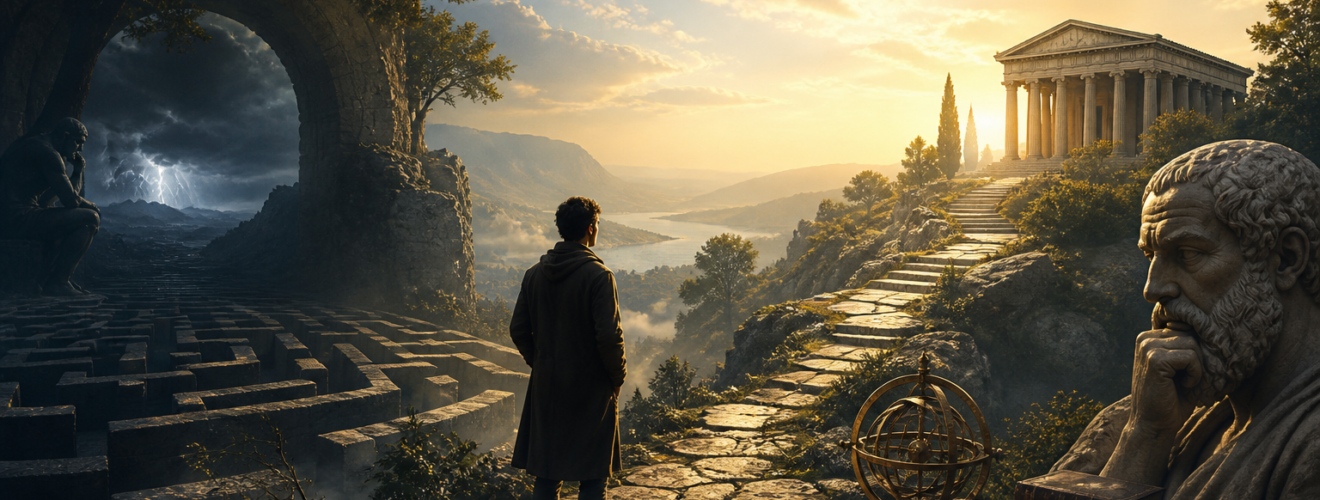
The quest for truth is a core part of the human story. We often think that truth is simple and clear. We assume that if we see something, it must be real. However, the path to wisdom is rarely that easy. To find what is true, we must use a deep level of care. This care is what we call philosophical rigor. It is a way to test our thoughts. It helps us avoid errors in how we view the world. Without this rigor, our search for wisdom can fail. We might fall for easy lies or half-truths. This article will show why rigor is vital for finding truth today.
Wisdom is more than just having many facts. It is the ability to use those facts well. It requires us to look at the roots of our beliefs. Many of our ideas come from our parents or our peers. We often accept these ideas without a second thought. But a true seeker of wisdom asks why they believe what they believe. They want to know if their ideas rest on a solid base. This is the first step in the search for truth. It is a call to look inward and check our own minds for bias.
The Role of Logic in the Search for Truth
Logic is the primary tool of the philosopher. It acts as a filter for our thoughts. When we use logic, we follow clear rules of reason. These rules help us see if a claim makes sense. For example, if two ideas clash, they cannot both be true at once. This simple rule helps us clear away bad ideas. Logic allows us to build a bridge from what we know to what we want to find. It keeps us from taking leaps that have no support. In a world full of noise, logic is a quiet guide that keeps us on the right path.
Deductive and Inductive Reasoning
There are two main ways we use logic to find truth. The first is deductive reasoning. This starts with a broad truth and moves to a specific fact. If the broad truth is right, the specific fact must also be right. This gives us a high level of certainty. The second way is inductive reasoning. This starts with many small facts and leads to a broad idea. This way is common in science. It helps us see patterns in the world. Both ways are needed for a full search for wisdom. They help us test our views from different angles. Using both ensures that our rigor is strong.
Identifying Logical Fallacies
A big part of rigor is knowing when logic fails. We call these failures fallacies. Many people use them to win a point without having the truth on their side. They might attack a person instead of an idea. Or they might say that because something is old, it must be good. A wise person learns to spot these tricks. By doing so, they protect their mind from bad input. They do not let loud voices lead them away from the facts. This skill is vital for anyone who wants to live a life based on truth.
Epistemology and the Nature of Knowledge
Epistemology is the study of how we know things. It is a branch of philosophy that asks tough questions. What does it mean to know something? Is there a limit to what we can find out? These questions add a new layer of rigor to our search. They force us to look at the tools we use to gain knowledge. We use our eyes, our ears, and our memory. But can we trust them? Rigor teaches us that our senses can be wrong. We must cross-check what we see with what we can prove through reason.
The Justified True Belief
For a long time, philosophers said that knowledge is a justified true belief. This means three things must happen. First, you must believe the claim. Second, the claim must be true in the real world. Third, you must have a good reason for your belief. Rigor focuses on this third part. Why do you think your belief is true? If you guess right, that is not knowledge. It is just luck. True wisdom requires a solid link between your mind and the world. You must be able to show your work and prove your point.
Skepticism as a Tool
Skepticism is often seen as a bad thing. People think it means you do not believe in anything. But in philosophy, it is a tool for rigor. It means you do not accept a claim until you have proof. A healthy dose of doubt keeps us safe from fraud. It pushes us to ask for better evidence. When we use doubt in a good way, we build a stronger base for our truths. We do not stop at the first answer. We keep digging until we find a truth that can stand up to any test. This is how we grow in wisdom over time.
The Ethical Need for Rigorous Truth
Finding the truth is not just a brain game. It has real effects on how we live. We make choices every day based on what we think is true. If our views are wrong, our choices might hurt others. This gives us a moral duty to be rigorous. We owe it to our neighbors to think clearly. When we spread false ideas, we cause harm. When we seek the truth with care, we build a better world. Rigor is an act of love for our fellow humans. It shows that we care enough to get things right.
Truth in the Digital Age
Today, we get more info than ever before. Much of this info is not true. It is easy for a lie to travel fast. This makes philosophical rigor more vital than ever. We cannot just read a post and believe it. We must stop and think. We must check the source of the claim. We must ask if there is a bias at play. This takes time and effort. Many people are too lazy to do this work. But the search for wisdom is not for the lazy. It is for those who value truth more than speed. Rigor helps us navigate the digital storm.
The Power of Intellectual Humility
Rigor also teaches us to be humble. It shows us how hard it is to be sure of anything. A wise person knows that they might be wrong. They are open to new facts that change their mind. This humility is a key part of the search for truth. It keeps us from being stuck in old, bad habits. It allows us to grow and learn. When we are humble, we listen more than we talk. We seek to understand before we seek to judge. This opens the door to deeper truths that we might have missed.
Conclusion: The Path Forward
The search for wisdom is a long journey. It never truly ends. But with philosophical rigor, we can make real progress. We use logic to clear the path. We use epistemology to check our steps. We use ethics to stay on the right course. This process makes our lives better. It gives us a sense of peace that comes from knowing we have done our best to find the truth. We should all strive to add more rigor to our lives. It is the only way to find the wisdom that truly matters. Let us commit to the hard work of thinking well. The truth is waiting for those who are brave enough to seek it.
Aristotle. (1984). The complete works of Aristotle (J. Barnes, Ed.). Princeton University Press.
Descartes, R. (1996). Meditations on first philosophy (J. Cottingham, Trans.). Cambridge University Press. (Original work published 1641).
Locke, J. (1975). An essay concerning human understanding (P. H. Nidditch, Ed.). Oxford University Press. (Original work published 1689).
Plato. (1997). Complete works (J. M. Cooper, Ed.). Hackett Publishing.
Russell, B. (1912). The problems of philosophy. Williams and Norgate.