Grade 5 Science : Levers, Pulleys, and Simple Circuits: How Machines and Electricity Make Work Easier
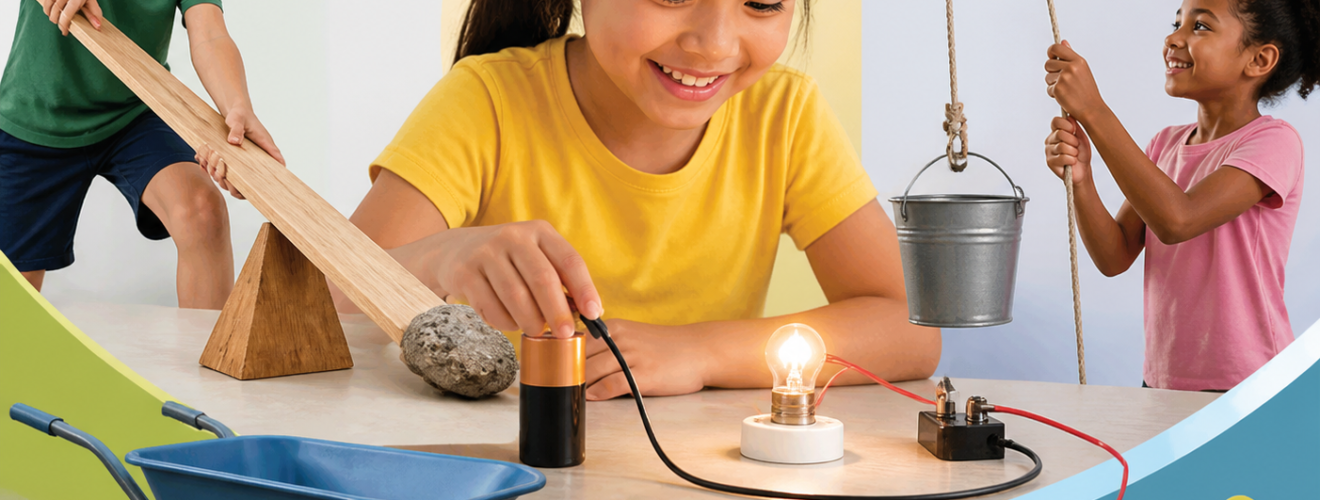
The study of physical science at the grade five level introduces students to the fundamental concepts of energy, force, and motion. Among the most vital components of this curriculum are simple machines and basic electrical systems. These concepts explain how humans interact with the physical world to perform tasks more efficiently. Simple machines like levers and pulleys reduce the amount of effort needed to move objects. Similarly, simple circuits provide a pathway for electricity to power modern tools. By understanding these systems, students gain a deeper appreciation for the mechanical and electrical principles that govern everyday life. This article explores the mechanics of levers and pulleys and the essential components of simple circuits to demonstrate how these tools make work easier.
The Mechanics of Levers
A lever is one of the most basic tools used to increase physical force. In its simplest form, a lever consists of a rigid bar that pivots on a fixed point known as a fulcrum. The primary purpose of a lever is to lift a heavy load using a smaller amount of input force, which is called the effort. Scientists and engineers measure the effectiveness of a lever by its mechanical advantage. This term describes how much the machine multiplies the input force. By changing the position of the fulcrum, the load, and the effort, we can change how the lever functions. There are three distinct classes of levers that are categorized based on the arrangement of these three components.
First-Class Levers
In a first-class lever, the fulcrum is positioned between the effort and the load. This is perhaps the most recognizable type of lever. A common example of a first-class lever is a seesaw or a pair of scissors. When you push down on one end of a seesaw, the other end goes up. This design allows for a change in the direction of the force. If the fulcrum is placed closer to the load, it becomes much easier to lift heavy objects. However, the effort must move a greater distance to achieve this. This trade-off between force and distance is a key principle in the study of all simple machines.
Second-Class Levers
A second-class lever places the load between the fulcrum and the effort. In this configuration, the effort and the load move in the same direction. A wheelbarrow is a perfect example of a second-class lever. The wheel acts as the fulcrum, the heavy material inside the tray is the load, and the person lifting the handles provides the effort. Because the load is closer to the fulcrum than the effort is, the user can lift very heavy weights with relatively little force. This type of lever always provides a mechanical advantage greater than one, making it an excellent tool for moving heavy materials in construction and gardening.
Third-Class Levers
The third-class lever is unique because the effort is applied between the fulcrum and the load. Unlike the first two classes, this lever does not make lifting heavy loads easier. Instead, it is designed to increase the speed or the distance that the load travels. A common example of a third-class lever is a fishing rod or a pair of tweezers. When a person uses a fishing rod, their hand provides the effort near the base, while the fish is at the far end. Although more effort is required to move the load, the tip of the rod moves much further and faster than the hand. This is useful for tasks that require precision or a wide range of motion.
The Power of Pulleys
Pulleys are another essential simple machine that help us perform work with less difficulty. A pulley consists of a wheel with a groove along its edge for a rope or cable. By pulling on one end of the rope, a person can lift an object attached to the other end. Pulleys are widely used in cranes, flagpoles, and window blinds. Like levers, pulleys work by either changing the direction of the force or by reducing the amount of force needed to lift an object. There are two main types of pulleys that students study: fixed pulleys and movable pulleys.
Fixed and Movable Pulleys
A fixed pulley is attached to a stable structure, such as a beam or a ceiling. This type of pulley does not reduce the amount of force needed to lift a load. Instead, it changes the direction of the force. For example, it is often easier to pull down on a rope to lift an object up than it is to lift the object directly. A flagpole uses a fixed pulley so that a person can stand on the ground and raise a flag to the top. In contrast, a movable pulley is attached to the load itself. As the rope is pulled, the pulley moves along with the load. This system cuts the required effort in half. However, the user must pull twice as much rope to lift the object the same distance. Many systems combine fixed and movable pulleys into a “block and tackle” to maximize mechanical advantage.
Understanding Simple Circuits
While levers and pulleys use mechanical energy, modern society relies heavily on electrical energy. To use electricity, we must create a path for it to flow, which is known as a circuit. A simple circuit is a closed loop that allows electrons to travel from a power source to a device and back again. For a circuit to function, it must have four basic parts: a source of energy, a set of conductors, a load, and a switch. Understanding how these parts interact is the first step in learning about more complex electrical systems.
Components of a Circuit
The energy source is usually a battery or a wall outlet. It provides the push that gets the electrons moving. The conductors are typically copper wires that allow the electricity to flow easily through the path. The load is the device that uses the electricity to do work, such as a light bulb or a motor. Finally, the switch is a tool used to open or close the circuit. When the switch is closed, the path is complete, and the light turns on. When the switch is open, the path is broken, and the electricity stops flowing. This control is vital for safety and energy conservation in our homes.
Series and Parallel Circuits
There are two primary ways to arrange components in a circuit. In a series circuit, all parts are connected in a single loop. The electricity must pass through every component one after the other. If one bulb burns out in a series circuit, the entire path is broken, and all the lights go out. In a parallel circuit, there are multiple paths for the electricity to follow. This means that if one part of the circuit fails, the other parts can still function. Most homes use parallel circuits so that turning off a light in the kitchen does not turn off the television in the living room. This design ensures that electrical systems remain reliable and efficient.
The Connection Between Machines and Electricity
Simple machines and electricity often work together to make our lives easier. For example, an electric elevator uses a motor to turn a pulley system. The motor provides the force using electrical energy, while the pulleys provide the mechanical advantage to lift the heavy elevator car. By combining these two areas of science, engineers can create powerful machines that do incredible things. For fifth-grade students, learning these basics provides a foundation for future studies in physics and engineering. It allows them to look at the world and see not just objects, but systems of force and energy at work. Whether it is using a spoon as a lever or turning on a lamp, the principles of physical science are always present.
Conclusion
Levers, pulleys, and simple circuits are the building blocks of modern technology. Levers allow us to lift heavy loads by choosing the right pivot point. Pulleys enable us to move objects vertically with ease by changing the direction of our pull. Simple circuits provide the energy needed to power the tools we use every day. Each of these systems demonstrates the basic rule of work: we can make a task easier by changing how we apply force or energy. As students explore these topics, they learn that science is a practical tool for solving problems and improving the world around them. Mastery of these concepts is essential for anyone interested in how machines and electricity function in our daily lives.
Sources
Giancoli, D. C. (2016). Physics: Principles with applications (7th ed.). Pearson Education.
Hewitt, P. G., Lyons, S., Suchocki, J. A., & Hewitt, J. (2012). Conceptual physical science (5th ed.). Pearson/Addison-Wesley.
National Research Council. (2012). A framework for K-12 science education: Practices, crosscutting concepts, and core ideas. National Academies Press.
Parker, S. (2005). The science of structures and machines. Heinemann Library.