
Uncovering the Water Cycle and Healthy Philippine Soils (Grade 4 Science)
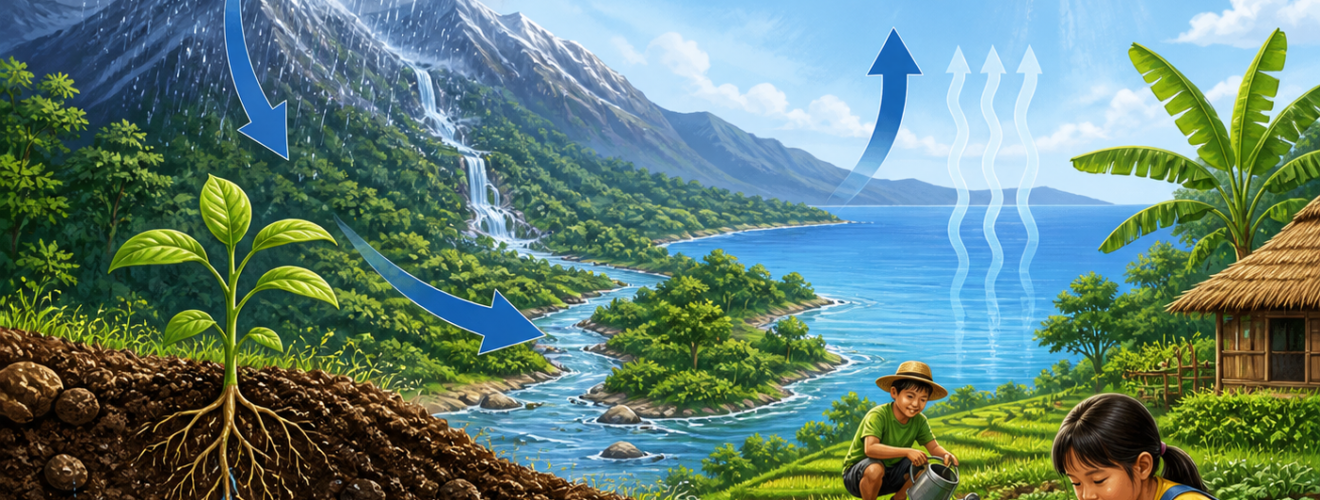
The natural world functions through a series of systems that support life on our planet. One of the most vital systems is the water cycle. This process describes how water moves from the ground to the sky and back again. For a country like the Philippines, the water cycle is essential. It provides the rain needed for our tropical forests and our many farms. Without this cycle, the land would become dry and life would struggle to survive. This article explores how rain forms and why it is so important for keeping Philippine soils healthy and productive.
The Constant Movement of the Water Cycle
The water cycle is a continuous journey. It has no start or end point. It is powered by the heat of the sun. The sun warms the water in our oceans, rivers, and lakes. When water gets warm enough, it turns into an invisible gas called water vapor. This part of the process is known as evaporation. In the Philippines, we are surrounded by large bodies of water like the Pacific Ocean. This means there is always a lot of evaporation happening around our islands.
From Vapor to Clouds
As the water vapor rises into the air, it begins to cool down. When the gas cools, it turns back into tiny liquid water droplets. These droplets bunch together to form clouds. This specific stage is called condensation. You can see condensation in your daily life. For example, when you see tiny drops of water on the outside of a cold glass of juice, you are seeing condensation. In the sky, these clouds are moved by the wind across the different regions of the Philippines, from the mountains of Luzon to the plains of Mindanao.
The Return of Water to Earth
When the water droplets in the clouds become too heavy, they fall back to the ground. This is called precipitation. Most of the time in our country, precipitation happens as rain. In colder parts of the world, it might be snow or hail. Rain fills our rivers and soaks into the ground. This collection of water is the final stage of the cycle before it starts all over again. The rain that falls today might have been part of the ocean just a few days ago. This shows how connected our environment truly is.
The Unique Climate of the Philippines
The Philippines is a tropical country. This means we have two main seasons: the dry season and the wet season. The water cycle behaves differently during these times. During the wet season, the country experiences monsoons. A monsoon is a giant wind system that brings a lot of rain. The Southwest Monsoon, also known as Habagat, brings heavy rain from July to September. This rain is very important for the water cycle because it refills our dams and provides water for drinking and farming.
However, too much rain can also be a challenge. High amounts of precipitation can lead to floods. This is why understanding the water cycle is helpful for safety. By knowing how clouds form and how much rain to expect, people can prepare better. The cycle ensures that the water is recycled and cleaned as it moves through the atmosphere. It is a natural filter that keeps the Earth’s water supply moving and fresh for all living things.
Healthy Philippine Soils and the Role of Water
Soil is the skin of the Earth. It is not just dirt; it is a complex mix of minerals, air, water, and tiny living organisms. In the Philippines, we are lucky to have very rich soil. Much of our soil comes from volcanic activity. Volcanoes provide minerals that make the land very fertile. For plants to grow well, they need healthy soil that can hold onto water. This is where the water cycle and soil health meet. Without rain, the soil would become hard and dusty, making it impossible for plants to survive.
Types of Soil Found in the Philippines
There are different types of soil in our country. Loam soil is considered the best for farming. It is a mix of sand, silt, and clay. Loam soil feels soft and crumbly. It is excellent at holding just the right amount of water from the water cycle. Clay soil is also common. It has very small particles and holds a lot of water. While it is good for some crops, it can become too heavy and sticky when it rains too much. Sandy soil, found near our beautiful beaches, does not hold water well. Rain passes through it very quickly, which is why most crops do not grow well in sand.
Nutrients and Soil Hydration
Rain does more than just wet the ground. It helps dissolve nutrients in the soil. Once these nutrients are dissolved in water, the roots of the plants can drink them up. This is how a small seed grows into a large mango tree or a tall stalk of corn. Healthy soil also acts like a sponge. It absorbs the rain and stores it deep underground. This underground water is called groundwater. During the dry season, when there is less rain, plants and even humans rely on this stored water to stay hydrated.
The Dangers of Soil Erosion
While rain is a blessing, it can also cause problems if the soil is not protected. Soil erosion happens when the top layer of soil is washed away by heavy rain. This top layer, called topsoil, contains the most nutrients. When we lose topsoil, the land becomes poor and plants cannot grow. In the Philippines, erosion is a big concern during the typhoon season. Without trees and grass to hold the soil in place, the heavy rain from the water cycle can wash the land into the rivers and seas.
Trees play a huge role in preventing this. Their roots act like an anchor, gripping the soil tightly. The leaves of the trees also break the fall of the raindrops. Instead of hitting the ground with force, the rain drips gently onto the earth. This allows the water to soak in slowly rather than rushing away. This is a perfect example of how living things like trees work together with the water cycle to keep the earth healthy and strong.
Conclusion: Caring for Our Natural Resources
The journey of rain is a beautiful and essential part of life. By moving water from the sea to the sky and back to our fields, the water cycle ensures that life can continue. It keeps our Philippine soils rich and our forests green. As students, understanding this cycle helps us see why we must protect our environment. If we keep our water clean and plant more trees, we help the water cycle do its job. A healthy cycle leads to healthy soil, and healthy soil leads to a healthy nation. We must all be guardians of our water and our land to ensure a bright future for the next generation.
Sources
Bureau of Soils and Water Management. (2021). Soil resources of the Philippines: Management and conservation. Department of Agriculture.
Department of Education. (2019). Science 4 learner’s material (1st ed.). Pasig City: Rex Book Store, Inc.
NASA Science. (2023). The water cycle. National Aeronautics and Space Administration. https://science.nasa.gov/earth/water-cycle/
Philippine Atmospheric, Geophysical and Astronomical Services Administration (PAGASA). (2022). Climate of the Philippines. Department of Science and Technology.
United Nations Educational, Scientific and Cultural Organization (UNESCO). (2020). Water and climate change: The United Nations world water development report 2020. UNESCO Publishing.