Leaf Printing and Nature Stencils: Making Patterns with Local Leaves
Nature printing is an old and valuable art form. It uses the physical body of a plant to create an image on paper or cloth. This process is also known as physiotypia. It was a vital tool for early scientists and botanists. Before the camera was invented, people needed a way to record plant shapes accurately. Leaf printing allowed them to capture every vein and edge. Today, this method remains a popular way to study nature. It blends the fields of art and biology. By using local leaves, students and artists can learn about the plants in their own backyards. This article discusses the history, science, and methods of making patterns with local leaves.
The History and Science of Botanical Printing
The roots of nature printing go back to the fifteenth century. Leonardo da Vinci used this method to record the shapes of leaves. He would coat a leaf with charcoal or ink. Then, he would press it into his notebooks. This provided a perfect record of the leaf’s structure. Later, in the eighteenth century, the practice became more professional. Printers used metal plates and heavy presses. This allowed them to print many copies for books. These books helped people identify plants for medicine and food. The scientific value of these prints was high because they showed the true scale and texture of the specimen.
From a biological view, leaf patterns are not random. They follow specific rules of growth. The veins in a leaf form a network called venation. These veins carry water and food to the cells. They also provide a skeleton for the leaf. When we make a print, we are mapping this biological system. Different trees have different vein patterns. For example, some have a single main vein. Others have many veins that spread out like a fan. Studying these patterns helps us tell one tree from another. It also shows us how plants adapt to their environment. Larger leaves might capture more sun, while smaller leaves might save water.
Selecting Local Botanical Specimens
The first step in leaf printing is the selection of materials. Not all leaves are the same for art. Some leaves are thick and waxy. These are very easy to print. Others are thin or fuzzy. These can be more difficult. When you look for local leaves, you should consider the time of year. Spring leaves are often soft and bright. They might be too delicate for heavy ink. Summer leaves are usually stronger. They have firm veins that create deep marks. Autumn leaves are beautiful, but they can be dry. A dry leaf will crack under pressure. It is best to use fresh leaves that still have moisture in them.
Identifying Tree Species for Printing
Local forests and parks offer many options. In many parts of the world, Oak and Maple trees are common. The Oak leaf has a lobed shape. It creates a very bold print. The Maple leaf is wider and has many points. It is perfect for large art pieces. If you live near evergreen trees, you can use pine needles. These create thin, linear patterns. Ferns are also excellent for this work. They have a repeating structure that looks very complex. Each tiny leaf on the fern stem adds to the total design. Identifying these species adds an educational layer to the craft. You are not just making art; you are cataloging your local environment.
The Role of Leaf Morphology
Morphology is the study of the form of things. In botany, it refers to the shape and structure of plants. When choosing a leaf, look at its edges. Some edges are smooth, while others have teeth. These teeth are called serrations. A leaf with many teeth will make a sharp and detailed print. You should also look at the back of the leaf. The veins are usually more prominent on the underside. This is the side you should apply ink to. The higher the relief of the veins, the clearer your pattern will be. This attention to detail is what makes a professional botanical print stand out.
The Methodology of Relief Printing
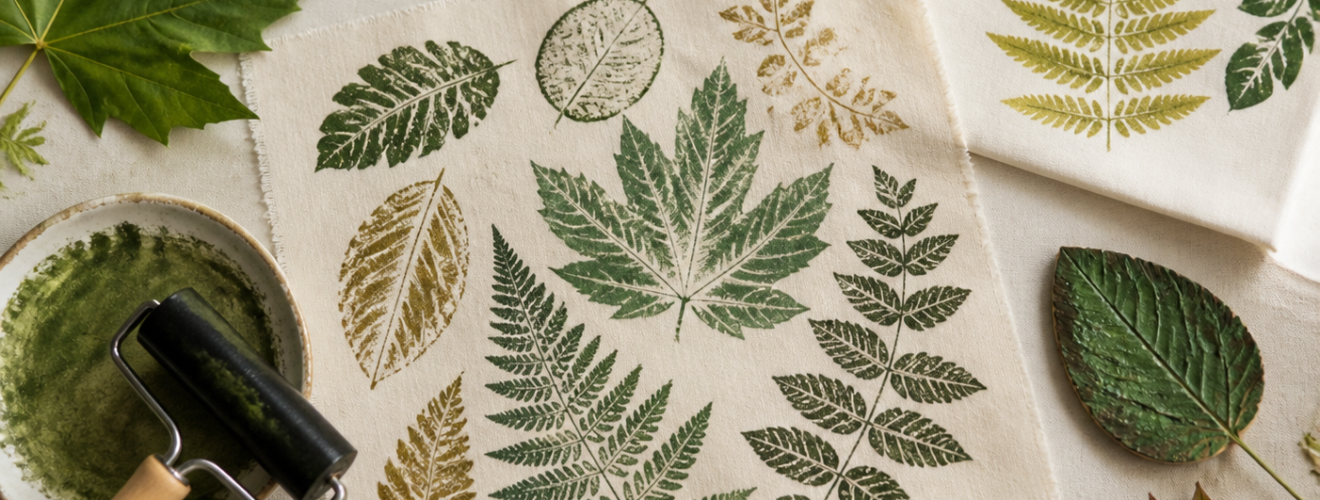
Relief printing is the most common method for leaf art. In this process, you apply a thin layer of pigment to the leaf surface. You can use ink, acrylic paint, or even watercolors. Professional artists often use brayers. A brayer is a small roller that spreads ink evenly. It is important not to use too much paint. If the paint is too thick, it will fill in the small gaps between the veins. This will result in a messy blob instead of a clear pattern. Once the leaf is coated, you place it on a clean piece of paper. You then cover it with a scrap of paper and rub it gently with your hand or a clean roller.
The type of paper you use matters a lot. Smooth paper will show every fine line. Rough paper might hide some of the details but can add a nice texture. Many people prefer to use heavy drawing paper or cardstock. When you lift the leaf, you will see a mirror image of its structure. This is a direct contact print. It shows the leaf as a positive image. You can repeat this process many times to make a pattern. You can overlap the prints to create the look of a forest floor. This method is very satisfying because it gives instant results. It allows you to see the hidden beauty of the plant world in a new way.
Nature Stencils and Negative Space
A second method is nature stenciling. This technique focuses on the space around the leaf. This is called negative space. In this method, you do not put ink on the leaf itself. Instead, you use the leaf as a mask. You place the dry leaf onto your paper. Then, you apply color over the top and around the edges. You can use a sponge, a spray bottle, or a large brush. When you lift the leaf, the area underneath remains white. The area around it is colorful. This creates a “ghost” image of the leaf. It is a very effective way to show the silhouette of a plant.
Stenciling is great for making complex layouts. You can layer multiple leaves on one page. You can spray different colors for each layer. This creates a sense of depth. It looks like you are looking through a canopy of trees. This technique is often used in modern graphic design. It is also used in textile art. You can use fabric paint to stencil leaves onto bags or shirts. This makes the art functional. It allows people to carry a piece of nature with them. The negative space technique is often easier for beginners because it requires less precision with ink.
Educational and Therapeutic Applications
Leaf printing is more than just a hobby. It is used in schools to teach kids about the life cycle of plants. It makes the science of biology more tactile. Students are more likely to remember a tree if they have printed its leaves. It also encourages them to look closely at the world. They begin to notice the differences between an Elm and an Ash tree. This builds environmental literacy. In a world that is very digital, this physical connection to the earth is very important. It helps foster a sense of stewardship for the environment.
This art form also has therapeutic benefits. The act of gathering leaves is a form of exercise. The process of printing requires focus and calm. It is a mindful activity that reduces stress. Many people find that working with natural materials improves their mood. It connects them to the seasons. You can see the year pass through the leaves you collect. In the spring, your prints are light and airy. In the winter, you might use dried skeletons of leaves. This cycle keeps the artist in tune with the rhythm of nature. It is a simple way to practice wellness while being creative.
Conclusion
Leaf printing and nature stenciling are powerful tools for expression. They allow us to capture the complex beauty of local flora. These methods have a long history in both art and science. By following simple steps, anyone can create professional and academic-style prints. Whether you are interested in biology or just want to make a beautiful pattern, these techniques are accessible to all. They remind us of the intricate designs that exist in every leaf. As we print, we document the diversity of our world. We also find a quiet space for creativity and learning. The patterns of the forest are waiting to be recorded.
Sources:
Bridson, G. D. R., & Wendel, D. E. (1986). Printmaking in the service of botany. Hunt Institute for Botanical Documentation.
Cave, R. (2010). Impressions of nature: A history of nature printing. British Library.
Reis, A. M. (2015). The art of nature printing: Capturing the beauty of the natural world. Botanical Press.
Thorkelsson, E. (2018). Botanical illustration and the history of scientific printing. Journal of Art and Science, 12(4), 45-58.