Exploring Lines and Shapes Through Everyday Objects
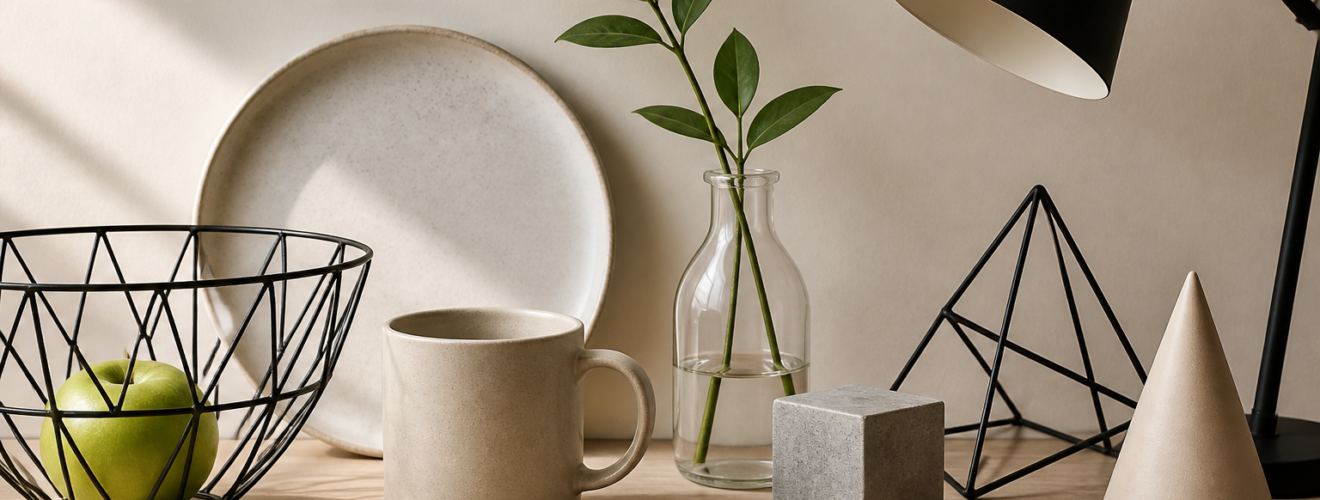
Exploring the world around us often begins with the basic elements of design. We see these elements in every room of our homes. Lines and shapes are not just math terms. They are the building blocks of our visual life. When we look at a table or a chair, we see geometry in action. This article looks at how these forms appear in everyday things. It also explains why they matter to our eyes and minds. By looking closer at simple items, we can learn a lot about the world.
We often take our surroundings for granted. We walk through rooms and use tools without thinking about their form. However, every object has a specific structure. This structure is made of lines that meet to form shapes. These shapes then fill a space. Understanding this can change how we see our daily life. It helps us appreciate the skill that goes into making simple goods. It also helps us understand how we relate to the space around us. This study is both simple and deep.
The Fundamental Nature of Lines
A line is the most basic part of any design. It is a path made by a moving point. In our homes, lines are everywhere. We see them in the edges of a door or the legs of a desk. Lines can be straight, or they can be curved. Each type of line tells a different story to our brain. Straight lines often feel strong and stable. They give us a sense of order. Curved lines feel soft and natural. They remind us of things found in nature, like a leaf or a river.
Vertical lines are very common in houses. They move up and down. Think about the frame of a window or a tall bookshelf. These lines lead the eye upward. They can make a small room feel taller. Horizontal lines move from side to side. We see them in the line of a floor or the top of a couch. These lines often make us feel calm. They suggest a sense of rest. When these lines meet, they create the corners that define our living spaces.
Diagonal lines are also important. They do not go straight up or straight across. Instead, they move at an angle. We might see these in the legs of a modern chair or a slanted roof. Diagonal lines create a feeling of movement. they make an object look more dynamic. In everyday life, these lines help to break up the boring look of too many squares. They add energy to a room. By noticing these lines, we see how objects guide our sight.
Geometric Shapes in the Living Space
When lines close a space, they create a shape. There are two main types of shapes. The first type is geometric. These are shapes like circles, squares, and triangles. They are very common in man-made items. The second type is organic. These shapes are irregular and often found in nature. In our homes, geometric shapes rule. They are easy to mass-produce and fit well together. Each shape has its own unique feel and use.
The Power of the Square and Rectangle
Squares and rectangles are the most common shapes in our daily lives. Look at a book, a phone, or a rug. Most of these items are rectangular. This is because right angles are very efficient. They allow items to be stacked and stored easily. Rectangles also feel safe and solid. They provide a sense of balance. In design, these shapes are used to hold things. They act as containers for information or for our bodies. We trust the flat surface of a square table to hold our food without it falling.
Even though they are common, they are not boring. Designers use different sizes of rectangles to create rhythm. A wall of pictures uses many small rectangles to make one large one. This creates a pattern that our brains enjoy. The clean edges of these shapes help us organize our thoughts. They provide a clear boundary between one thing and the next. This clarity is why we use them for almost everything in our offices and kitchens.
The Unity of the Circle
Circles are very different from squares. They have no corners and no start or end point. This makes them feel soft and friendly. In the home, we see circles in plates, bowls, and clocks. The circle is a shape of unity. It brings people together. This is why round dining tables are popular. They allow everyone to see each other easily. There is no “head” of a round table, so everyone feels equal.
From a functional view, circles are great for things that move. Wheels and knobs are circular because they turn smoothly. The lack of sharp edges also makes them safer. A round coffee table is better for a house with small children. It reduces the risk of bumps. Circles also break up the hard lines of a room. A round mirror on a square wall adds visual interest. It acts as a focal point because it stands out from the straight lines around it.
The Psychology of Visual Perception
Why do we care about these lines and shapes? It is because our brains are wired to find patterns. This is called visual perception. When we see a group of objects, our minds try to group them by shape. This helps us make sense of a messy world. If we see three dots in a row, we see a line. If we see four lines joined, we see a box. This mental work happens very fast. It allows us to recognize a chair even if it has a strange design.
Shapes also affect our mood. Sharp angles can make us feel alert or even tense. This is why some modern art uses many triangles. In contrast, rounded shapes help us relax. Designers use this knowledge to build better products. A soft, curved sofa is meant for resting. A sharp, angular desk is meant for work. By choosing the shapes in our homes, we can influence how we feel every day. This is the secret power of everyday objects.
Furthermore, the way objects are placed creates a “visual weight.” A large, dark square feels heavy. A small, light circle feels light. We use these shapes to balance a room. If one side of a room has a big, heavy cabinet, we might put two small chairs on the other side. This balances the visual scale. Our eyes want to see a world that feels even. When the shapes around us are in balance, we feel more at peace in our space.
Conclusion
In conclusion, lines and shapes are not just for art class. they are the core of everything we touch and see. From the straight line of a pencil to the round curve of a bowl, geometry is a constant friend. These forms help us organize our lives and our homes. They tell us where to look and how to feel. By paying attention to these simple details, we become more aware of our world. We can see the beauty in a simple box or the grace in a round lamp. Everyday objects are a lesson in design if we only take the time to look.
Sources
Arnheim, R. (1974). Art and Visual Perception: A Psychology of the Creative Eye. University of California Press.
Ching, F. D. K. (2014). Architecture: Form, Space, and Order (4th ed.). John Wiley & Sons.
Lidwell, W., Holden, K., & Butler, J. (2010). Universal Principles of Design. Rockport Publishers.
Wong, W. (1993). Principles of Form and Design. Van Nostrand Reinhold.