What are Bugtong, Salawikain, and Tanaga
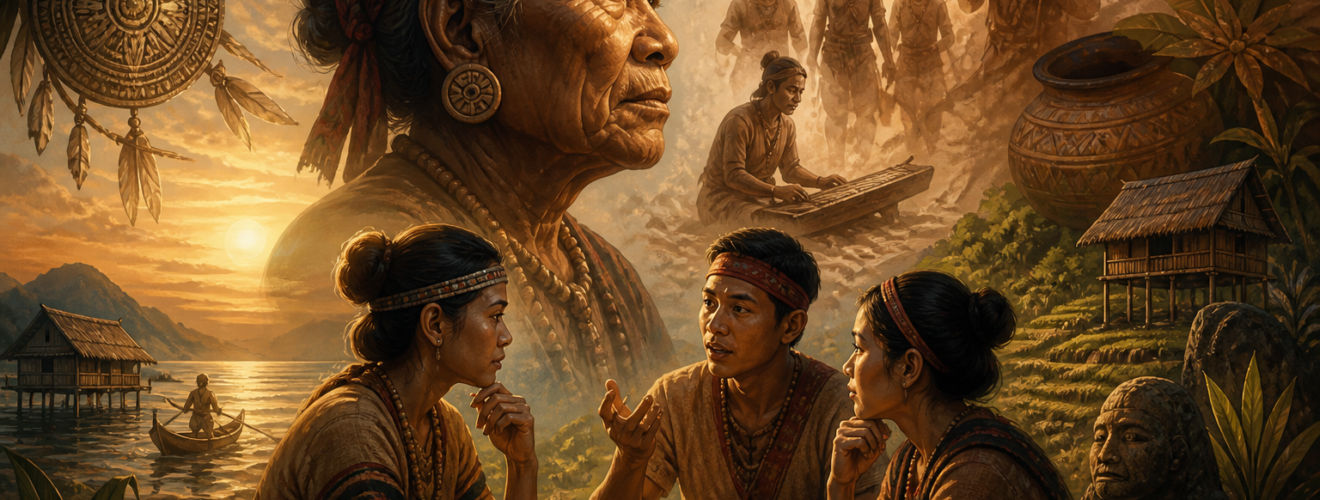
Pre-colonial literature in the Philippines is a rich and deep field of study. It offers a clear view of how our ancestors lived their daily lives. Long before the arrival of foreign powers, the people of the islands had their own ways of expression. They did not rely on heavy books or written codes to share their views. Instead, they used the power of the human voice. This oral tradition was the backbone of their society. It was a primary way to share history, values, and laws. Three of the most vital forms of this art are the Bugtong, the Salawikain, and the Tanaga. Each form served a unique purpose in the community. They were tools for teaching and tools for play. They also showed a deep link between the people and the natural world. By looking at these forms, we can see the brilliance of early Filipino thought. We can learn how they saw the world and their place in it. This article will look at these three forms of folk speech and poetry. We will see how they reflect the soul of a people through simple but deep words.
The Intellectual Play of the Bugtong
The Bugtong, or riddle, is one of the oldest forms of Filipino folk speech. It is more than just a simple game for children. In pre-colonial times, the Bugtong was a way to test the mind. It was a social event that took place during wakes or village gatherings. The goal was to guess the object being described through a metaphor. This metaphor is called the talinghaga. The talinghaga is the heart of Filipino poetry. It uses a common object to hide a deeper meaning. For example, a riddle might describe a house that you can carry on your head. The answer is a hat. This seems simple, but it requires a person to look at the world in a new way. It forces the mind to find links between different things.
The Bugtong forced people to notice the small details of their daily life. It used images from the farm, the sea, and the home. This form of art helped build a sense of unity in the tribe. Everyone could join in the fun regardless of their rank. It also helped the young to learn about their environment. By solving a Bugtong, a child learned the traits of plants and animals. This shows that our ancestors valued wit and keen sight. They saw beauty in the small things around them. The Bugtong is a proof of their sharp minds and their love for communal joy. It was an intellectual exercise that used the natural world as its primary textbook. This created a culture that was both playful and very observant.
The Ethical Compass of the Salawikain
While the Bugtong was for play, the Salawikain served a more serious role. The Salawikain is a proverb or a wise saying. These are short lines that give advice on how to live a good life. They acted as the unwritten laws of the tribe. In a society that did not use much paper, these sayings were easy to remember. They were passed down from the old to the young through speech. The Salawikain focused on social harmony and respect. They taught people how to treat their neighbors and their elders. One famous saying tells us that a heavy load becomes light when many people help. This shows the value of the spirit of help. It was vital for the survival of the village.
Another saying warns that a person who does not look back at their roots will not reach their goal. This teaches the value of history and the debt of gratitude. The Salawikain are full of metaphors from nature. They often compare human life to the growth of a tree or the flow of a river. This shows that our ancestors saw themselves as part of the earth. They did not try to rule over nature. Instead, they tried to live in balance with it. These proverbs provided a moral compass for the community. They kept the peace and guided the heart during hard times. Even today, many of these sayings are still used in modern speech. They remain a vital part of the Filipino way of life and our sense of right and wrong.
The Artistic Rigor of the Tanaga
The Tanaga is a form of short poetry that shows a high level of skill. It is often called the Filipino equivalent of the haiku. However, the Tanaga has its own unique rules that make it special. It is a poem of exactly four lines. Each line must have seven syllables. The lines usually rhyme at the end in various patterns. This structure is very tight. It requires the poet to be very careful with their words. Like the Bugtong, the Tanaga relies on the talinghaga. It uses an image to convey a complex emotion or a life lesson. For example, a Tanaga might describe a small boat in a storm. This could be a metaphor for a person facing hard times in life.
The beauty of the Tanaga is its brevity. It says a lot in just a few short words. This shows that pre-colonial Filipinos had a very refined sense of art. They knew how to use sound and rhythm to create a specific mood. The Tanaga was not just for the elite. Many people in the village could compose them and share them. It was a way to express love, grief, or hope in a structured way. This form of poetry proves that early Filipinos had a complex language. They had a rich set of words to describe their feelings and thoughts. The Tanaga is a small window into the creative soul of our ancestors. It shows that they were not just hunters or farmers. They were also artists and deep thinkers who valued the power of song and verse.
Synthesis and Cultural Identity
Looking at the Bugtong, Salawikain, and Tanaga, we see a clear picture of a lost world. We see a culture that valued wisdom, art, and community. These oral traditions were the glue that held the people together across many islands. They were not just for fun or for passing the time. They were tools for survival. They taught the social skills needed to live in a group. They also taught the values needed to live a life of honor. These forms show that pre-colonial Filipinos had a deep understanding of their world. They saw the links between all things in nature and human life. They saw the magic in the daily tasks of the home and the field.
Today, these voices still speak to us through history. They remind us of our true identity. They tell us that our culture did not start with the arrival of the West. We had a rich and colorful history long before that happened. By studying these forms, we honor our ancestors. We keep their voices alive for the next generation to hear. These traditions are a great source of pride for all Filipinos. They are the roots of our modern literature and our way of speaking. We must continue to study and share them in our schools and homes. They are the true voices of our past. They help us understand who we are today and where we are going in the future.
Sources:
Eugenio, D. L. (2007). Philippine folk literature: An anthology. University of the Philippines Press.
Lumbera, B. (2005). Tagalog poetry, 1570-1898: Tradition and influences in its development. Ateneo de Manila University Press.
Rizal, J. (1890). Specimens of Tagal folklore. Trubner’s Record.