Life Under the Lens: Cellular Structure and Energy Flow in Philippine Ecosystems
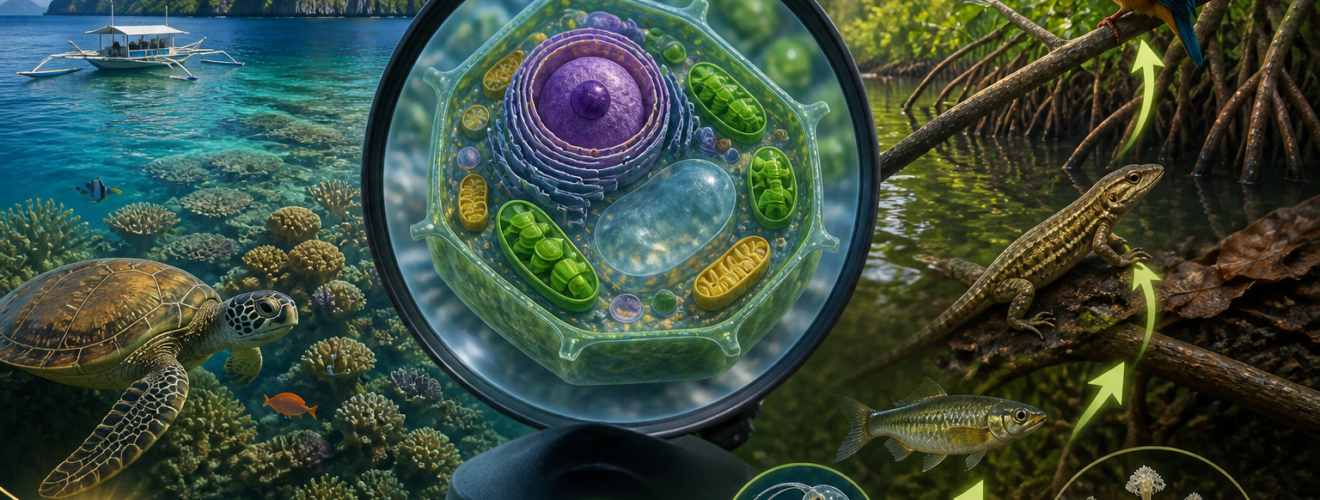
The Philippines is a vast group of more than seven thousand islands. It is a global center for many forms of life. These forms range from the smallest moss to the largest trees. Every one of these living things starts at the same place. They all start with the cell. The cell is the basic unit of life. It is the building block for all plants and animals. To understand how our local nature works, we must look at these tiny structures. We must see how they use energy to thrive. This article looks at the link between the cell and the wide Philippine landscape. We will see how energy flows from the sun into every living thing in our country.
Our islands are home to many species that exist nowhere else. This is what we call endemism. The Philippine eagle and the tamaraw are great examples. These animals have complex bodies made of trillions of cells. At the same time, our seas have coral reefs that are full of life. Each part of these reefs depends on cellular work. Cells do not just provide a shape. They also process the energy that keeps the system stable. By looking at these cells, we can learn how to save our nature. We can see how small changes at the cell level affect the whole forest or sea. This knowledge is key to the study of biology in our region.
The Cellular Foundation of Philippine Life
All life in the Philippines is made of cells. There are two main types of cells. These are plant cells and animal cells. In our lush rainforests, plant cells are the stars. These cells have a thick outer layer called a cell wall. This wall gives the trees the strength to grow tall. It allows the Narra tree to reach for the sky. Inside these cells, there are special parts called organelles. Each part has a specific job. For example, the nucleus acts as the brain of the cell. It holds the DNA that tells the plant how to grow. This DNA is unique to the species of our islands. It makes our local plants special and strong.
Animal cells are a bit different. They do not have a hard cell wall. This allows animal cells to be flexible. This flexibility is vital for local wildlife like the tarsier. The tarsier has cells that allow it to jump and move fast through the trees. These cells have a plasma membrane. This membrane controls what goes in and out of the cell. It lets in nutrients and keeps out waste. This balance is what keeps the animal healthy. Both plant and animal cells work to maintain a state of balance. Scientists call this state homeostasis. It is the core of survival for every creature in our land.
The Role of Plant Cells in Forests
Plant cells in the Philippine jungle are very busy. They have a part called the chloroplast. These small green parts are very important. They catch the energy from the sun. This is the first step in the flow of energy. In the Sierra Madre mountains, billions of leaves are working right now. They use their chloroplasts to make sugar. This sugar is the fuel for the plant. Without this process, the forest would not have energy. The structure of the plant cell is built to support this work. Large areas in the cell store water and food. These are called vacuoles. They help the plant stay firm even in the heat of the sun.
The Dynamics of Animal Cells in Local Fauna
In the animal world, cells focus on movement and growth. They need a lot of energy to do this. They have many mitochondria. These are the power plants of the cell. They take the food the animal eats and turn it into a form of energy. This form is called ATP. In the Philippine eagle, the wing muscles have many of these power plants. This allows the bird to fly high and hunt. The energy flow inside the cell is fast. It must be fast to support such a large and active bird. This shows how the small parts of life support the big parts.
Energy Flow and the Process of Photosynthesis
Energy flow is the path that energy takes through an ecosystem. In the Philippines, this flow begins with the sun. Our country gets a lot of sunlight all year. This makes our land very productive. Plants are the primary producers. They take light and turn it into food. This process is called photosynthesis. It happens in the green parts of the plant. The plant takes in carbon dioxide from the air. It takes in water from the roots. With the help of the sun, it makes glucose. This is a simple sugar that holds energy. This energy then moves to the animals that eat the plants.
This flow of energy is like a one way street. It starts with the sun and moves through the food chain. In our mangroves, this process is very clear. The mangrove trees use the sun to grow thick roots. Small fish then eat the bits of plants that fall into the water. The energy moves from the tree to the fish. When a larger fish eats the small fish, the energy moves again. This is how the sun feeds the whole sea. The cell is the site where all this energy is transformed. It is a vital link in the chain of life. Without photosynthesis, life in our islands would stop.
Cellular Respiration and the Energy Pyramid
Once plants make energy, other living things must use it. This is where cellular respiration comes in. This process happens in both plants and animals. It is the way cells break down food to get energy. It happens inside the mitochondria. In our local ecosystems, this process allows animals to grow and reproduce. For example, a carabao eats grass. Its cells then break down that grass to move its heavy body. This process also releases heat. This heat is why animals are warm. Most of the energy taken in is used for daily life. Only a small part is stored for the next level of the food chain.
This leads to what we call the energy pyramid. At the bottom of the pyramid are the plants. They have the most energy because they get it from the sun. As we move up the pyramid, there is less energy. Only about ten percent of the energy moves to the next level. This is why there are many plants but few top predators. In the Philippines, the top of the pyramid might be a large shark or an eagle. These animals need to eat a lot to get the energy they need. This balance is very delicate. If the bottom of the pyramid is hurt, the top will suffer too. This is why protecting our forests and reefs is so important.
Environmental Impacts on Microscopic Energy Flow
Changes in our environment can affect how cells work. Climate change is a big threat to the Philippines. When the sea gets too warm, it affects the cells of the coral. The coral has tiny plants living inside its cells. These plants give the coral food. If the water is too hot, the plants leave. This is called coral bleaching. Without the plants, the coral cells cannot get enough energy. They may die. This shows how a change in heat can break the energy flow. It starts at the cell level and ends with the loss of a reef. This is a major concern for our country.
Pollution also plays a role. Chemicals in the water can hurt the cell membrane. If the membrane is damaged, the cell cannot take in nutrients. This can slow down the growth of fish and plants. In our rice fields, the use of too many chemicals can hurt the soil cells. This makes it harder for the rice to grow. We must be careful about how we treat our land. Every action we take reaches down to the cell. By keeping our air and water clean, we help the cells do their job. This keeps the whole energy flow moving as it should. It ensures a future for our natural world.
Conclusion
The study of life in the Philippines is a study of cells. From the peaks of the mountains to the floor of the sea, cells are at work. They capture the sun and turn it into life. They move energy from one being to the next. This flow is what makes our country so beautiful and rich. By understanding cell structure, we see the foundation of life. By understanding energy flow, we see how all things are linked. We must protect these tiny processes to save our big ecosystems. The health of the Philippine eagle depends on the health of the cell. We must honor this link in all our conservation work.
Sources
Alcala, A. C. (1986). Guide to Philippine flora and fauna. JMC Press.
Heaney, L. R., & Regalado, J. C. (1998). Vanishing treasures of the Philippine rain forest. Field Museum.
Philippine Department of Science and Technology. (2020). Status of Philippine ecosystems. DOST.
Reece, J. B., Urry, L. A., Cain, M. L., Wasserman, S. A., Minorsky, P. V., & Jackson, R. B. (2014). Campbell biology (10th ed.). Pearson.