The Miracle of Life: Comparing Human, Local Animal, and Plant Reproduction(Grade 5 Science)
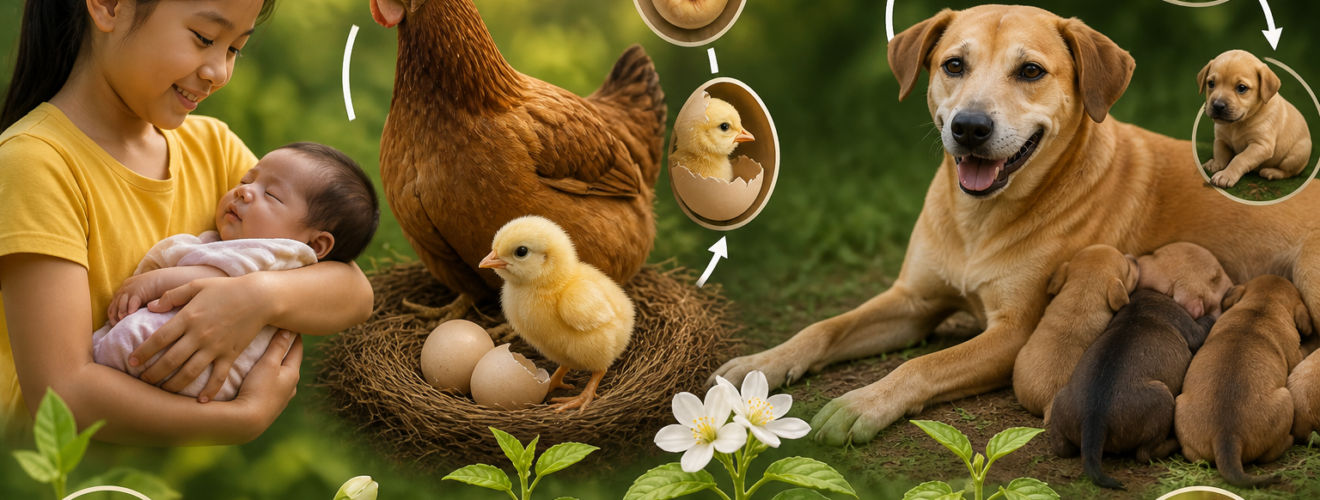
The study of biology reveals a grand design for the continuation of life. Reproduction is the biological process by which new individual organisms are produced. This process is fundamental to the survival of every species on Earth. Without it, life would cease to exist within a single generation. By examining how humans, local animals, and plants reproduce, we can gain a deeper respect for the natural world. Each group has unique methods for bringing new life into the environment. These methods are tailored to their specific needs and habitats. This article explores the common threads and the distinct differences between these three groups.
Biologists categorize reproduction into two main types: sexual and asexual. Sexual reproduction involves the combination of genetic material from two parents. This creates offspring that are unique but similar to their parents. Asexual reproduction involves a single parent making an exact copy of itself. While some simple organisms use asexual methods, most humans, local animals, and many plants rely on sexual reproduction. This variety in genes helps species adapt to changes in their environment. It ensures that some individuals may survive even if conditions become difficult.
The Process of Human Reproduction
Human reproduction is a complex and highly regulated process. It begins with the union of two specialized cells. These are the sperm from the male and the egg from the female. This union is called fertilization. It results in a single cell known as a zygote. The zygote contains all the instructions needed to build a new human being. These instructions are stored in DNA. Half of the DNA comes from the mother and half comes from the father. This is why children often look like a mix of both parents. This genetic diversity is a hallmark of human life.
Once fertilization occurs, the zygote travels to the mother’s uterus. Here, it attaches to the wall and begins to grow. This stage of life is known as pregnancy or gestation. In humans, this period lasts about nine months. During this time, the single cell divides many times. It forms tissues, organs, and eventually a complete body. The mother’s body provides all the food and oxygen the developing baby needs. This close physical connection is vital for the survival of the offspring. It is a period of intense growth and protection within a controlled environment.
The birth of a human baby is just the start of a long journey. Humans are born quite helpless compared to many other species. They require a long period of care and protection from their parents. This stage is known as infancy and childhood. During this time, the brain grows rapidly. Children learn how to walk, talk, and interact with the world. Parents provide food, shelter, and education. This long period of care is necessary because human society and survival are complex. It ensures that the next generation is ready to eventually reproduce themselves.
Reproduction in Local Animal Species
Local animals, such as squirrels, birds, and frogs, have different ways of reproducing. Most of these animals also use sexual reproduction. However, the way they care for their young varies greatly. Mammals, like the squirrels seen in local parks, have a process similar to humans. They give birth to live young. These young are fed with milk from the mother. This allows the baby mammals to grow strong before they have to find their own food. Mammals often spend a lot of time teaching their young how to survive in the wild.
Birds offer a different perspective on the miracle of life. Instead of carrying their young inside their bodies, birds lay eggs. An egg is a self-contained life support system. It has a hard shell to protect the growing chick. Inside the egg, there is a yolk that provides food. The mother or father must sit on the eggs to keep them warm. This is called incubation. When the chick is ready, it pecks its way out of the shell. Many birds also provide a great deal of care for their chicks. They bring them insects or seeds until the chicks are old enough to fly and hunt.
Amphibians like frogs have a very different strategy. They often lay hundreds or even thousands of eggs in water. These eggs are soft and jelly-like. Unlike birds or mammals, many frogs do not stay to care for their young. The eggs hatch into tadpoles, which breathe through gills. Over time, the tadpoles undergo a change called metamorphosis. They grow legs and lungs so they can live on land. This strategy relies on high numbers. Even if many tadpoles are eaten by predators, some will survive to become adult frogs. This ensures the species continues without direct parental care.
The Botanical World: Plant Reproduction
Plants may seem very different from humans and animals, but they also have a life cycle. Most common plants reproduce using seeds. This process often starts with a flower. Flowers are not just for beauty; they are the reproductive organs of the plant. To make a seed, pollen from the male part of a flower must reach the female part. This is called pollination. Some plants use the wind to carry their pollen. Others rely on helpers like bees, butterflies, or birds. These animals are called pollinators. They visit flowers for nectar and move pollen from one plant to another.
Once pollination happens, fertilization takes place inside the flower. This leads to the creation of a seed. Many plants grow a fruit around the seed. The fruit protects the seed and helps it move to a new place. For example, an animal might eat an apple and drop the seeds far away. Other seeds have wings like a maple tree seed. These wings help the seed fly on the wind. When a seed finds good soil with water and light, it begins to grow. This is called germination. The tiny plant uses food stored in the seed until it can make its own food from the sun.
Some plants do not use seeds at all. Ferns and mosses use tiny structures called spores. Spores are much smaller than seeds. They do not have a food supply inside them. They must land in a very wet and perfect spot to grow. This is a very old way of reproducing. It worked long before the first flowers ever appeared on Earth. Whether using seeds or spores, plants are experts at spreading their life to new places. They provide the base for almost all other life on our planet by turning sunlight into energy.
Comparing the Three Kingdoms of Life
When we look at humans, animals, and plants together, we see many patterns. All three groups require specialized cells to start a new life. All three groups pass on traits through DNA. This means that offspring will always belong to the same species as their parents. A maple tree will never grow from an apple seed. A bird will never hatch from a frog egg. This consistency is what allows ecosystems to stay balanced. Every living thing has its own role to play. Their reproductive cycles are designed to fit those roles perfectly.
The main difference lies in the level of care and the environment of the young. Humans and mammals provide the most care over a long time. This helps offspring survive in complex social groups. Many local animals, like birds, provide short-term care in a nest. Others, like frogs and plants, rely on producing many offspring at once. They do not provide care, but they ensure survival through large numbers. These different paths all lead to the same goal. They all ensure that life continues to thrive on our planet. Understanding these cycles helps us protect the nature around us.
In conclusion, the miracle of life is found in every corner of our world. From the birth of a human baby to the sprouting of a tiny seed, the process is full of wonder. We share our local environment with many creatures and plants. Each one follows a path set by its biology. By learning about these paths, we see how connected we are to all living things. Respecting the life cycles of animals and plants is a key part of being a good citizen of Earth. Life is a gift that is passed from one generation to the next in many beautiful ways.
Sources
Campbell, N. A., & Reece, J. B. (2020). Biology (12th ed.). Pearson Education.
National Geographic Society. (2022). Plant reproduction and life cycles. National Geographic Education.
Scholastic Science World. (2021). How animals grow: Comparing life cycles in the wild. Scholastic Inc.
World Wildlife Fund. (2023). Local ecosystems and animal reproduction strategies. WWF Conservation Series.