
Bayanihan in the Neighborhood
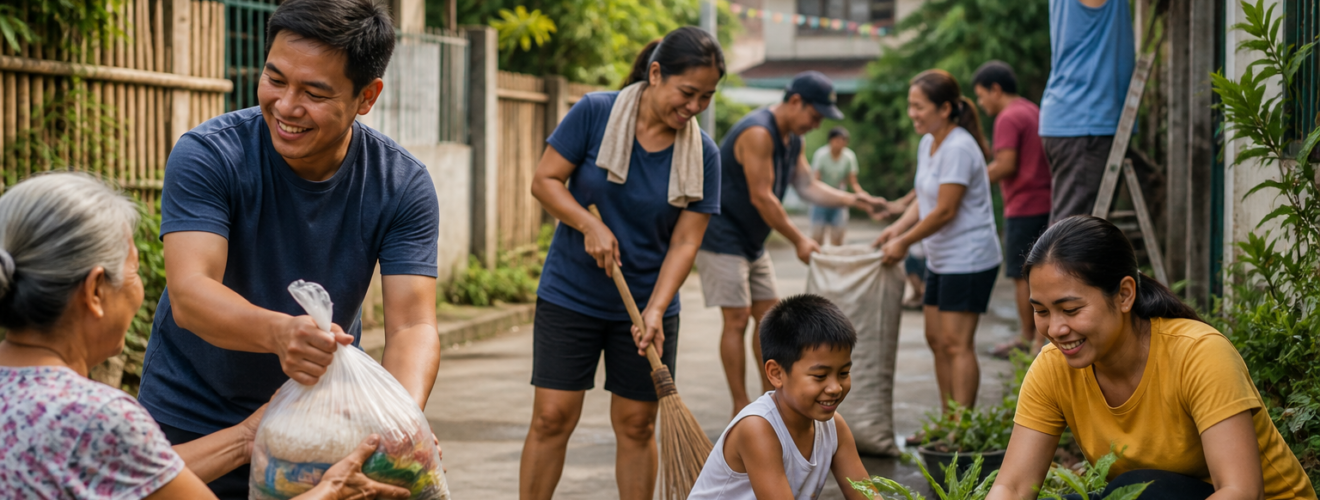
The concept of Bayanihan stands as a core pillar of Filipino culture. It represents a unique spirit of communal unity. This value drives individuals to work together for a common goal. The term comes from the word bayan. In the Filipino language, bayan means town, nation, or community. Thus, Bayanihan refers to being part of a group effort. Historically, it was seen when neighbors helped a family move their home. These homes were made of light materials like bamboo and palm leaves. Men would lift the entire house on their shoulders using large poles. They would walk together to place the house in its new location. Today, the physical act of carrying a house is rare. However, the essence of the tradition remains strong. It has moved from rural fields to modern urban neighborhoods. This article examines how Bayanihan acts as a social force. It looks at its roots and its new forms in the modern day.
The Historical Roots of Communal Help
To understand Bayanihan, one must look at the traditional Filipino village. In these small towns, resources were often scarce. Survival depended on the help of others. The practice was never about money. It was an unwritten rule of mutual aid. When a neighbor needed help, the community responded. This was done without the expectation of pay. Instead, the reward was a sense of belonging. The host family would often provide a simple meal for the workers. This meal served as a celebration of their shared work. It reinforced the bonds between families. This tradition created a safety net for everyone in the village. It ensured that no one had to face a large task alone. The collective strength of the group was always greater than the sum of its parts.
The Symbol of the Moving House
The image of men carrying a hut is the most famous symbol of this culture. It shows that heavy burdens become light when shared. This specific act required perfect timing. Each person had to walk at the same pace. They had to balance the weight evenly. If one person stumbled, the whole house could fall. This taught the community about the importance of trust. It also taught them about coordination. These lessons stayed with the people long after the move was done. The physical house was a metaphor for the community itself. By protecting the home of one, they were protecting the stability of all. This historical context is vital. it shows that Bayanihan is rooted in action. It is not just a feeling or a thought. It is a visible sign of love for one’s neighbor.
Bayanihan in the Urban Neighborhood
As people moved to cities, the way they lived changed. Concrete walls replaced bamboo structures. Neighbors often do not know each other as well as they did in the past. High-rise buildings and busy streets can make people feel isolated. However, the Bayanihan spirit has not vanished. It has simply changed its shape. In urban settings, this spirit appears during times of crisis. Natural disasters are common in the Philippines. Typhoons and floods often hit the islands. During these times, the neighborhood comes alive with help. People share their food and clean water. They offer shelter to those whose homes are damaged. They work together to clear the streets of debris. This modern version of the tradition is fast and flexible. It does not need a formal leader to start.
The Rise of Community Pantries
A recent and powerful example of modern Bayanihan is the community pantry. This movement started in a small street in Quezon City. A single person set up a bamboo cart with food items. The sign said to give what you can and take what you need. This idea spread across the whole country in just a few days. Thousands of pantries appeared in different neighborhoods. This was a response to the hunger caused by the global health crisis. It showed that the spirit of the moving house is still alive. People did not wait for the government to act. They looked at their own neighbors and saw a need. They filled that need with whatever they had. Some gave sacks of rice. Others gave a few pieces of fruit. This movement proved that communal unity can thrive even in a modern city. It relied on trust and the common good.
The Sociology of Social Capital
In academic terms, Bayanihan can be viewed as a form of social capital. Social capital refers to the networks of relationships among people. These networks allow a society to function effectively. When neighbors trust each other, they can solve problems quickly. High social capital leads to lower crime rates and better health. In a neighborhood where Bayanihan is active, people feel safer. They know that if something goes wrong, someone will help. This creates a strong sense of psychological security. It also fosters a collective identity. People no longer see themselves as just individuals. They see themselves as part of a larger story. This connection is essential for the health of any neighborhood. It turns a group of houses into a true community.
Digital Bayanihan and Technology
Technology has also changed how this spirit works. Social media groups now serve as digital neighborhoods. Residents use these platforms to coordinate help. They post about lost pets or share news about local traffic. During emergencies, these groups become vital tools for rescue. This is what some call Digital Bayanihan. It allows people to help even if they are not physically present. A person can send money or order supplies for a neighbor using an app. While the tools are new, the intent is the same. The goal is to support the group. Technology has expanded the reach of the community. It has made it possible for the spirit of help to cross great distances. This shows the resilience of the value. It can adapt to any new environment.
Challenges and Future Outlook
There are challenges to maintaining this spirit today. Modern life is very fast. Many people spend more time at work than at home. This leaves less time for building ties with neighbors. Privacy is also more highly valued now. Some people prefer to keep to themselves. They may feel that asking for help is a sign of weakness. There is also the risk of the tradition becoming a substitute for formal support. Communities should not have to solve every problem alone. Formal systems like the government must still do their part. However, Bayanihan should not be lost. It provides a human touch that no system can replace. It creates warmth and kindness in a cold world.
The Importance of Education
To keep this value alive, it must be taught to the next generation. Schools in the Philippines often include lessons on Bayanihan. They teach children that they have a duty to their peers. These lessons are often done through group projects. By working together in class, students learn the value of cooperation. This ensures that the spirit does not die out. It becomes a part of their identity as they grow up. Neighborhood associations also play a role. By hosting local events, they give people a chance to meet. These simple meetings are the seeds of future help. When people know each other’s names, they are more likely to care for each other’s well-being. This is the simple secret to a strong neighborhood.
Conclusion
Bayanihan is a beautiful and vital part of Filipino life. It has moved from the rural past into the urban present. It has survived through changes in technology and lifestyle. At its heart, it is about the power of the group. It shows that we are all responsible for one another. Whether it is moving a house or sharing a bag of rice, the act matters. It builds trust and strengthens the community. In a world that often feels divided, this spirit is more important than ever. It reminds us that we are stronger when we stand together. The neighborhood is not just a place to live. It is a place where we can practice being human. Through Bayanihan, every neighborhood can become a home for everyone. This tradition will continue to be a light for many years to come.
Sources
Ang, S. (2020). The Filipino concept of Bayanihan in the time of pandemic. Journal of Community Psychology, 48(5), 123-135.
Bankoff, G. (2007). Cultures of disaster: Society and natural hazard in the Philippines. Routledge.
De Leon, F. M. (2011). The core values of Filipino culture. National Commission for Culture and the Arts.
Rafael, V. L. (2015). Contracting colonialism: Translation and Christian conversion in Tagalog society under early Spanish rule. Duke University Press.
Tiatco, S. A. (2018). Performing Catholicism: Faith and theater in a Philippine province. University of the Philippines Press.