Economic Diversification: Why Relying on One Industry is Risky
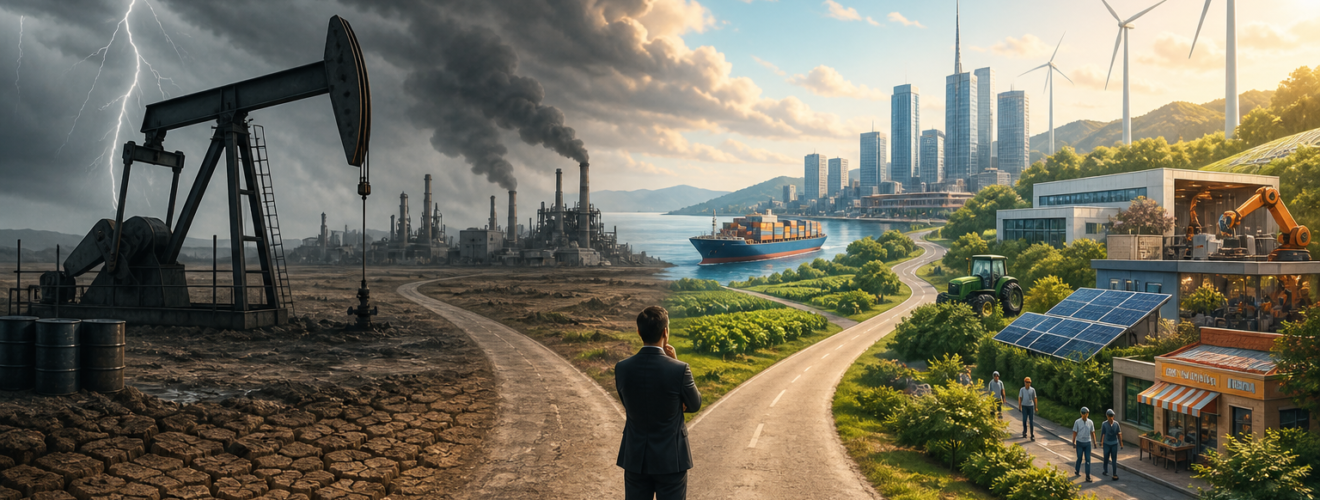
Economic growth is a primary goal for every modern nation. Most countries want to see their wealth grow year after year. To do this, some nations focus on a single strength. They might export oil, mine gold, or focus only on tourism. This strategy can lead to very fast growth for a short time. However, history shows that this path is full of danger. When a nation puts all its eggs in one basket, it becomes weak. Economic diversification is the act of spreading money and labor across many different sectors. It is not just a good idea for growth. It is a vital tool for survival in a global market. This article explores why a narrow focus is risky. It also looks at how a diverse economy builds a safer future for all citizens.
The Nature of Market Volatility
Markets are never truly still. They move up and down based on global events. If a country relies on one product, its entire budget depends on that product’s price. This is known as market volatility. For example, consider a nation that only sells oil. If the global price of oil stays high, the nation prospers. It can build roads and schools with the profits. But if the price drops, the country faces a sudden crisis. Tax revenue disappears almost overnight. Without other industries to fill the gap, the government must cut spending. This leads to job losses and social unrest. Diversification acts as a shield against these price swings. When one sector fails, others can stay strong. This balance keeps the national income steady over time.
The Impact of Global Demand Shifts
Global demand is not permanent. What the world wants today might not be what it wants tomorrow. New laws, climate goals, or fashion trends can change trade in an instant. For instance, the world is moving away from coal and toward green energy. Nations that only export coal will soon find they have no buyers. If they do not have other industries, their economies will shrink. Diversification allows a country to pivot. If demand for one product falls, the nation can lean on its tech, farming, or service sectors. This flexibility is the hallmark of a mature and resilient economy. It ensures that a change in global taste does not become a national tragedy.
The Resource Curse and Dutch Disease
Economists often speak of the resource curse. This happens when a country has a lot of one natural resource. Instead of getting richer, the country often sees slower growth. This is linked to a concept called Dutch Disease. When a country exports a lot of one resource, its currency value goes up. This makes its other exports more expensive for the rest of the world. As a result, local farms and factories cannot compete. They close down because they are too costly. Soon, the country only has that one resource left. This creates a trap. The nation becomes a prisoner of its own wealth. To avoid this, governments must invest in many different areas. They must ensure that the success of one sector does not kill the growth of others.
Institutional Weakness and Corruption
Relying on a single industry often leads to weak public institutions. When money flows from one source, power stays in a few hands. There is less need for a fair tax system because the resource provides the cash. This can lead to a lack of transparency. Leaders might ignore the needs of the people because they do not rely on them for taxes. A diverse economy requires many different types of workers and owners. This variety creates a system of checks and balances. It forces the government to be more responsive to various groups. In this way, economic variety supports better law and more honest leadership. It builds a foundation where fair rules apply to everyone.
Technological Shifts and Obsolescence
We live in an age of rapid change. New inventions can make old industries useless in a few years. Think about the move from film cameras to digital ones. Or think about how internet streaming changed the movie business. If a country only focuses on an industry that becomes obsolete, it faces ruin. Specializing too much makes a nation stiff. It cannot adapt to the next big thing. A diversified economy fosters a culture of learning and innovation. It encourages people to try new ideas in many fields. This creates a workforce that can handle change. When the old ways of making money die out, a diverse nation is already working on the new ways. This keeps the country relevant on the world stage.
The Importance of Human Capital
A single-industry economy often limits the skills of its people. If every job is in a mine, people only learn how to mine. They do not learn how to code, design, or provide medical care. This is a waste of human potential. When an economy is diverse, it offers many career paths. This encourages citizens to seek higher education in various fields. A broad range of skills is known as human capital. High human capital makes a nation very attractive to investors. It means the country has the talent to start any kind of business. By moving away from a single industry, a nation invests in the brains of its people. This is the most valuable resource any country can have.
Policy Strategies for Diversification
Moving to a diverse economy does not happen by luck. It requires smart choices by leaders. Governments must build the right tools for growth. This includes good roads, fast internet, and reliable power. It also means making it easy for small businesses to start. Tax breaks for new industries can help them grow until they are strong. Education is also a key policy tool. Schools should teach skills that work in many different jobs. Another strategy is to build “special zones” for trade and tech. These zones attract foreign money and bring new ideas into the country. By taking these steps, a nation can slowly move away from its risky focus. It builds a wider base for its wealth.
The Role of Private Investment
Government cannot do it all alone. Private companies must also want to grow in new areas. To attract this money, a country must be stable. Investors like to know that the laws will not change tomorrow. They want to see a fair court system and low crime. When a nation is stable, it attracts diverse projects. A tech firm might open an office next to a textile factory. Each new business adds a new layer of safety to the economy. This mix of private effort and public support is the best way to change. It creates a cycle where success in one area helps fund the next one. This is how small nations become global leaders.
Conclusion
The global economy is full of risks and changes. Relying on one industry is like sailing a small boat in a storm. It might be fast when the wind is good, but it will sink when the waves grow high. Diversification is the only way to build a sturdy ship. It protects a nation from price drops and shifts in demand. It helps avoid the traps of the resource curse. Most importantly, it creates a future where every citizen has a chance to succeed. A diverse economy is a stable economy. It is a sign of a nation that thinks about tomorrow, not just today. By spreading risk, a country ensures that its wealth will last for many generations to come.
Sources
Auty, R. M. (1993). Sustaining development in mineral economies: The resource curse thesis. Routledge.
Gylfason, T. (2001). Natural resources, education, and economic development. European Economic Review, 45(4-6), 847-859.
Venables, A. J. (2016). Using natural resources for development: Why has it proven so difficult? Journal of Economic Perspectives, 30(1), 161-184.